
 Taste Madagascar
Madagasikara
A large Indian Ocean island that eats rice three times a day, with a small dish of greens, meat or beans to go with it.
The Malagasy meal is rice, vary, and its accompaniment, laoka. The rice is the point; the laoka seasons it. Laoka might be romazava, a clear beef and greens broth, or ravitoto, pounded cassava leaves with pork, or beans, small fried fish or plain boiled greens. Leafy greens, called brèdes, are eaten daily and in great variety. Flavouring is restrained: ginger, garlic, onion and tomato, with chilli paste served on the side so each person decides. Zebu beef is the prized meat. On the coasts coconut milk and seafood take over, and vanilla, cloves and pepper are grown for export.
3 recipes · 1 cuisine
All dishes 3
- 2 hr 15 min

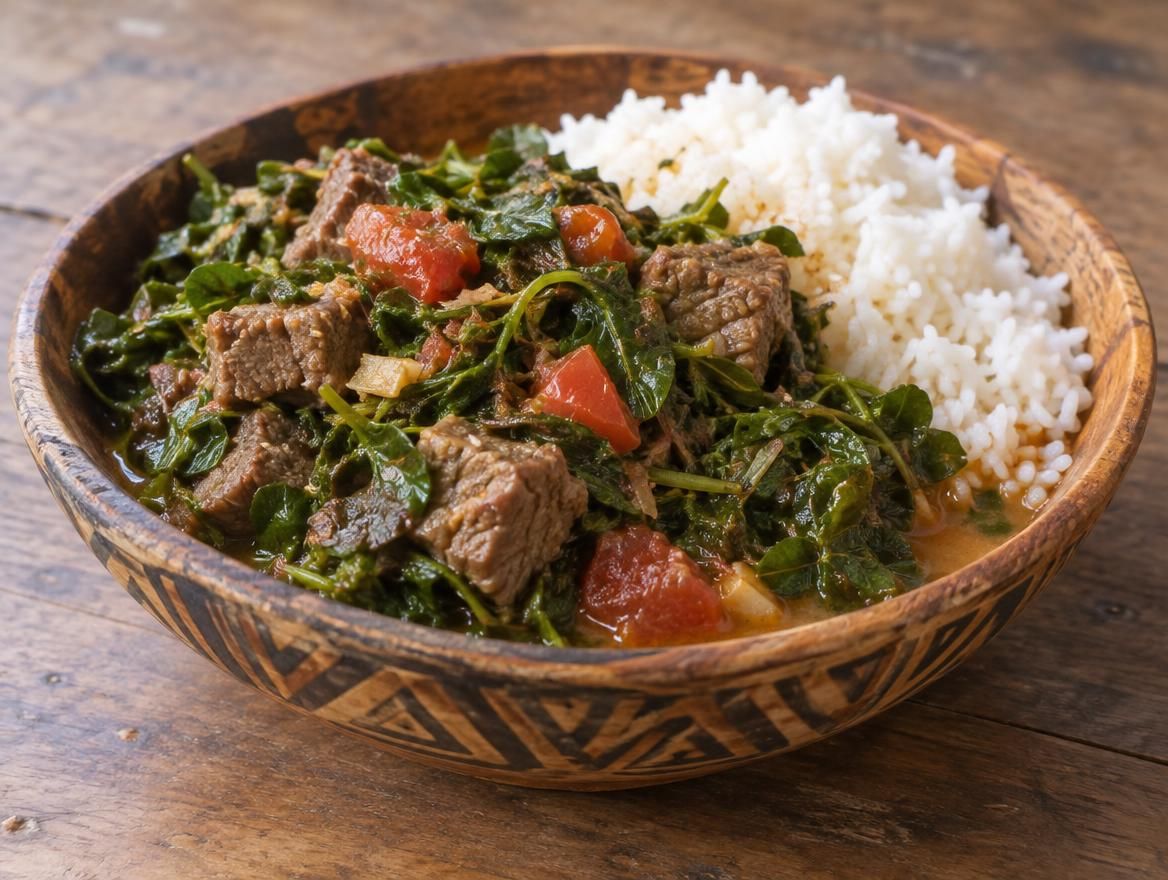
Romazava
Madagascar's national stew: beef simmered with ginger, garlic and tomato, finished with a heap of greens including tongue-tingling paracress. Eaten with rice.
Easy
- 2 hr

Ravitoto
Ravitoto sy henakisoa
Pounded cassava leaves cooked slowly with fatty pork and garlic until dark, soft and rich. A Malagasy staple served with plenty of rice.
Easy
- 7 hr 45 min

Koba
Koba ravina
A dense Malagasy sweet of ground peanuts, rice flour, banana and brown sugar, wrapped in banana leaves, steamed for hours and sold by the slice.
Medium
Regional cuisines
Think you know Madagascar food?
3 quiz dishes. Optional — Passport stamps still come from cooking.
Take the Madagascar food quizFood history
The first settlers arrived by sea from island South-East Asia, bringing rice farming and a rice-centred way of eating that still defines the island. Bantu-speaking migrants from the African mainland brought zebu cattle. Arab and Swahili traders, then Indian and Chinese communities, added spices, fried pastries and noodle soups. France ruled from the 1890s until 1960 and left baguettes, pastries and a taste for composed salads. Crops from the Americas, among them cassava, peanuts and tomatoes, were absorbed along the way.