

 Taste Singapore
Singapura
A small island city-state where Chinese, Malay, Indian and Peranakan cooking share one hawker centre and argue about who does it best.
Singapore eats at hawker centres: open-air food courts where a stall does one dish and has done it for decades. Hainanese chicken rice, char kway teow, laksa, bak kut teh, chilli crab and kaya toast are the headliners, but the same roof holds Malay nasi padang, Indian roti prata and biryani, and Peranakan cooking that fuses Chinese technique with Malay spice. Breakfast is kopi and toast at a kopitiam; supper can be at midnight. Food is the national conversation, and a hawker's queue is the only review that matters.
6 recipes · 1 cuisine
All dishes 6
- 1 hr 45 min

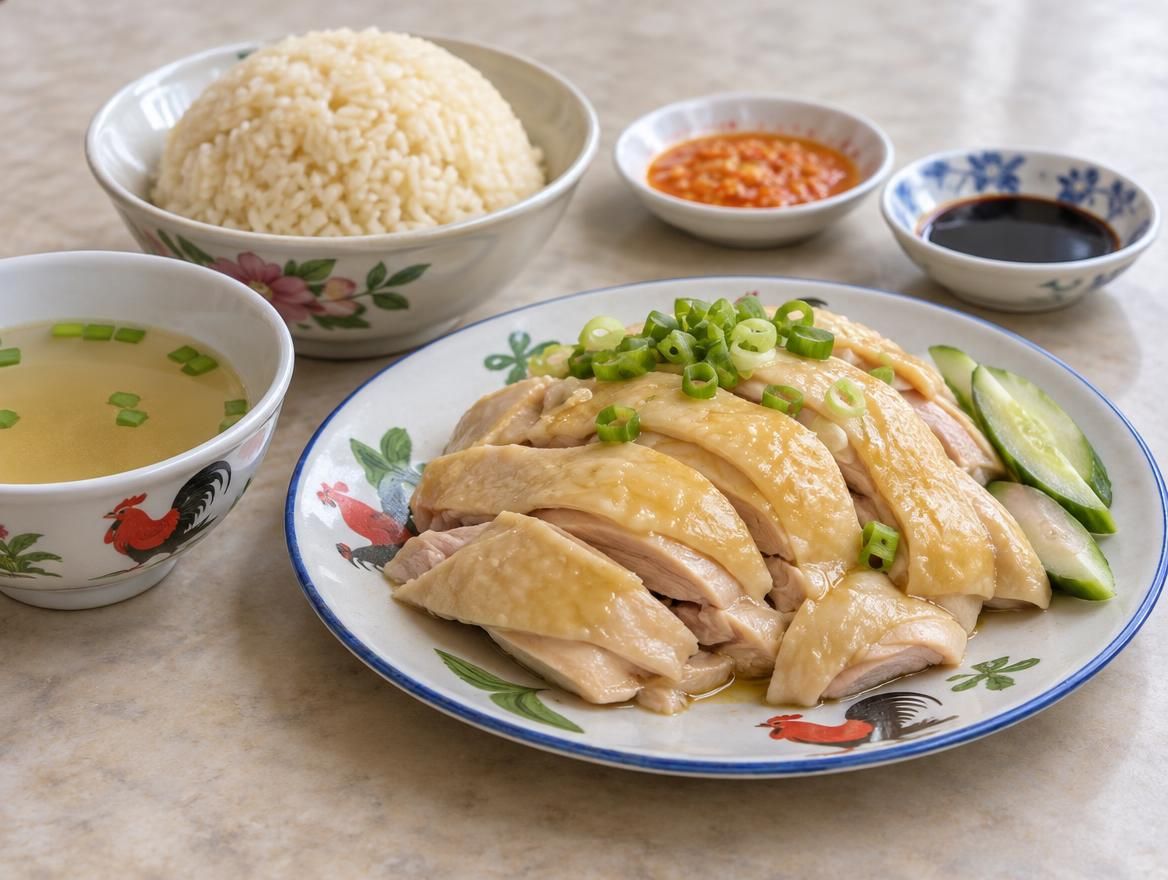
Hainanese chicken rice
海南鸡饭
Singapore's poached chicken with rice cooked in the chicken stock and fat, served with ginger-chilli sauce and dark soy.
Medium
- 50 min

Chilli crab
辣椒螃蟹
Singapore's wok-fried crab in a sweet, tangy tomato-chilli gravy thickened with egg, eaten with fried buns.
MediumMedium heat
- 1 hr 15 min

Katong laksa
Laksa Katong
Singapore's coconut laksa from the Katong district: thick rice noodles cut short in a rich prawn and coconut gravy, eaten with a spoon.
MediumMedium heat
- 30 min

Char kway teow
炒粿条
Flat rice noodles fried hard in lard with dark soy, egg, prawns, bean sprouts and chives, the Singapore-Malaysia hawker classic.
Medium
- 1 hr

Kaya toast
咖椰吐司
Singapore's kopitiam breakfast: charcoal-style toast with coconut-egg kaya jam and cold butter, with soft-boiled eggs and dark soy.
Easy
- 1 hr 45 min

Bak kut teh
肉骨茶
Singapore's Teochew-style pork rib soup: a clear, fiercely peppery garlic broth served with rice, dark soy chilli and fried dough.
EasyMedium heat
Regional cuisines
Think you know Singapore food?
6 quiz dishes. Optional — Passport stamps still come from cooking.
Take the Singapore food quizFood history
Founded as a British trading post in 1819, Singapore drew migrants from southern China, the Malay archipelago and South India, each with their own cooking and each adapting to the others' ingredients. Hainanese cooks who worked in colonial kitchens opened the first coffee shops. Street hawkers were moved into purpose-built centres from the 1970s, which preserved the dishes and standardised the city's diet. Hawker culture was added to UNESCO's intangible heritage list in 2020. Singapore and Malaysia share most of this food and dispute its ownership daily.
Common ingredients
Techniques
- poaching whole chicken
- wok-frying over high flame
- simmering spice pastes in coconut milk
- braising in soy
- charcoal toasting