

Georgian
ქართული სამზარეულო
Walnuts, fresh herbs, blue fenugreek, sour plum and pomegranate over bread, cheese, beans and dumplings, served at a feast with wine from clay jars.
Eight thousand years of winemaking in buried qvevri sit under everything. Trade routes between Persia, Byzantium, the Arab world and Russia all left marks: pomegranate and saffron habits from Persia, Ottoman touches in the west, and a Russian imperial appetite that made Georgian restaurants the best in Moscow. Soviet rule spread khachapuri and khinkali across fifteen republics. Since independence a tourism boom has sent them further.
Herbs by the fistful, raw at the end: coriander, purple basil, parsley, tarragon, dill. Ground walnuts thicken and enrich where other cuisines use cream. Blue fenugreek, marigold, ground coriander and chilli form the spice base, often as the khmeli suneli blend. Sourness comes from tkemali plum, pomegranate, vinegar and unripe grape. Bread and cheese are central; meat is roasted or braised simply. Many dishes are naturally vegan because of long Orthodox fasts.
Countries and regions
Kakheti · Imereti · Adjara · Samegrelo
Dishes 6
- 2 hr 15 min

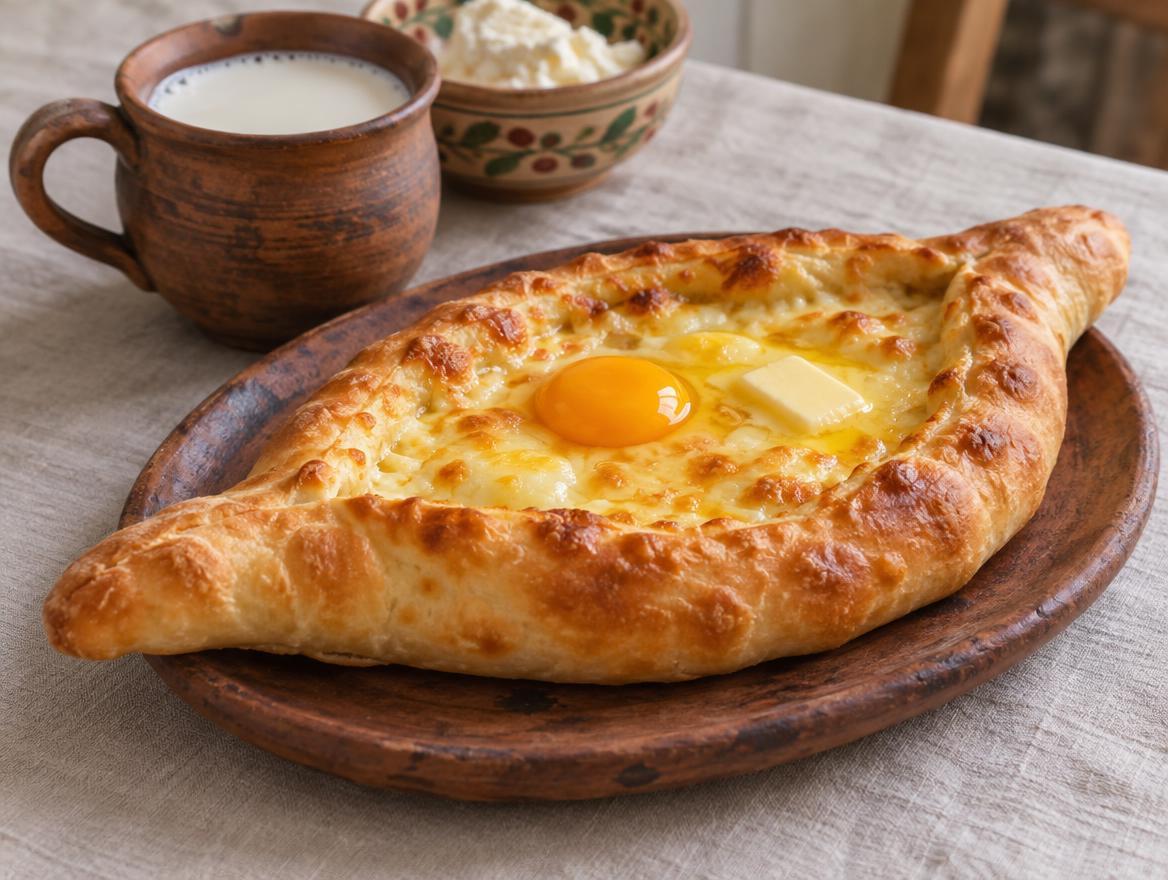
Adjaruli khachapuri
აჭარული ხაჭაპური
Georgian cheese bread boat with a raw egg yolk and a knob of butter stirred into the molten cheese at the table.
GeorgiaMedium
- 1 hr 50 min

Khinkali
ხინკალი
Georgian soup dumplings: pleated pouches of spiced beef and pork, eaten by hand, broth first, topknot left on the plate.
GeorgiaA bit of work
- 1 hr

Lobio
ლობიო
Georgian red beans stewed with onion, garlic, walnuts, coriander and fenugreek, served warm with cornbread and pickles.
GeorgiaEasy
- 1 hr 20 min

Chakhokhbili
ჩახოხბილი
Georgian chicken stewed in its own juices with onions, tomatoes and a late shower of coriander, basil and parsley.
GeorgiaEasy
- 55 min

Pkhali
ფხალი
Georgian spinach and walnut pâté, seasoned with garlic, coriander, fenugreek and vinegar, dotted with pomegranate.
GeorgiaEasy
- 1 hr 25 min

Badrijani nigvzit
ბადრიჯანი ნიგვზით
Georgian fried aubergine slices rolled around a garlicky walnut paste and finished with pomegranate seeds.
GeorgiaEasy