

Understanding the regional cuisines of Italy
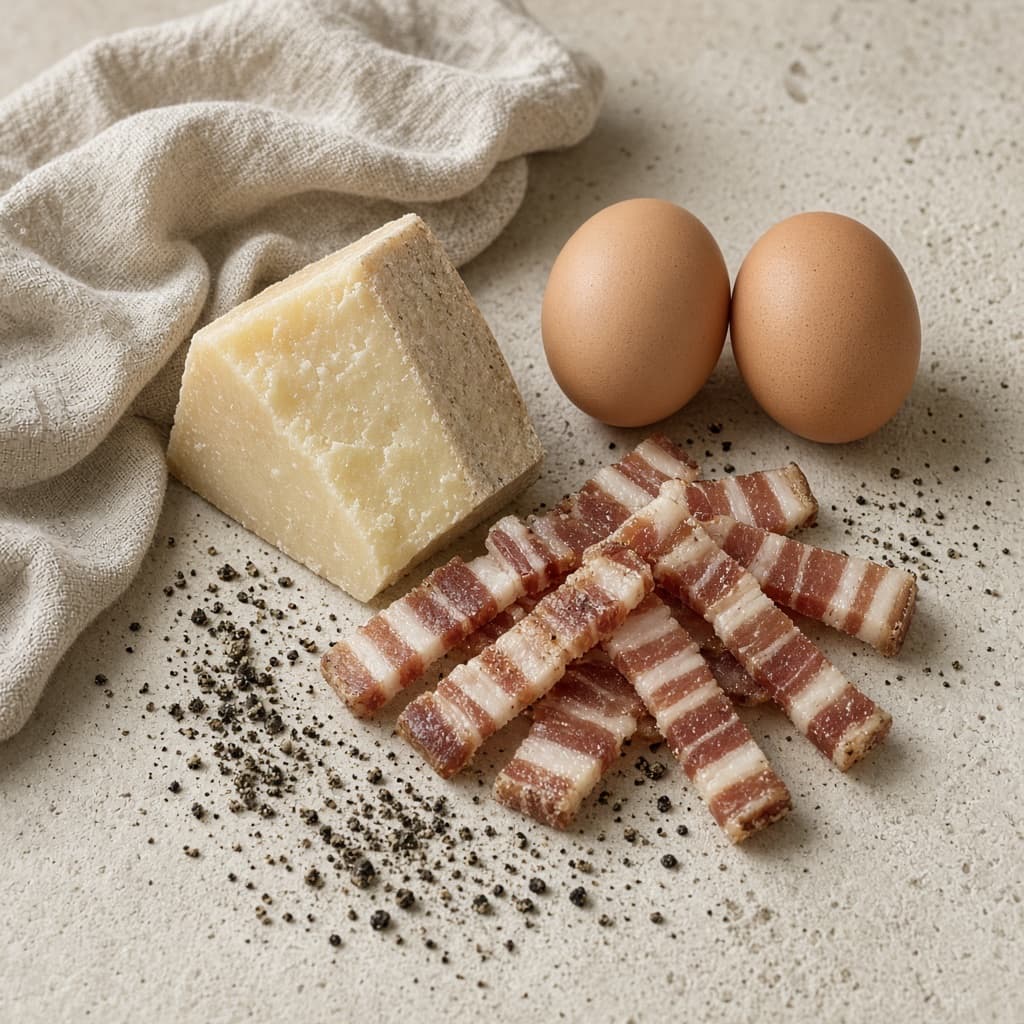
Carbonara is Roman. That sentence is doing a lot of work.
Italy is not a flavour. Emilia-Romagna, Lazio, Sicily and the Veneto cook different dinners, argue about them, and still get filed under one tourist menu. If you treat 'Italian' as tomato, basil and a mountain of cheese, you will miss the point of half the peninsula.
Our carbonara page is Lazio-leaning on purpose: guanciale, pecorino, egg, pepper. Cream is a different pasta. Cacio e pepe is the same city with two ingredients fewer. Amatriciana adds tomato and still wants the pig jowl. These are family arguments, not interchangeable 'Roman-style' specials.
North of that, Emilia-Romagna is egg pasta, pork, and Parmesan that actually tastes of a cowshed. Liguria is basil, pine nut and oil pounded for pesto, not a jar of green mayonnaise. The Veneto cooks rice and polenta as seriously as Rome cooks spaghetti. Sicily is its own kitchen — sweet-sour, fried street food, pistachio, and a history that is Arab and Spanish as much as Italian.
Tomato only became central after the Americas. That does not make a tomato sauce inauthentic; it makes the 'ancient Roman carbonara' story a lie. Pasta alla norma is Sicilian eggplant and ricotta salata. Pizza as a Neapolitan craft is older than the frozen disc, and still not a national law.
Home cooking still organises itself around market vegetables, dried pasta, and the pot of something already in the fridge. Technique looks simple and fails if you rush: pasta water that is not salty, cheese added to a roaring pan, oil that never meets starch. Al dente is a texture, not a personality.
When we expand Italy on this site, we do it as a cluster — Roman plates, a Genovese pesto, a Sicilian pasta — not one random 'Italian' recipe from every region with the same stock photo of a checked tablecloth. Read the country page, then the cuisine page, then cook the dish that names its city.