Produce
Cassava leaves
Also called manioc leaves, pondu, saka-saka, ravitoto, matapa, feuilles de manioc
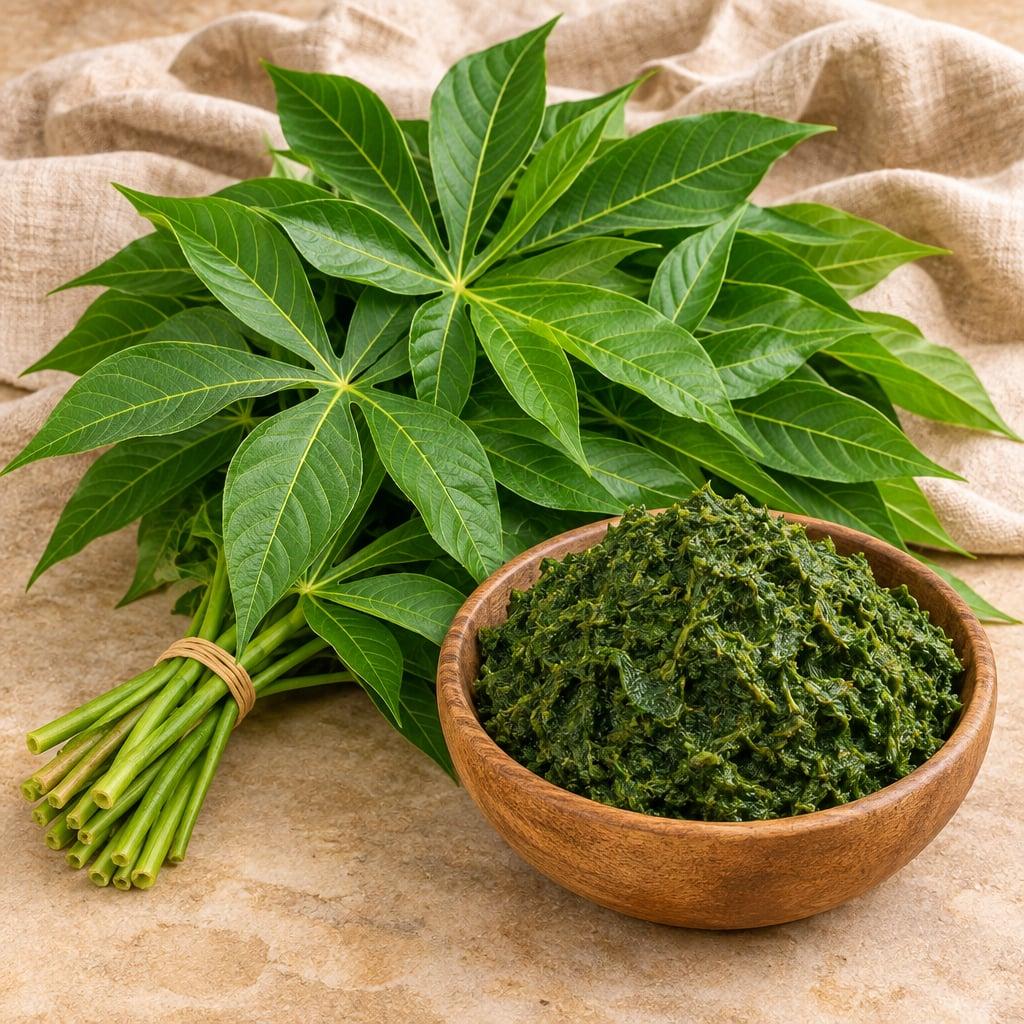
The young leaves of the cassava plant, the same shrub grown for its starchy root. Sold fresh in bunches where it grows and, everywhere else, pounded and frozen in flat blocks. They are a daily green across Central, East and Southern Africa and in Madagascar.
Origin
Cassava is South American and reached Africa on Portuguese ships. The leaves became a staple green from Congo to Mozambique and Madagascar. Abroad, look in the freezer of African, Filipino or Indonesian grocers, where the packet may say cassava leaves, pondu, saka-saka or ravitoto.
Flavour
Deep, grassy and slightly bitter, somewhere between spinach and green tea, with a rough texture that long cooking turns soft and almost creamy.
How it is made
The leaves are stripped from their stems and pounded in a mortar or minced until fine, then cooked straight away or frozen.
How to use it
Always pound or mince them, then boil them for a long time: at least 45 minutes for frozen pounded leaves and over an hour for fresh. Raw cassava leaves contain compounds that release cyanide, and thorough boiling in an open pot drives them off. After that, enrich the leaves with peanut, coconut, palm oil or fatty pork.
Storage
Frozen blocks keep for six months. Fresh leaves wilt within two days in the fridge, so pound and freeze what you will not cook.
Recipes using it

Matapa
Pounded cassava leaves simmered with ground peanuts, coconut milk and garlic, finished with prawns. Mozambique's green stew, eaten over rice or xima.
Easy

Ravitoto
Ravitoto sy henakisoa
Pounded cassava leaves cooked slowly with fatty pork and garlic until dark, soft and rich. A Malagasy staple served with plenty of rice.
Easy