
Pantry
Chuño
Chuño
Also called ch'uñu, chuño negro, black chuño, freeze-dried potato
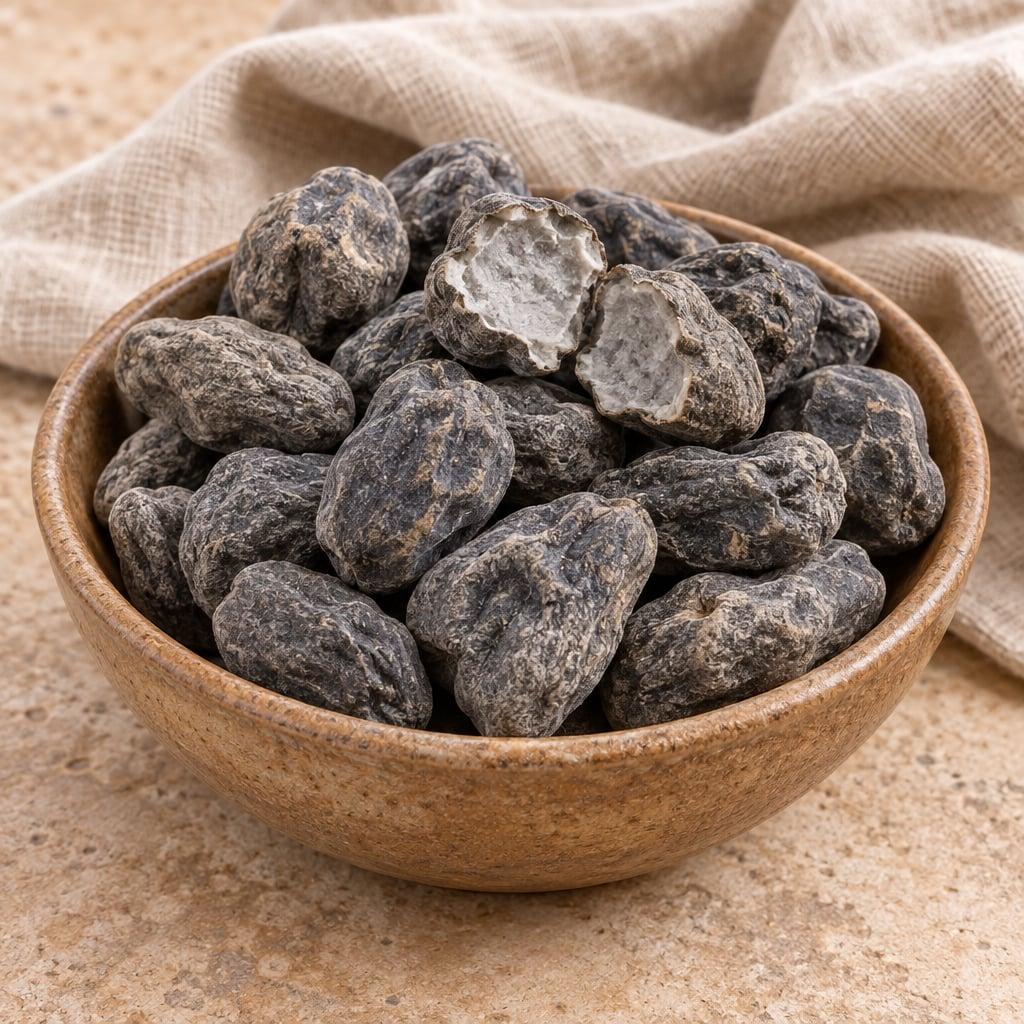
Potatoes freeze-dried by the Andean weather. The finished tubers are small, hard, wrinkled and almost black, light as cork, and they keep for years. They have to be soaked overnight before they can be cooked.
Origin
The high plateau of Bolivia and Peru, where hard frost at night and strong sun by day make freeze-drying possible without machines. Andean farmers were making it long before the Inca, and it still stocks highland larders. Bolivian and Peruvian shops abroad sell it dried in bags.
Flavour
Earthy and faintly sour, with a mineral, slightly fermented edge that people either like at once or learn to. Soaked and boiled, it is spongy and chewy rather than floury.
How it is made
Frost-hardy bitter potatoes are spread on open ground in the coldest weeks of winter, frozen at night, thawed in the sun, then trampled to press the water out. The cycle repeats for several days until they are dry. White chuño, called tunta, also spends weeks in running water, which bleaches it.
How to use it
Cover with plenty of cold water and soak for at least 12 hours, changing the water once. Rub off the papery skin and squeeze out the water. Then boil it whole for 15 to 20 minutes as a side, pound it to crumbs to thicken soups such as chairo, or scramble it with egg and cheese for chuño phuti.
Storage
Dry chuño keeps for years in a sealed bag or jar away from damp. Once soaked, cook it the same day or keep it covered in the fridge for one day.
Recipes using it

Fricasé
La Paz pork soup, yellow and hot with ají amarillo, cumin and oregano, served with chuño and white maize. The Bolivian morning-after bowl.
EasyMedium heat

Chairo
Altiplano beef soup thickened with pounded chuño, with white maize, broad beans, peas and thin potato sticks, finished with fresh mint.
Easy