Produce
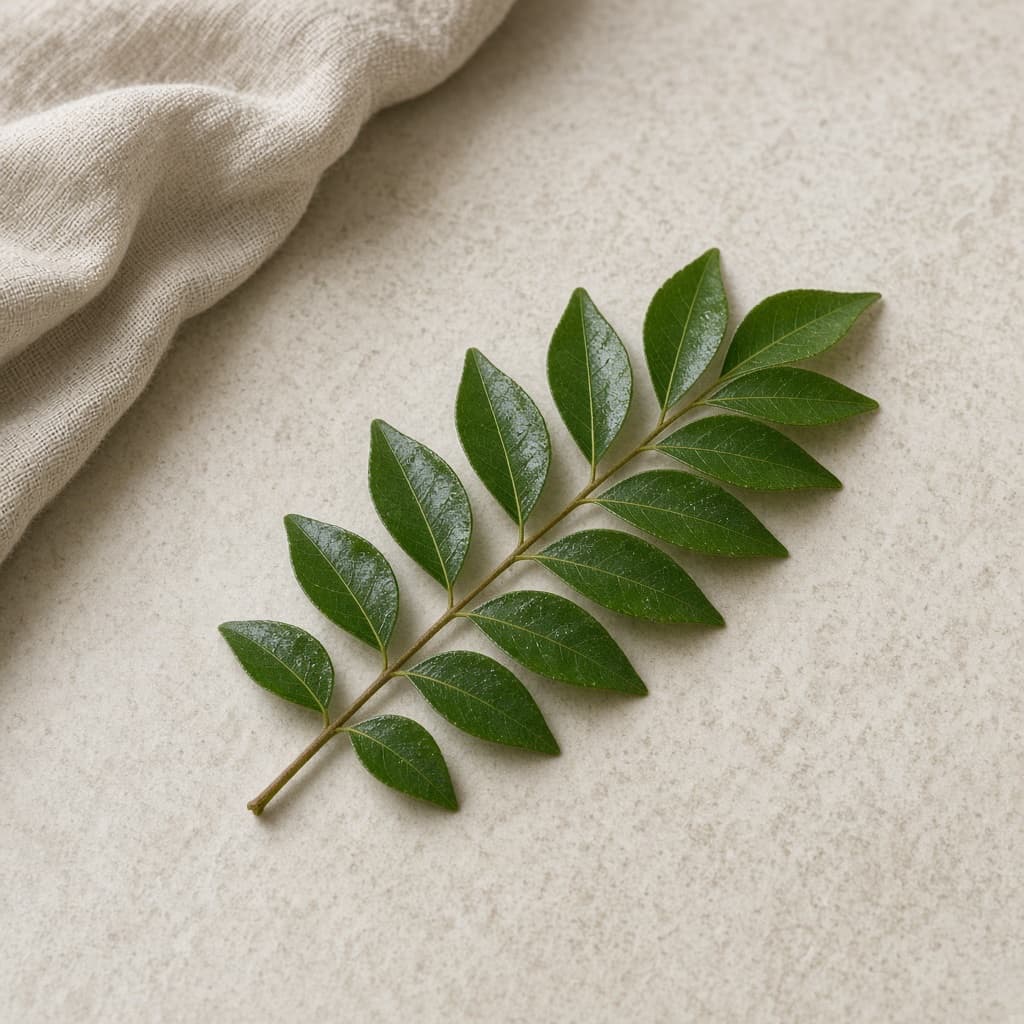
Curry leaves
கறிவேப்பிலை
Also called kadi patta, karuveppilai
Small shiny aromatic leaves fried in oil at the start of a South Indian tempering. They are not curry powder, not bay, and not Thai lime leaf, though the three get confused on English labels.
Origin
South Asia, especially Tamil, Kerala and neighbouring kitchens where a tadka without curry leaves tastes unfinished. The tree is Murraya koenigii.
Flavour
Citrus, roasted nut, and a faint diesel-green note that is useful rather than ugly. Dried leaves taste like a rumour of the fresh ones. Burnt leaves taste of hair.
How to use it
Heat oil or ghee until a mustard seed pops, then add the leaves — they will spit — and fry a few seconds until they turn darker green and smell nutty. That flavoured fat is the start of a dosa potato, a fish curry or a dal. Pull out any blackened leaves. Frozen leaves can go in from frozen; they are better than dried. Do not sprinkle raw leaves on a finished plate as if they were coriander — they want the oil.
Storage
Fridge, wrapped, for a few days, or freeze in a bag — they keep colour and much of the perfume. Do not buy yellow, slimy leaves.
Recipes using it
Checking your allergy settings…