
Seasoning
Fermented locust beans
Also called iru, dawadawa, nététou, soumbala
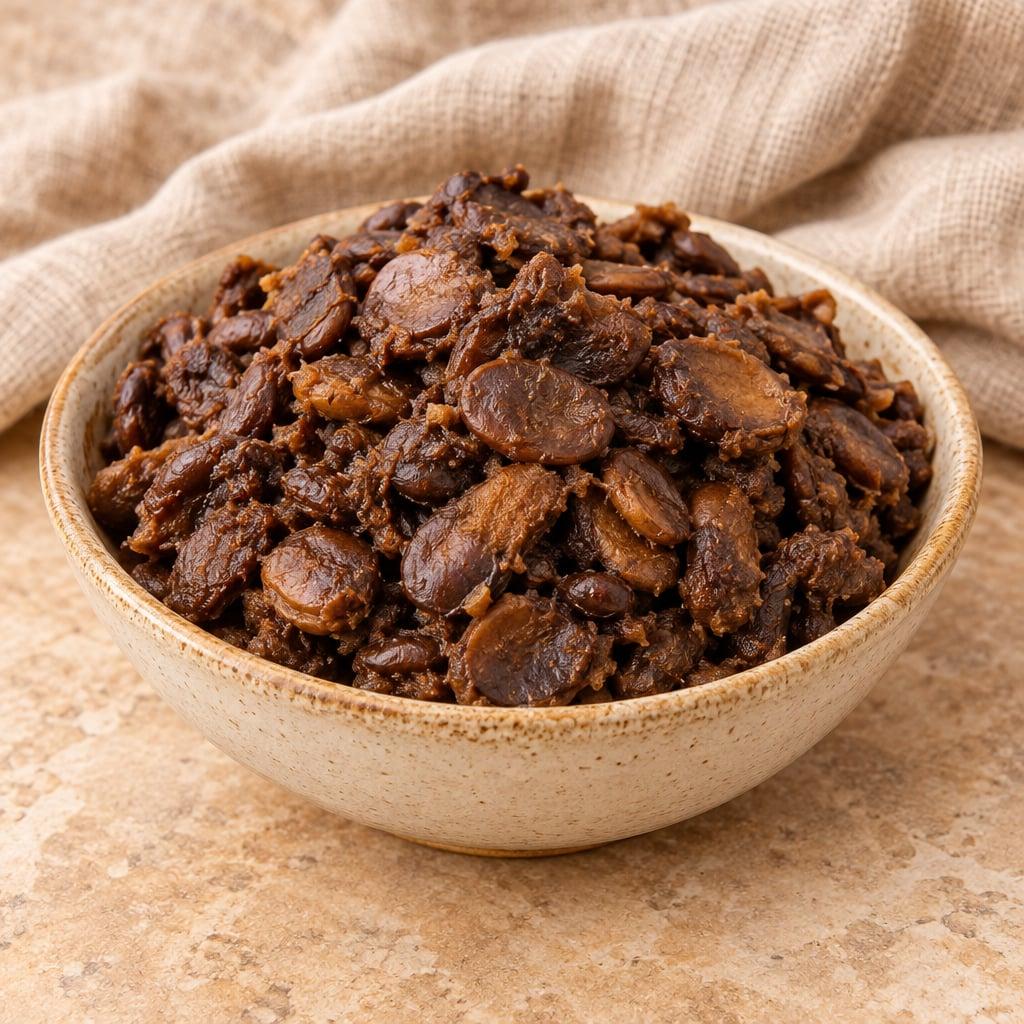
The seeds of the African locust bean tree, boiled, hulled and fermented until dark, soft and very pungent. Sold as whole soft beans, as a mashed paste, or dried and pressed into balls or discs. It is the savoury base note of a great deal of West African cooking.
Origin
The savannah belt from Senegal to Nigeria and beyond. Yoruba cooks call it iru, Hausa cooks dawadawa, Wolof cooks nététou and Mandinka cooks soumbala. West African shops sell it frozen, dried or in jars.
Flavour
Strong, funky and deeply savoury, somewhere between miso, ripe cheese and dark chocolate. The smell is fierce raw and mellows once it is fried or simmered.
How it is made
The seeds are boiled for many hours, pounded to remove the hulls, boiled again, then wrapped warm and left to ferment for two to four days.
How to use it
Rinse whole beans briefly and fry them in the oil at the start of a stew, or pound them with garlic and pepper into a seasoning paste. One to three tablespoons season a family pot. Dried discs are crumbled or soaked first.
Storage
Fresh or frozen iru keeps for months in the freezer, wrapped twice so it does not perfume everything else. Dried forms keep a year in a sealed jar. In the fridge, use fresh beans within a week.
Recipes using it

Soupou kandja
Senegalese okra stew in red palm oil with fish, smoked fish and fermented locust beans, served over white rice.
EasyMedium heat

Efo riro
Yoruba vegetable stew of spinach cooked into a thick base of fried peppers, palm oil and locust beans, with beef, smoked fish and stockfish.
MediumHot

Amala with ewedu
Yoruba yam flour swallow, dark and smooth, eaten with ewedu: jute leaves whisked into a slippery green soup with locust beans and crayfish.
Medium

Ofada stew
Nigerian pepper stew of red peppers and scotch bonnet fried in bleached palm oil with locust beans, beef and eggs, eaten with ofada rice.
MediumHot