Produce
Ginseng
인삼
Also called fresh ginseng, insam
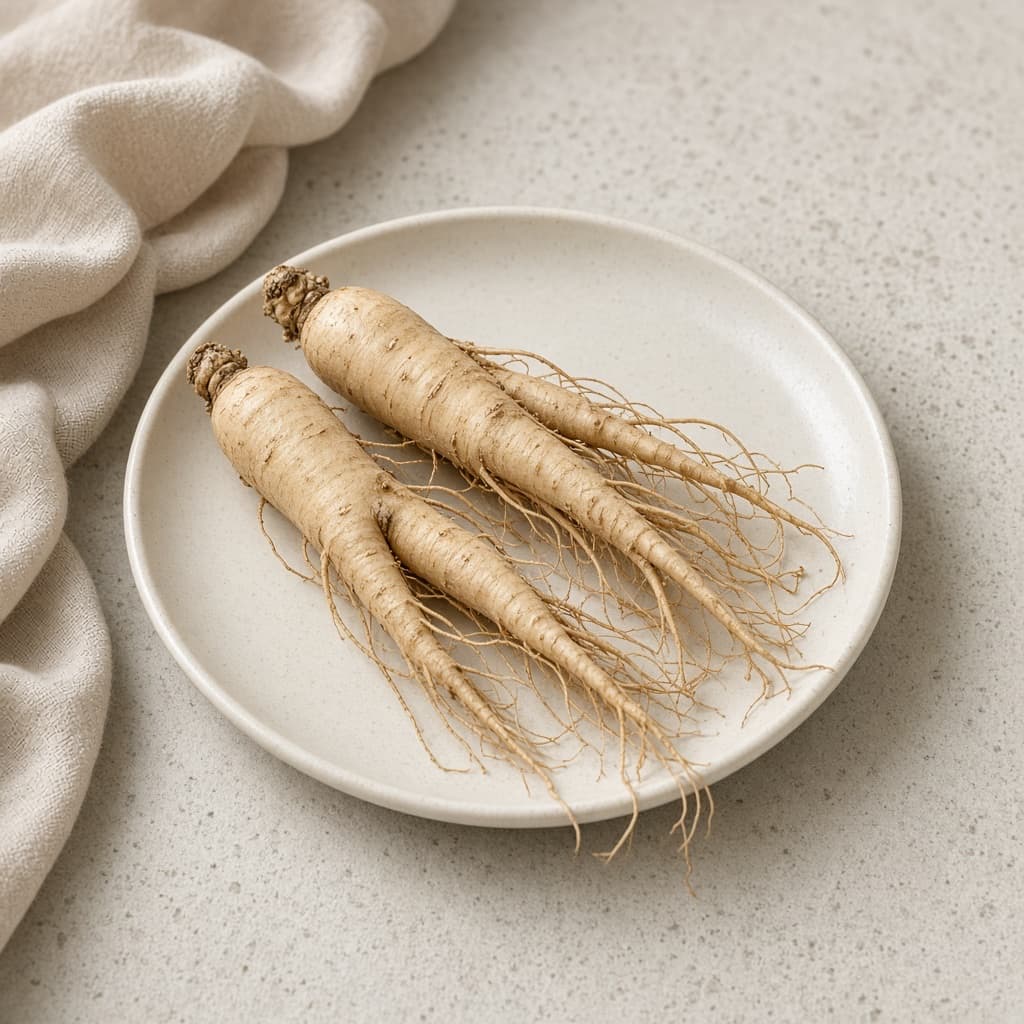
A pale aromatic root, insam, used fresh in samgyetang and other restorative soups. Young fresh ginseng is milder; red ginseng has been steamed and dried and is stronger and more medicinal.
Origin
Korean and Chinese mountain cultivation, with Korean kitchens treating fresh root as food as well as tonic. The samgyetang bird is built around a piece of it, not a dusting of powder.
Flavour
Bitter, earthy and a little sweet, with a lingering herbal heat. Fresh young root is cleaner; red ginseng is darker and more insistent. It should perfume the broth, not taste of soil.
How to use it
Scrub fresh ginseng; peel only if the skin is rough. Tuck a piece inside a small chicken with garlic, jujube and soaked rice, then simmer until the meat is falling. Dried or red ginseng is stronger — use less. Powdered ginseng tea is not a fair swap for the fresh root. If the bitterness dominates, dilute with water and add a jujube. Do not fry ginseng as if it were ginger — the perfume burns.
Storage
Fresh roots in the fridge, wrapped, used within a week. Dried ginseng keeps in an airtight tin. Frozen fresh pieces are acceptable in a soup.
Recipes using it
Checking your allergy settings…