Produce
Jicama
Also called yam bean, bangkuang, sengkuang, Mexican turnip, Pachyrhizus erosus
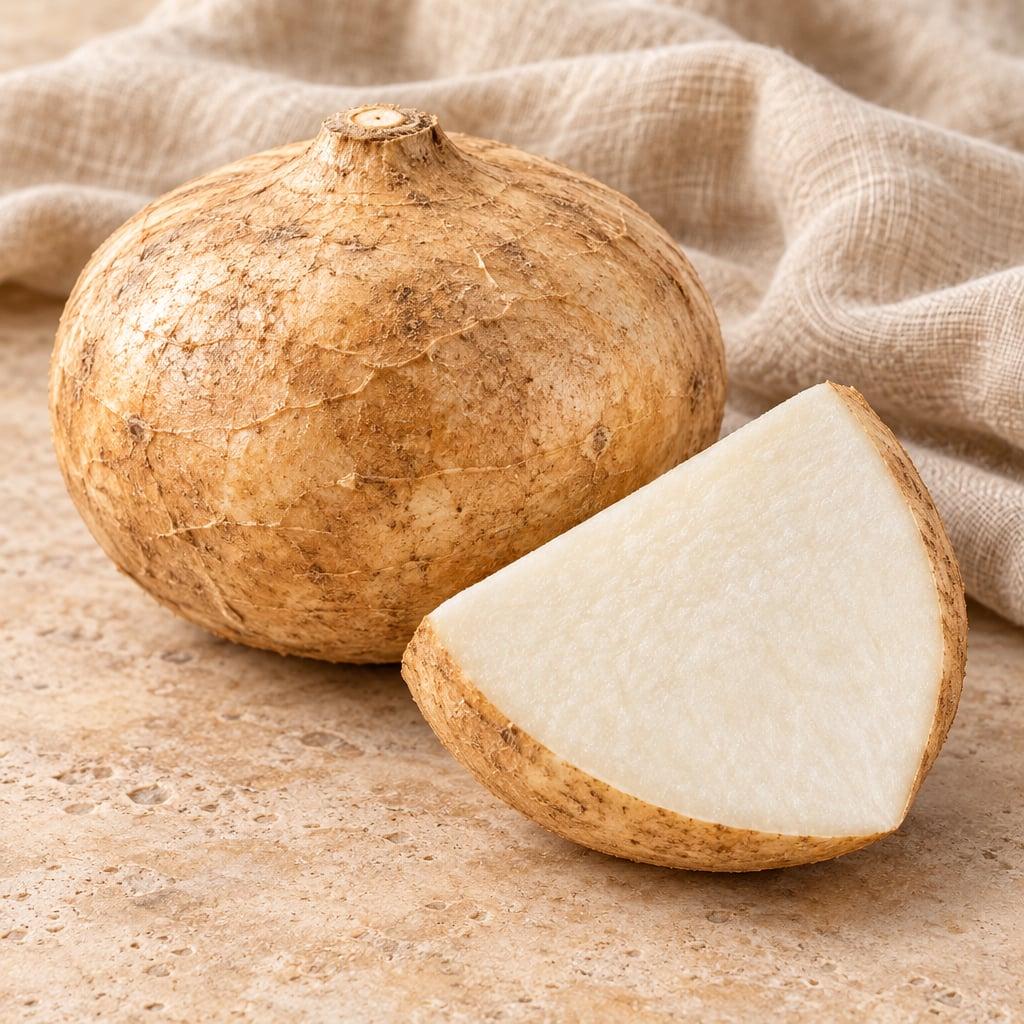
The swollen root of a climbing bean plant: round, sandy-brown and flat-topped, with crisp white flesh. In Singapore and Malaysia it is bangkuang or sengkuang, the bulk of popiah filling and the crunch in rojak.
Origin
Mexico and Central America. Spanish galleons carried it to the Philippines, and from there it spread through South-East Asia and southern China, where it is grown widely and sold cheaply.
Flavour
Raw, it is juicy and mildly sweet, somewhere between a pear and a water chestnut. Braised, it softens without turning to mush, goes sweeter, and soaks up whatever it cooks in.
How to use it
Slice off the top and bottom and peel the thick, fibrous skin away with a knife; a vegetable peeler struggles. Cut it into matchsticks for popiah or salads, or wedges to eat raw with lime and chilli. Only the root is food: the leaves, pods and seeds of the plant are toxic.
Storage
Keep whole roots somewhere cool and dry, out of the fridge, for two to three weeks; long cold storage makes them soft and spotty. Once cut, wrap the rest, refrigerate it and use it within a week.
Recipes using it

Popiah
薄饼
Singapore fresh spring rolls: soft wheat skins spread with sweet sauce, chilli and garlic, rolled round braised jicama and carrot, egg, prawns, lettuce, sprouts and crushed peanuts.
Medium

Rojak
Rojak buah
Penang fruit rojak: pineapple, jicama, cucumber, green mango and tofu puffs tossed in a black, sweet prawn-paste dressing and buried in crushed peanuts.
Easy