Produce
Jujube
대추
Also called Korean date, dae-chu, dried red date
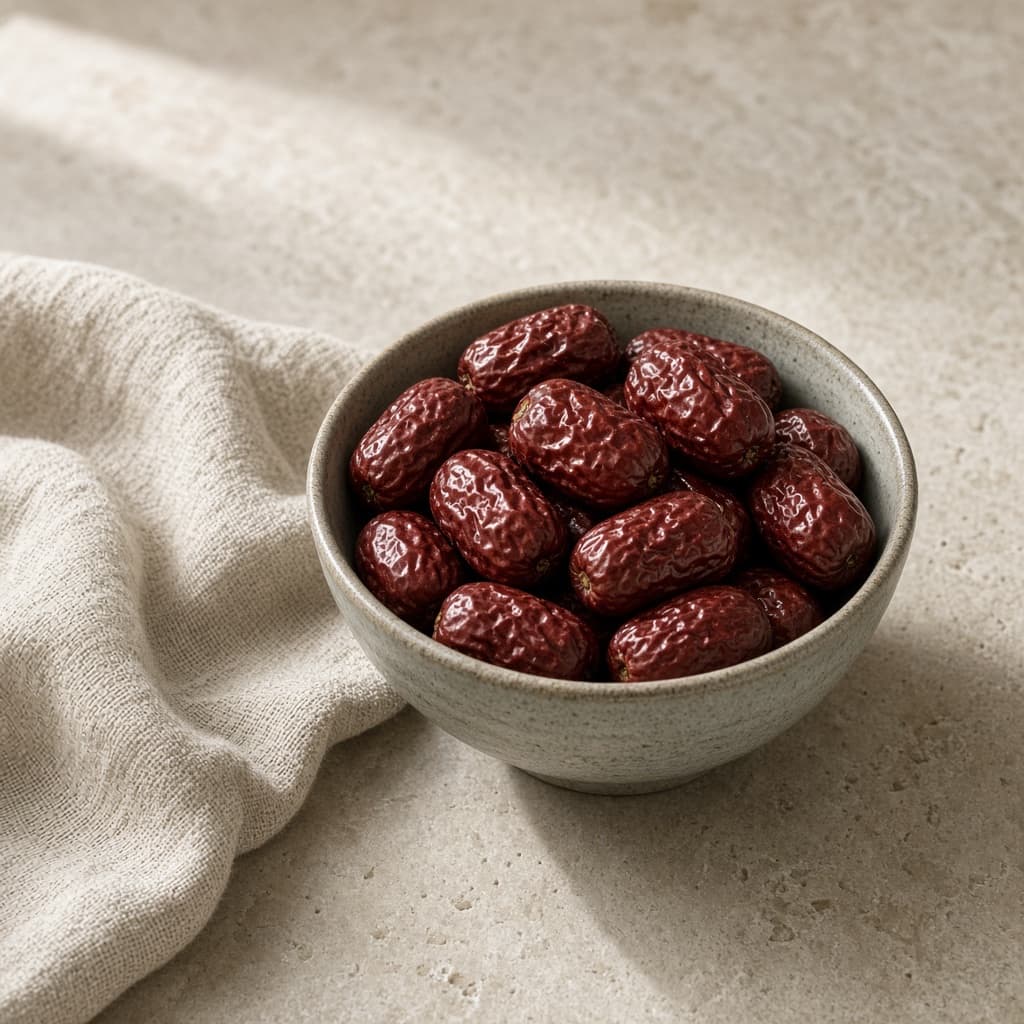
A small red date, daechu, usually sold dried for Korean soups and teas. Fresh jujubes exist in season and eat like a crisp apple; the dried ones are the pantry ingredient.
Origin
East Asia, where the tree has been grown for fruit and medicine for a very long time. Korean samgyetang and many herbal teas assume the dried red fruit.
Flavour
Sweet, apple-honey, with a little tannin in the skin. Stewed, it tastes of brown sugar and tea. A dusty, insect-holed date tastes of cardboard.
How it is made
Ripe fruit is sun-dried or oven-dried until the skin wrinkles and the colour deepens to rust. Some packs are pitted; most still have a hard stone.
How to use it
Drop two or three dried jujubes into samgyetang or a simmering teapot; they sweeten the broth and take the edge off ginseng. Slash them if you want more flavour out in a short cook. Eat the flesh if you like, and mind the stone. Do not substitute sticky dessert dates one-for-one — Medjool is richer and less tannic. If the fruit is leather-hard, soak it in warm water first.
Storage
Airtight pantry, away from moths. Fridge in humid weather. Throw out any that smell fermented or show mould in the wrinkles.
Recipes using it
Checking your allergy settings…