Produce
Jute leaves
Also called ewedu, molokhia, mulukhiyah, ayoyo, saluyot, jute mallow
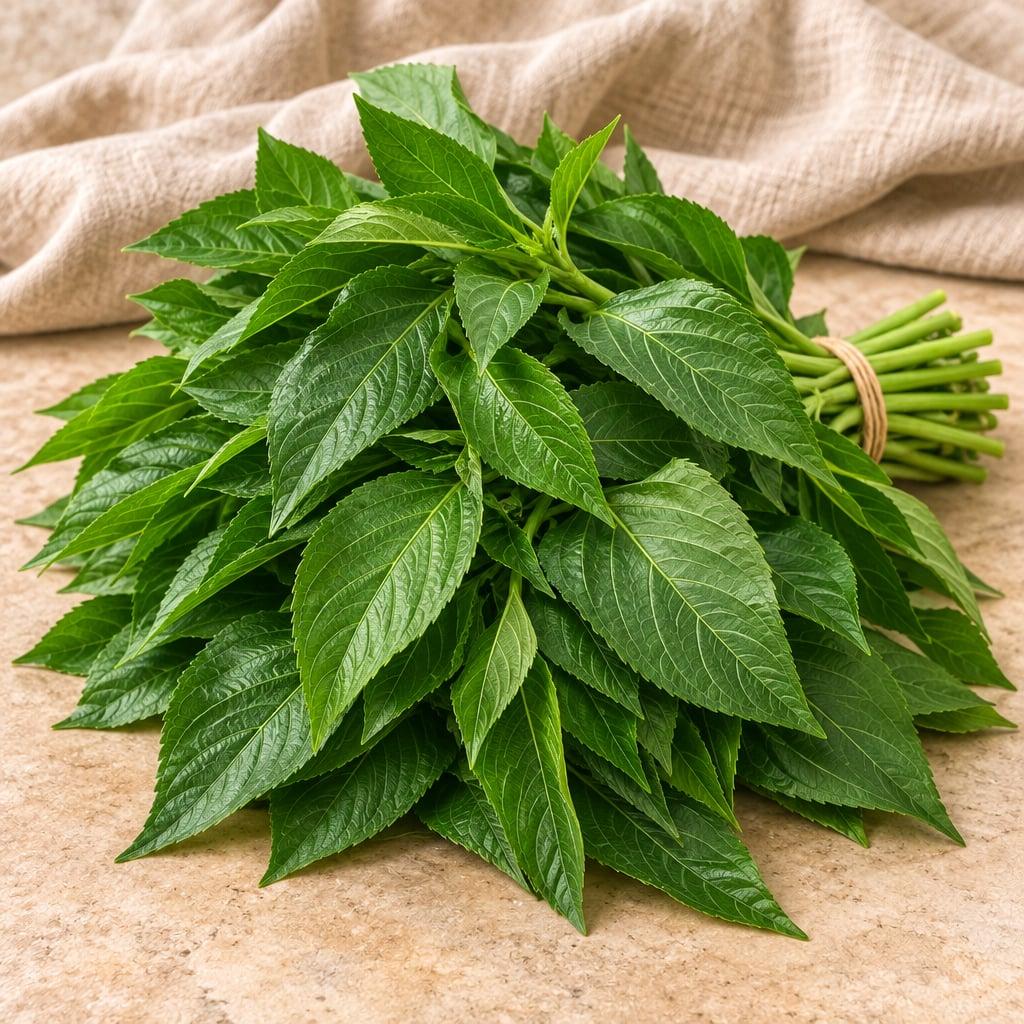
The young leaves of the jute plant, the same plant whose stems give jute fibre. They are dark green, soft and pointed, and when chopped and cooked they turn slippery, which is the point: they thicken a soup the way okra does. Sold fresh in bunches, and frozen ready-chopped, which is how most cooks outside Africa buy them.
Origin
Grown and eaten across West Africa, Egypt, the Levant and South Asia. Yoruba cooks call it ewedu, Egyptians molokhia and Filipinos saluyot. Look in the freezers of African, Middle Eastern and Asian shops for frozen chopped leaves; fresh bunches turn up in summer.
Flavour
Mild, grassy and slightly bitter, like spinach with a hint of sorrel. The texture matters more than the taste: silky and stretchy once cooked.
How to use it
Pick the leaves off the stems, wash them and chop them very fine. Cook them briefly in a little water, a few minutes only, and whisk until the soup goes smooth and slippery. A pinch of potash or bicarbonate of soda keeps them bright green and adds to the slip.
Storage
Fresh leaves wilt fast. Keep them wrapped in a damp cloth in the fridge and use them within two days. Frozen chopped leaves keep for months and are cooked straight from frozen.