
Pantry
Keluak
Also called kluwek, kluwak, buah keluak, kepayang, black nut, Pangium edule
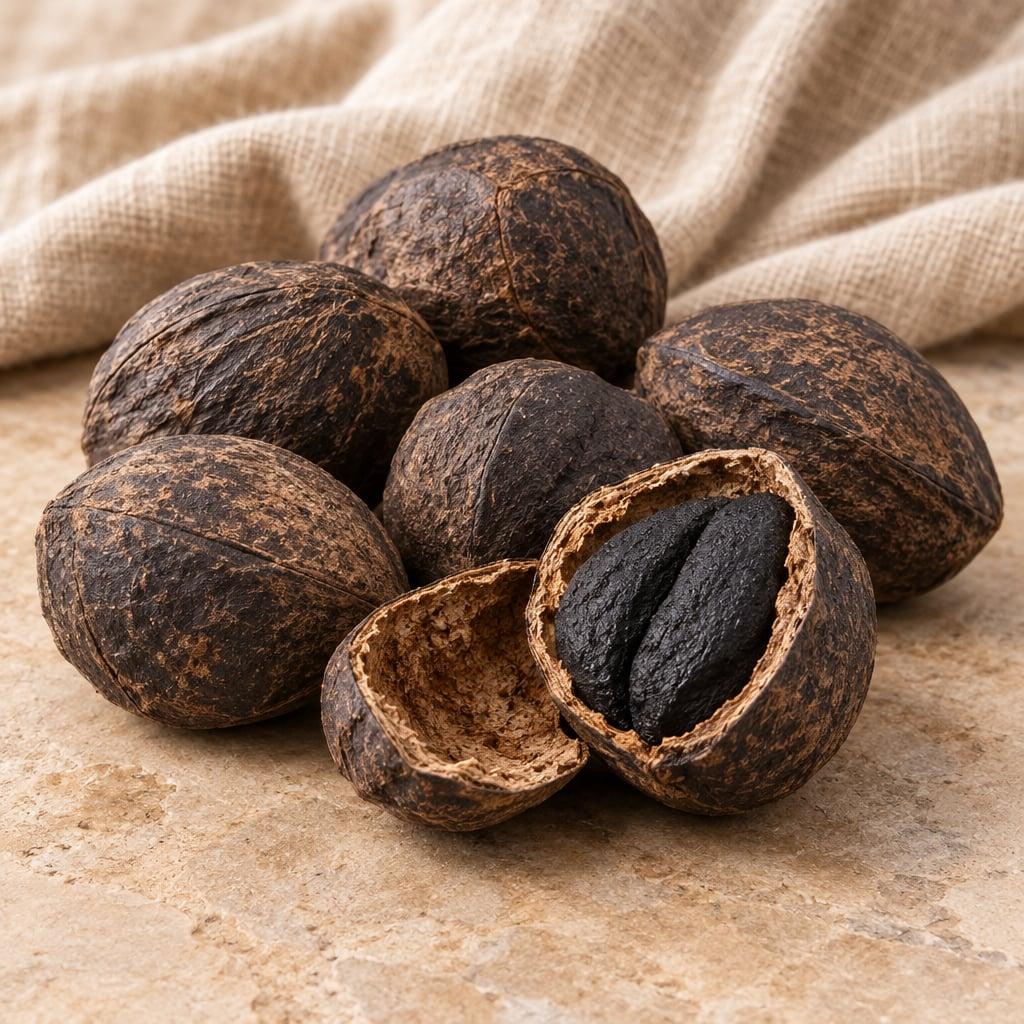
The seed of the kepayang tree, a hard, dark-shelled nut about the size of a walnut. Raw, it contains hydrogen cyanide and is poisonous. Boiled, then buried in ash and earth to ferment for several weeks, the kernel turns black, oily and safe to eat. That kernel is what turns rawon black and gives Peranakan ayam buah keluak its sauce.
Origin
Kepayang grows wild across Indonesia, Malaysia and New Guinea. The processed nuts are sold as kluwek in Java and keluak in Malaysia and Singapore. Outside the region, look in Indonesian, Malaysian or Singaporean grocers and online Asian shops. Sachets of bumbu rawon, a ready-made rawon paste, usually contain it.
Flavour
Earthy, bitter and savoury, often compared to dark chocolate, black olive and mushroom at once, with a slight sourness and a long, almost smoky finish. Nothing else tastes like it.
How it is made
The seeds are boiled, then buried in ash or soil for around forty days, which removes the cyanide and ferments the kernel.
How to use it
Crack the shell with the back of a heavy knife or a pestle and scrape the kernel out with a teaspoon. Smell every one: good keluak is black-brown, moist and smells of chocolate and earth. Throw away any that are dry and pale, sour or mouldy. Pound the flesh into the spice paste. There is no real substitute.
Storage
Whole nuts keep for months in an airtight container in a cool, dry cupboard or the fridge. Once cracked, use the flesh the same day. Buy only nuts sold processed for cooking; never use raw kepayang seeds.
