Produce
Mango
Also called ripe mango, nam dok mai
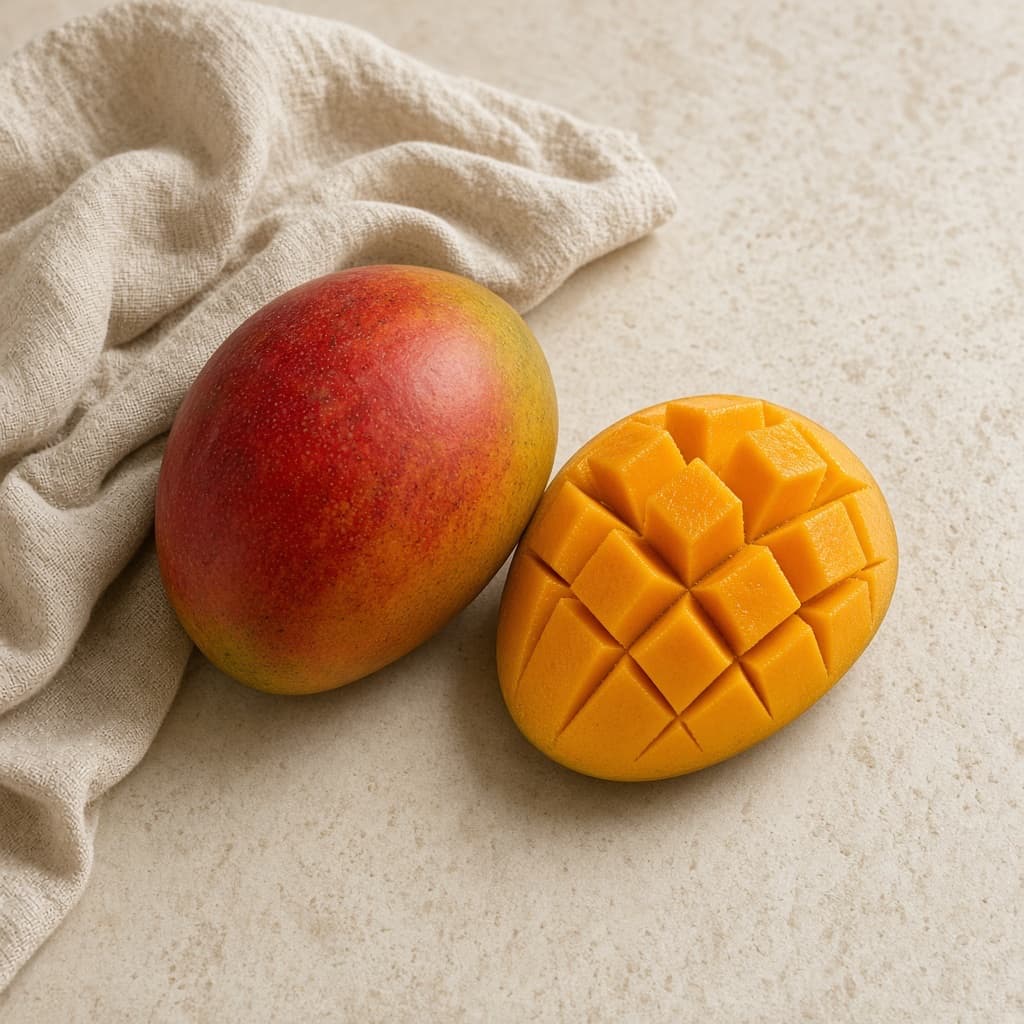
A tropical stone fruit. Ripe fragrant mango is a dessert ingredient (nam dok mai and similar for sticky rice); green mango is a sour salad fruit and a different job. The stone is large and the flesh clings.
Origin
South and Southeast Asia, now grown across the tropics. Thai dessert mangoes are selected for perfume and a non-fibrous bite; supermarket mangoes vary wildly.
Flavour
Floral, resinous and sweet when ripe, with a pine note in some varieties that people either love or refuse. Unripe fruit is tart and crunchy. A mango that smells of nothing will taste of nothing.
How to use it
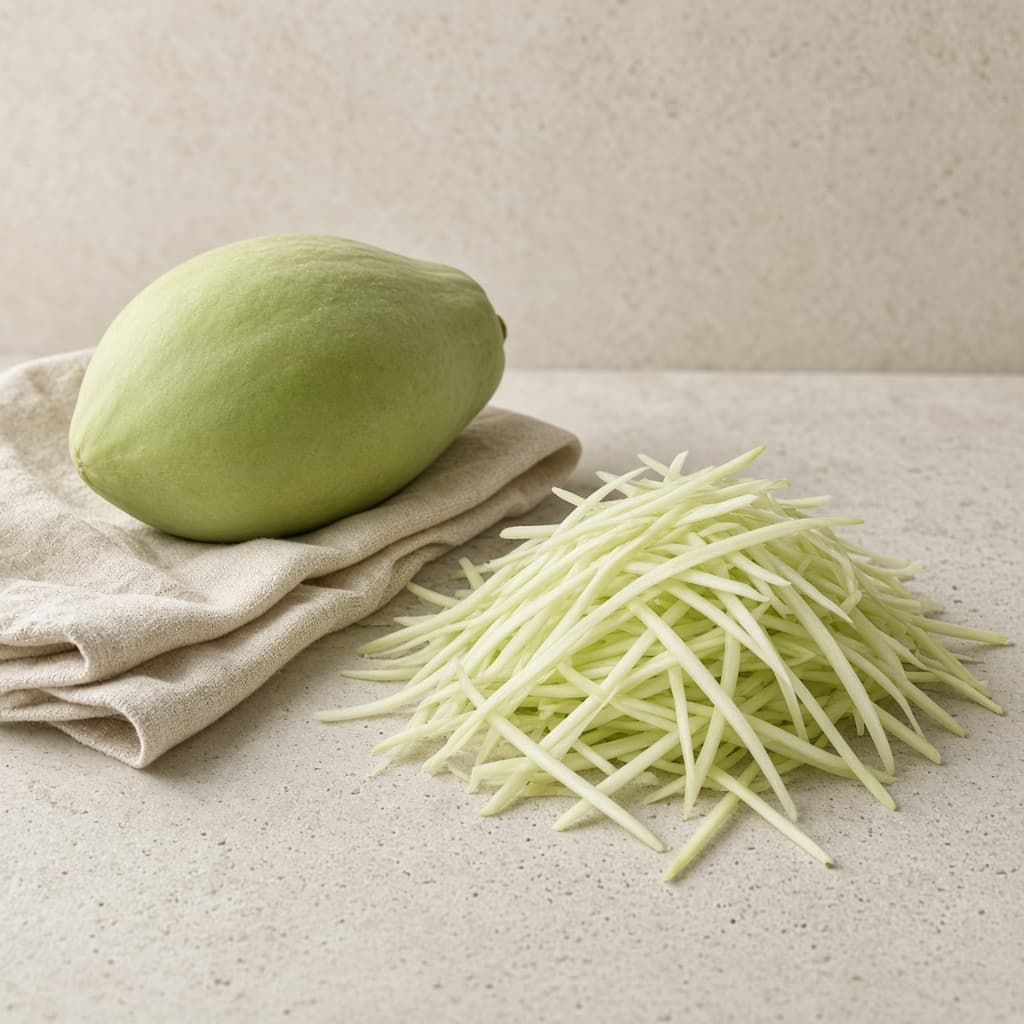
Ripen on the bench until it smells through the skin and yields to a thumb. Slice down either side of the stone, then cube or scoop. For sticky rice, use a ripe non-stringy mango at room temperature, not fridge-cold. Green mango is shredded for salads with chilli, fish sauce and lime. Fibrous fruit is better as a puree or a lassi. Do not cook ripe mango for long in a curry unless you want jam.
Storage
Ripen on the counter, then fridge for a few days. Cut fruit should be eaten soon.
Recipes using it
Checking your allergy settings…