
Grains
Millet couscous
Also called thiakry, chakery, dégué, araw, millet granules
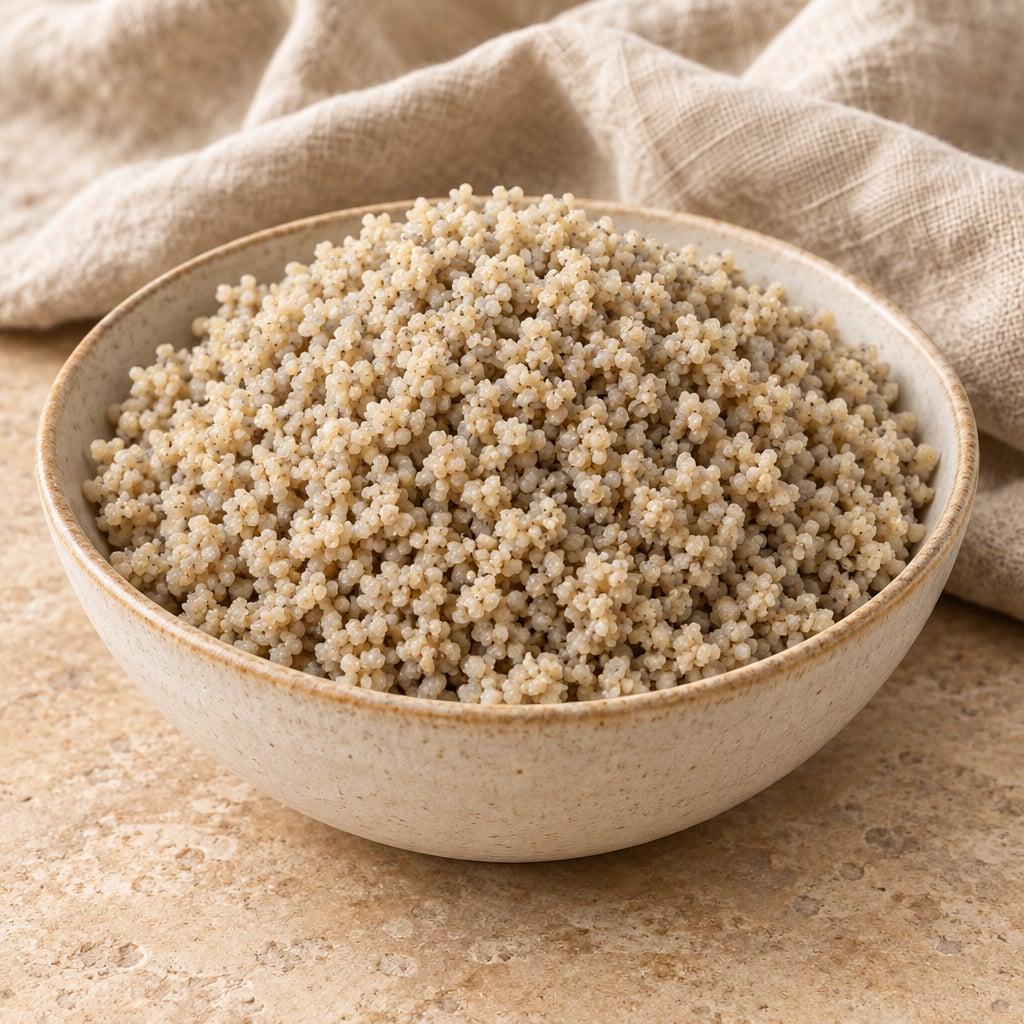
Small rolled granules of pearl millet flour, a little larger and rougher than wheat couscous, grey-beige in colour. Sold dried in bags, usually already steamed once so it only needs hot water. It is the grain in the Senegalese dessert thiakry and in Malian dégué.
Origin
The Sahel, where pearl millet has been the staple grain for thousands of years. Senegal, Mali, Burkina Faso and Niger all roll and steam it. Abroad, look in West African shops for bags marked thiakry, dégué or araw.
Flavour
Nutty and earthy with a faint sourness, heavier than wheat couscous and with more chew. It holds its shape in milk or yoghurt rather than dissolving.
How it is made
Millet flour is sprinkled with water and rolled by hand in a wide bowl until it beads into granules, which are sieved to size, steamed and dried.
How to use it
Pour over boiling water, cover and leave it to swell, then fluff with a fork and a little butter. Cool it before stirring into sweetened yoghurt. Finer grades are steamed and eaten with savoury sauces like any couscous.
Storage
Keeps a year in a sealed bag or jar somewhere dry and dark. Millet flour goes bitter with age, so smell an old bag before using it. Once cooked, keep it in the fridge and eat within two days.
