
Pantry
Sweet potato starch
地瓜粉
Also called sweet potato flour, di gua fen, coarse sweet potato starch, goguma starch
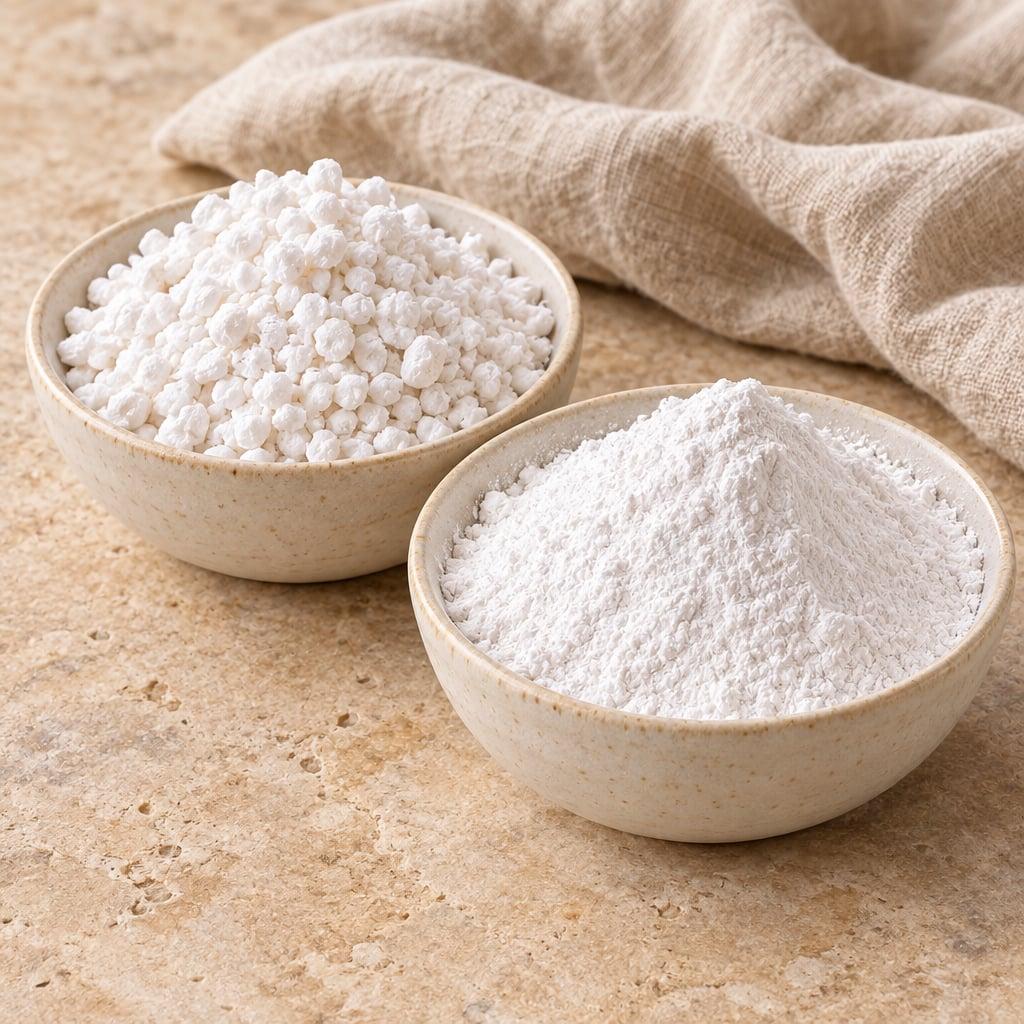
Pure starch washed out of sweet potatoes and dried. Taiwanese shops sell two kinds: a fine powder and a coarse one in small, pebbly granules. The coarse one is the craggy crust on popcorn chicken and fried pork chops; the fine one makes the chewy, translucent batter of an oyster omelette.
Origin
Made in Taiwan, Fujian and across southern China, and in Korea, where it becomes the glass noodles of japchae. Look for it in Taiwanese, Chinese and Korean grocers; packs labelled 地瓜粉 are the Taiwanese kind.
Flavour
Neutral. What matters is texture: fried, it sets into a crisp, slightly glassy shell; cooked with water it turns clear, sticky and bouncy, the texture Taiwanese call QQ.
How to use it
For frying, press the coarse granules onto marinated meat and leave it five minutes so they hydrate and stick, then fry. For batters and thickening, mix the fine powder with cold water just before use, because it settles fast. Potato or tapioca starch will stand in, but the crust is finer and the chew less.
Storage
Keep it airtight in a cool, dry cupboard, where it lasts a year or more. If the coarse granules clump, crush them lightly with a rolling pin.
Recipes using it

Oyster omelette
蚵仔煎
Taiwanese night-market oyster omelette: small oysters set in a chewy, translucent sweet potato starch batter with egg and greens, under a sweet-savoury red sauce.
Medium

Taiwanese popcorn chicken
鹹酥雞
Bite-size chicken thigh marinated in soy, garlic and five-spice, coated in coarse sweet potato starch, double-fried with Thai basil and tossed in pepper salt.
Easy

Dan bing
蛋餅
Taiwanese breakfast egg crepe: a thin, chewy spring onion batter pancake fried onto a layer of egg, rolled and sliced, with soy paste or chilli sauce.
Easy