Produce
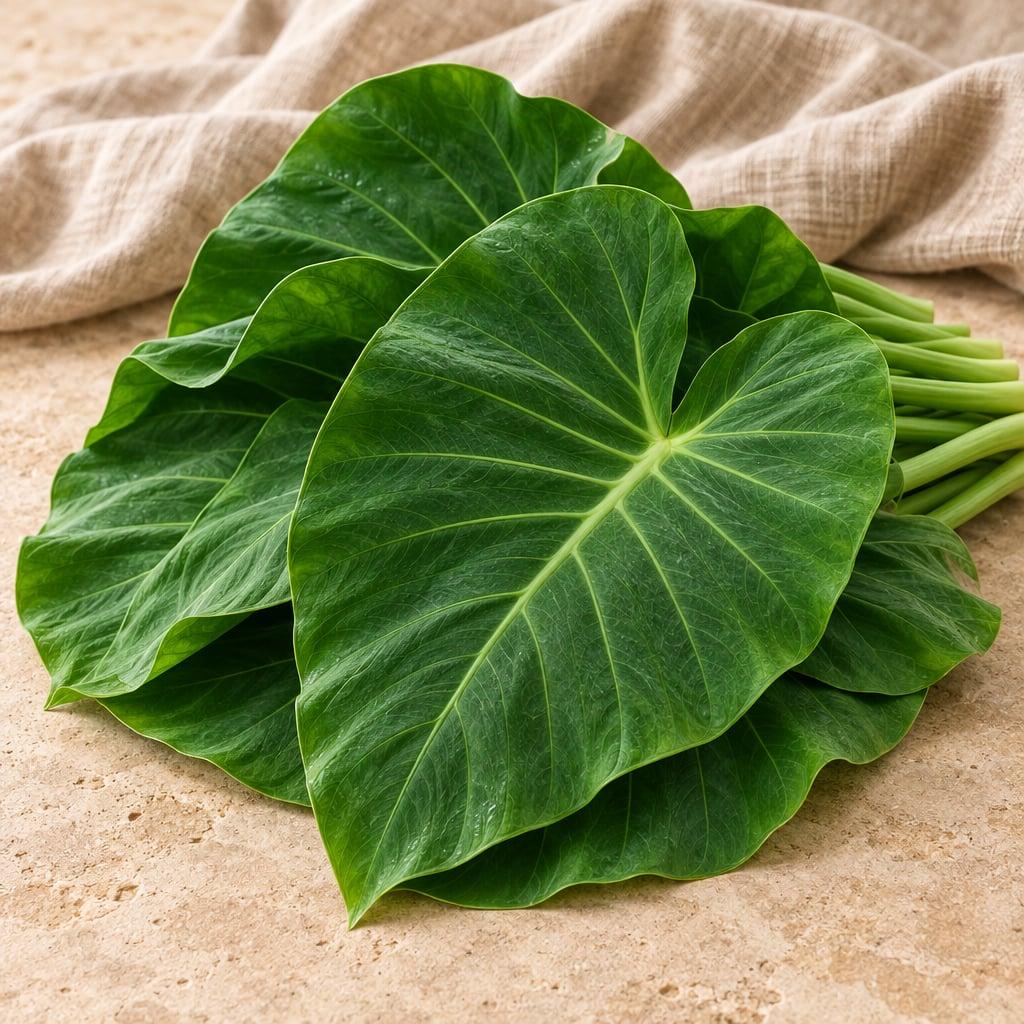
Taro leaves
Also called lu'au, rourou, luau leaves, gabi leaves, dasheen leaves, callaloo
The large heart-shaped leaves of the taro plant, eaten as a cooked green across the Pacific, South-East Asia, the Caribbean and West Africa. In Samoa they are lu'au, in Fiji rourou, in the Philippines gabi leaves.
Origin
Taro was carried across the Pacific by the people who first settled it, and its leaves are as old a food there as the corm. Fresh leaves are sold at Pacific Island, Filipino and Caribbean markets. Frozen ones are easier to find elsewhere.
Flavour
Mild, earthy and a little nutty once cooked. Softer than spinach and very good at soaking up coconut cream.
How to use it
Never eat them raw or undercooked. The leaves hold needle-like calcium oxalate crystals that sting the mouth and throat, and only long cooking, 45 minutes or more, breaks them down. Cut out the stem and the thick central rib, stack young leaves, and wrap or simmer them with coconut cream.
Storage
Fresh leaves keep two or three days wrapped in damp paper in the fridge. They freeze well raw, stacked flat, for several months.
Recipes using it

Palusami
Samoan parcels of young taro leaves filled with salted coconut cream and onion, baked until the leaves turn soft and the cream sets thick.
Easy

Kontomire stew
Ghanaian stew of cocoyam leaves in red palm oil with tomato, ground egusi, smoked fish and boiled eggs, served with boiled yam and plantain.
EasyMedium heat