
Flour
Yam flour
Also called elubo, èlùbọ́ iṣu, amala flour, dried yam flour
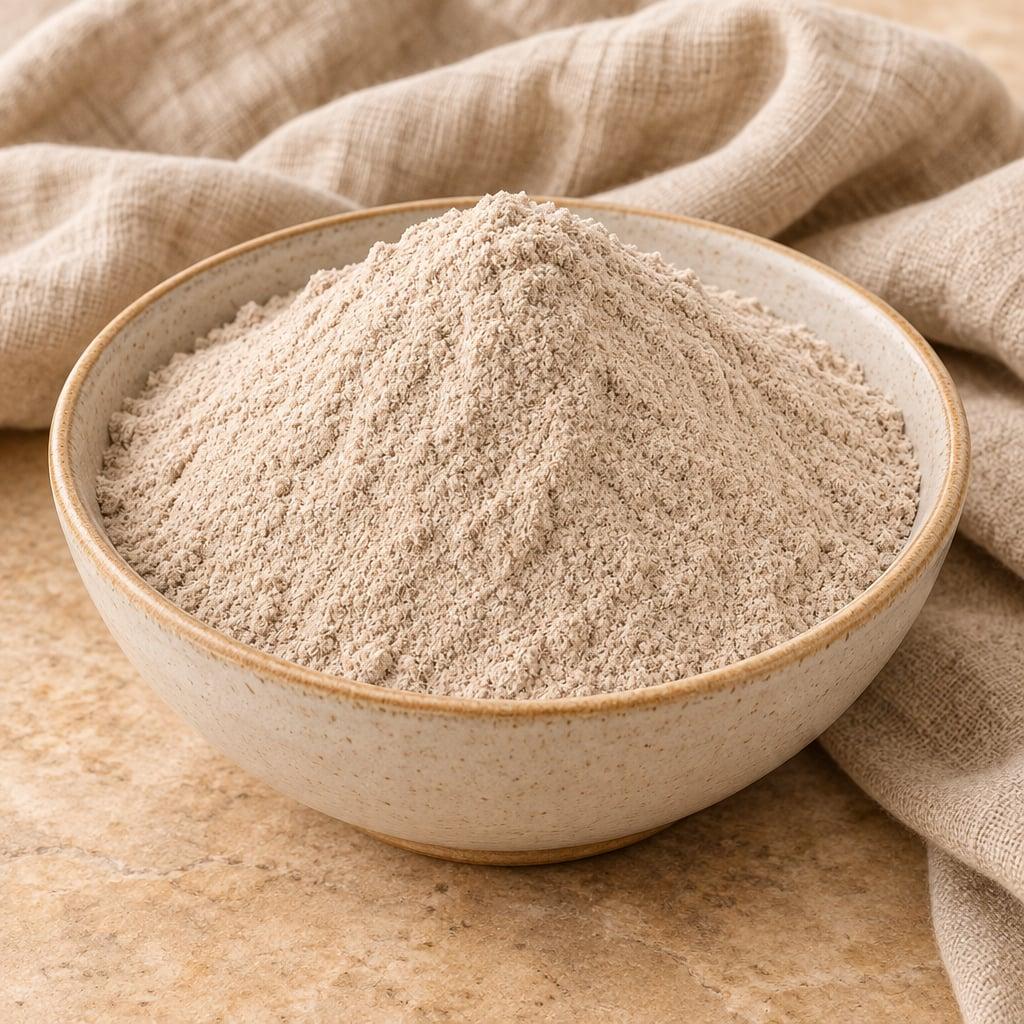
A fine beige-grey flour milled from peeled, sliced and dried white yam. It turns dark brown the moment hot water touches it, which is why the swallow made from it, amala, is the colour of milk chocolate.
Origin
South-western Nigeria, Benin and Togo, wherever true yams are grown. It is the flour of Yoruba cooking above all, and Oyo State is known for it. Sold in West African shops as elubo or amala flour; check the bag says yam, since plantain and cassava versions exist.
Flavour
Earthy and faintly sour-smoky from the drying, with a clean starchy finish. It is plain by design and meant to carry soup.
How it is made
Yam is peeled, sliced, briefly parboiled, then sun-dried for days until hard and brown, and finally milled and sieved.
How to use it
Tip it into water that has just boiled, off the heat, and beat hard with a wooden spoon until smooth, then steam it briefly with a splash more water. It is not a baking flour and does not behave like wheat.
Storage
Keeps six months to a year in an airtight container away from damp. Sieve it before use if it has clumped. Cooked amala should be eaten warm the same day.
