

Braising
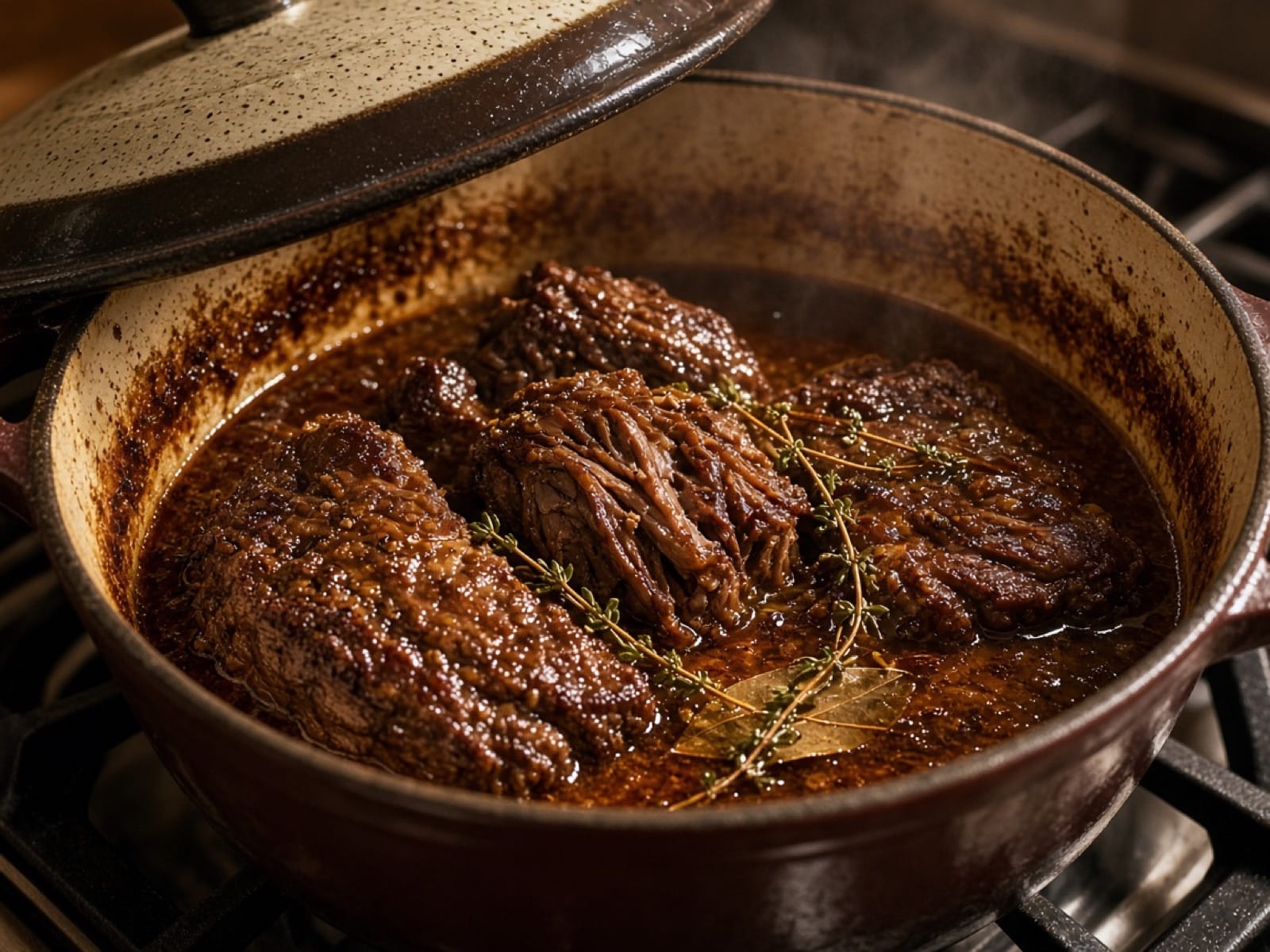
Brown, then cook slowly with a little liquid under a lid until collagen turns to sauce. It is weekday patience, not restaurant theatre.
Why it works
Dry heat builds flavour on the surface — the browned crust is not decoration. Moist heat at a gentle simmer then dissolves connective tissue into gelatin, which is why a cheap cut becomes spoonable and why the liquid thickens without flour if you give it time. The pot should smell concentrated, not boiled. Chicken adobo, kimchi jjigae and a tomato-butter chicken gravy all use this logic, even when nobody says the word braise.
How to do it
- Dry and season the meat or vegetables. Wet food steams instead of browning.
- Brown in a heavy pot in batches. Do not crowd. Colour is flavour; grey is a missed step.
- Add aromatics and cook them in the fat you just made.
- Add enough liquid to come partway up the sides — not a swimming pool. Wine, stock, soy, or the recipe's souring liquid all count.
- Cover and cook low until a fork meets little resistance. A hard boil toughens and turns fat into scum.
- Uncover and reduce the liquid if it tastes thin. Salt at the end, because reduction concentrates.
Common mistakes
- Boiling hard, which toughens meat and emulsifies fat into a greasy broth.
- Too much liquid, which stews instead of braises and dilutes the fond.
- Skipping the brown step and wondering where the flavour went.
- Salting only at the start of a long soy or fish-sauce braise, then reducing to a salt lick.
Recipes using this
Checking your allergy settings…