

Deglazing
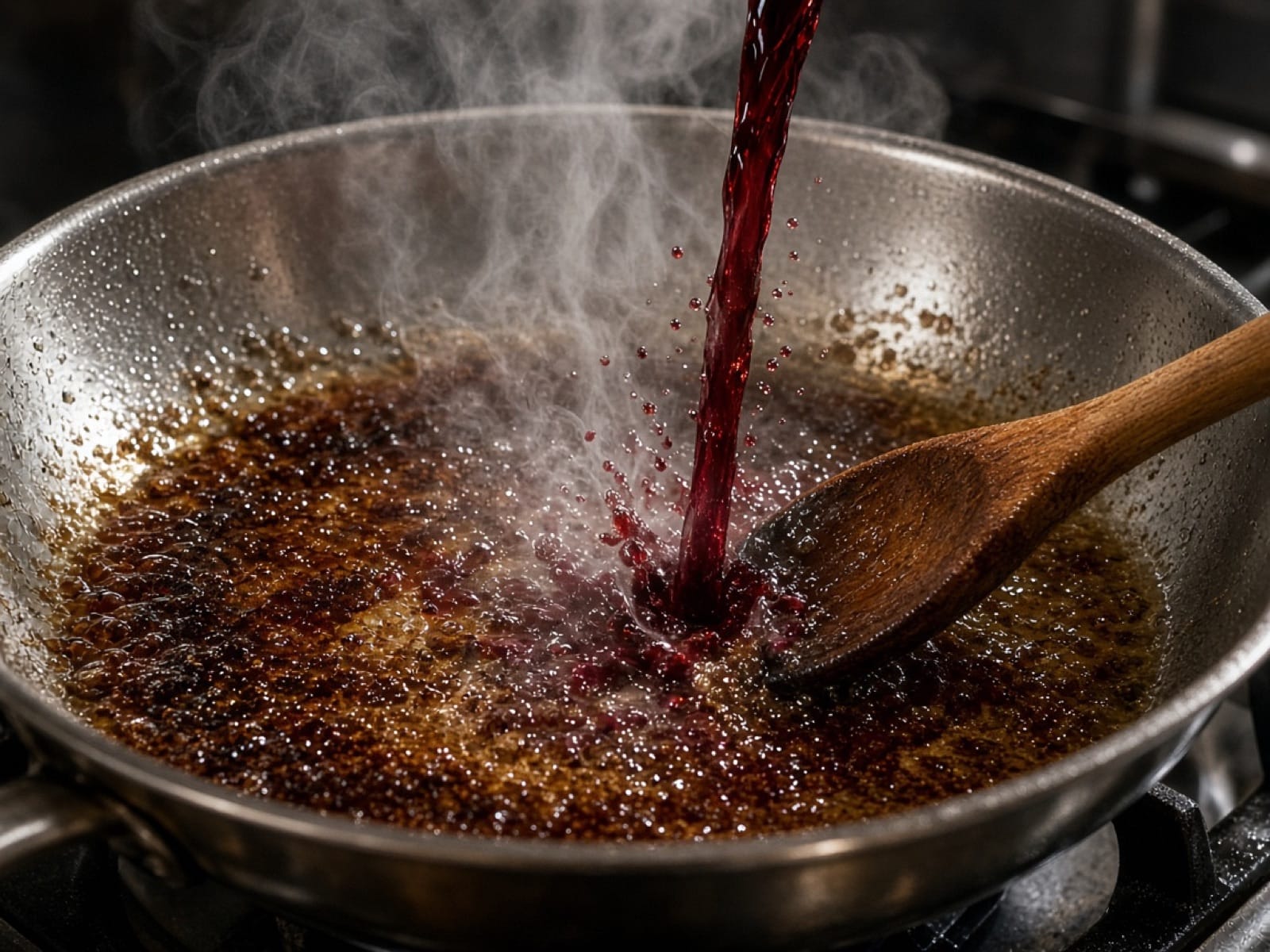
Adding liquid to a hot pan to lift the browned bits stuck to the metal — the fastest sauce you already paid for.
Why it works
Those bits are concentrated flavour from amino acids and sugars that browned on the metal. Liquid dissolves them into a sauce instead of leaving them as burnt sugar on the pan. Wine, stock, water, even the souring liquid from an adobo all work; the point is heat plus something watery enough to dissolve, then a short reduce so it tastes like the dish and not like raw wine. This is how a butter-chicken gravy picks up the fond, and how a paella pan contributes more than rice.
How to do it
- After searing, pour off excess fat if it is a lake. Leave the brown, not the deep-fry.
- Add wine, stock, or water. It should hiss. If it sits there silently, the pan was not hot.
- Scrape with a wooden spoon until the fond dissolves. That scraping is the technique.
- Reduce until it tastes like itself, then finish with butter, soy, or the recipe's sauce.
- If you are building a braise, this is the moment before the lid goes on — do not skip it and then wonder why the pot tastes pale.
Common mistakes
- Deglazing a burnt pan — you will taste carbon, not fond.
- Using a nonstick pan with nothing stuck, then wondering why the sauce is thin.
- Adding a cold cup of wine and walking away. Reduce, then taste.
- Deglazing with a sweet sauce that will scorch before it dissolves the brown.
Recipes using this
Checking your allergy settings…