

Emulsification
Forcing fat and water to hold together — mayonnaise, carbonara, a glossy pan sauce that does not split on the plate.
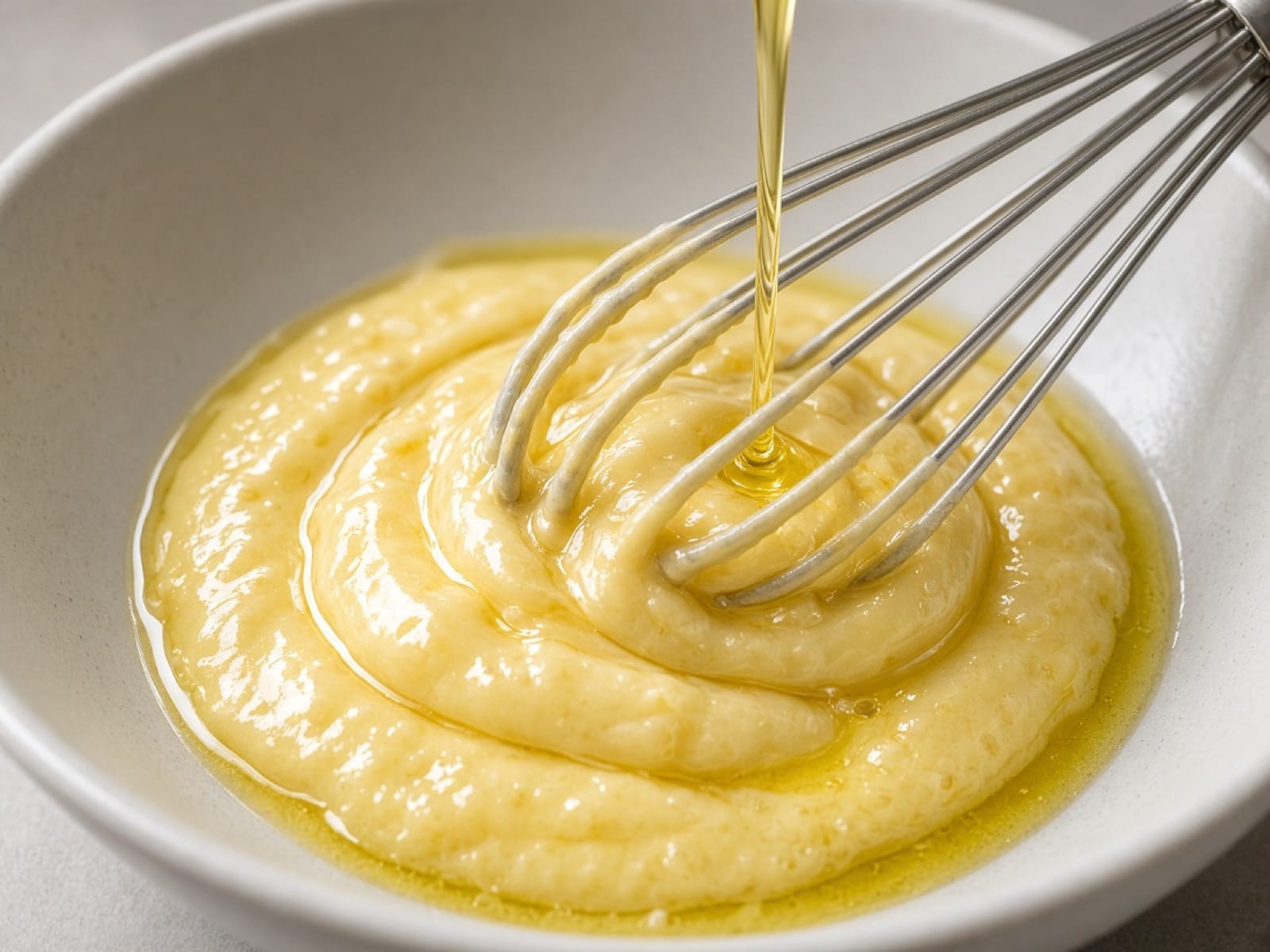
Why it works
Egg yolk, mustard, starch from pasta water, or vigorous tossing creates a network that suspends fat droplets in water. Heat helps if it is gentle and ruins you if it is not: carbonara on a ripping-hot pan is scrambled eggs, not sauce. The gloss you want is tiny droplets, not a slick of oil floating on wet pasta. That is why Roman kitchens talk about pasta water as an ingredient, not a drain.
How to do it
- Start with a binder: yolk, starchy pasta water, mustard, or a reduced stock with body.
- Add fat gradually, or toss off the heat so eggs do not scramble. Residual heat is usually enough.
- Move the food. A still pan splits; a tossed pan holds.
- If it splits, add a splash of warm water and whisk or toss hard. Sometimes a fresh yolk will pull it back.
- Serve immediately. Emulsions wait for no one, and a minute under a lamp will break a carbonara.
Common mistakes
- Carbonara on a ripping-hot pan — scrambled eggs, not sauce.
- Adding oil all at once to a mayonnaise.
- Using pasta water that was never salted, then wondering why the sauce tastes flat.
- Letting grated pecorino hit a dry, scorching pan so it clumps into plastic.
Recipes using this
Checking your allergy settings…