

 Taste Canada
Regional cooking under a thin maple glaze. The useful Canadian plate names Quebec, the Prairies, the Pacific or the Atlantic, not a single national flavour.
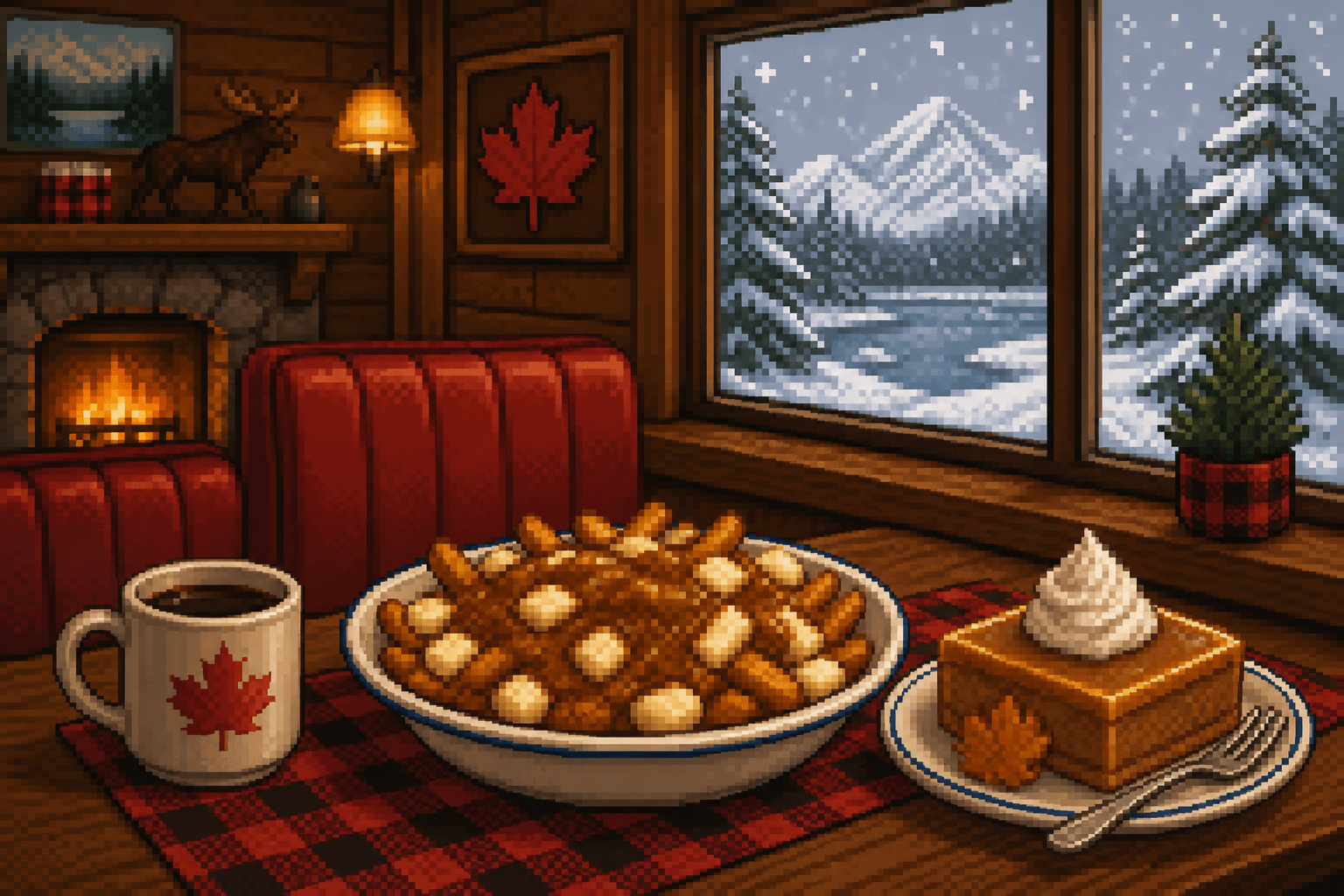
Poutine is a Quebec snack that escaped the greasy spoon: twice-cooked fries, cheese curds that still squeak, and a brown gravy hot enough to wilt them at the edges. Butter tarts are pastry shells with a filling of butter, sugar and egg — raisins optional, and people will fight. Montreal smoked meat, Maritime chowder, Prairie berries and Saskatoon pies, Pacific salmon and Chinese-Canadian restaurant cooking, Inuit and First Nations hunting and fish, Toronto's immigrant strip malls: that is the actual cupboard. Poutine's restaurant fame should not erase tourtière, pea soup, or the fact that gravy-and-curds is a specific francophone fast-food grammar. The café scene borrowed Australia; the pantry did not.
21 recipes · 1 cuisine
Essential dishes
Checking your allergy settings…
More dishes
Further Canada listings, including shorter editorial recipes and imported methods.
Checking your allergy settings…
Regional cuisines
Think you know Canada food?
21 quiz dishes. Optional — Passport stamps still come from cooking.
Take the Canada food quizFood history
Indigenous food systems — maize in the east, salmon on the coast, caribou and char in the north — predate every colonial pie. French settlers brought pot cooking, pastry and a taste for pork; the British brought baking powder and a sweeter tart. Ukrainian and other prairie kitchens added cabbage rolls and dumplings. Twentieth-century diners and chip wagons in Quebec standardised poutine; the exact town of origin is argued because snack food rarely keeps minutes. Honesty means naming First Nations, Inuit and Métis cooking as living kitchens, not a historical prologue, and treating poutine as one regional plate that travelled.