Produce
Potato
Also called potatoes
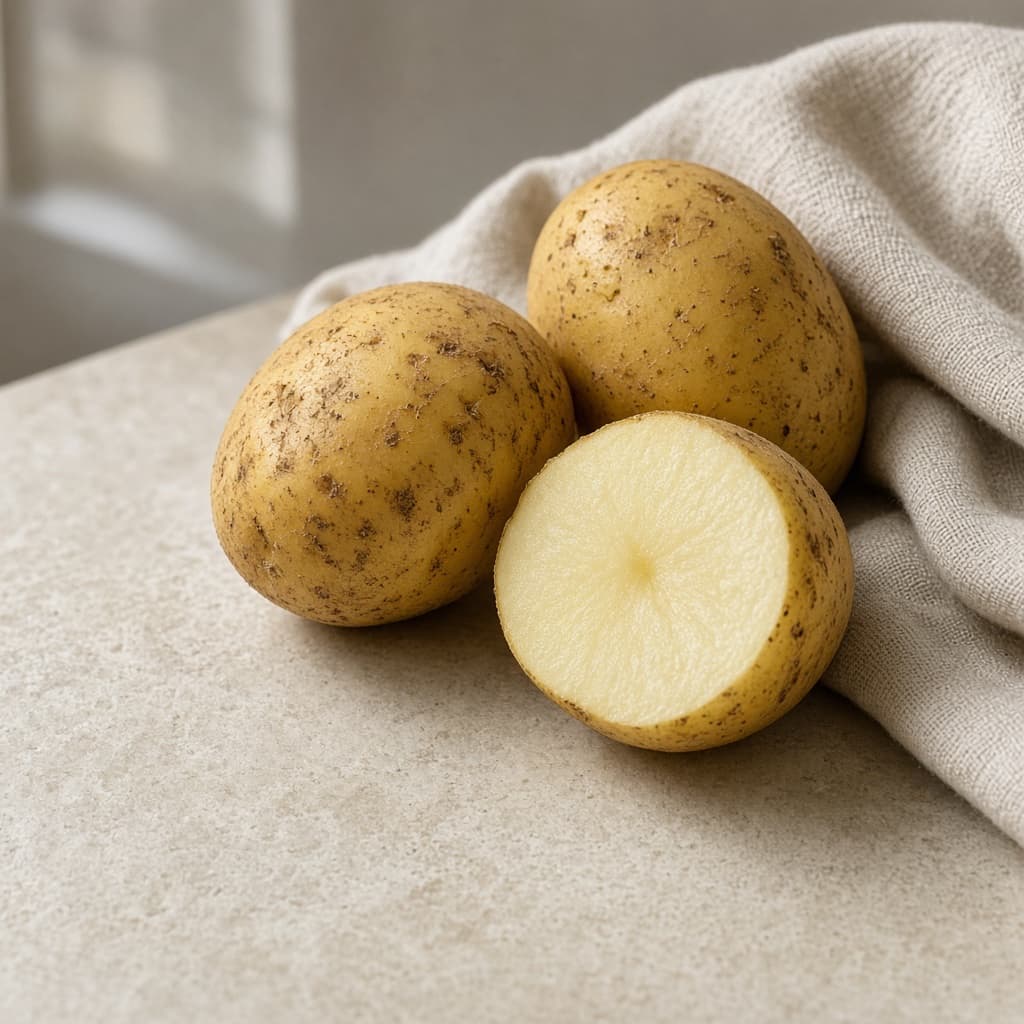
An Andean tuber that became a global starch. Waxy types hold their shape in salads and stews; floury types fluff for mash and roast. The variety on the bag matters more than most recipes admit.
Origin
Domesticated in the Andes, then remade European and Asian cooking. Korean gamja dishes, Japanese nikujaga and Indian aloo pots all use local selections of the same plant.
Flavour
Earthy and mild when boiled; sweet and nutty when roasted until the edges catch. Green skins mean light damage — cut those bits away.
How to use it
Choose the potato for the job. Waxy for stew and salad; floury for mash, roast trays and gnocchi. For roast potatoes, parboil until the edges fray, rough them in the colander, then hit hot fat. For mash, dry the drained potatoes in the pan before adding butter, or they go gluey. In Korean braises and Japanese curry, cut even chunks so they finish with the sauce. Salt the cooking water. Do not store peeled potatoes in water for hours if you can help it; they lose flavour.
Storage
Dark, cool and dry, not in the fridge and not beside onions. A paper bag beats sealed plastic. Throw out green, bitter tubers.
Recipes using it
Checking your allergy settings…
Showing 18 of 29. Search all recipes using potato