

 Taste Denmark
Rye, butter and an open sandwich that is assembled, not stacked for height. Danish cooking is a cold-table craft with a pastry shop attached.
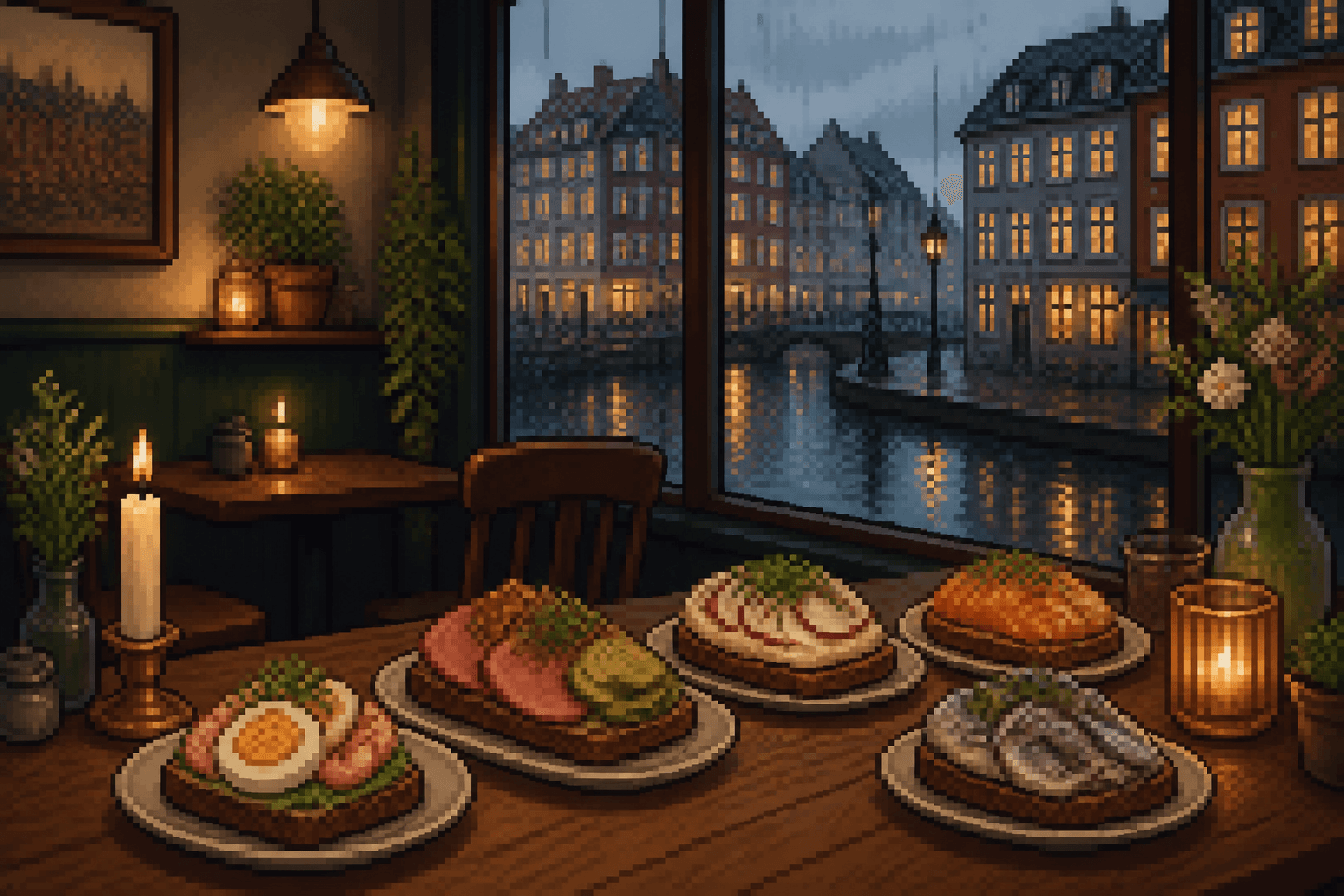
Smørrebrød is buttered rye (rugbrød) with toppings laid so you can see them: pickled herring, liver pâté with bacon and mushrooms, roast beef with remoulade, shrimp and egg. The butter is a waterproofing layer, not a smear. Everyday cooking is also fried pork with parsley sauce, meatballs (frikadeller), and potatoes. Cardamom buns and the layered wienerbrød are the baker's half of the culture. Copenhagen restaurants made New Nordic famous; the lunch table still wants herring and a dense bread. Pickles, dill and a sharp mustard keep the fat in line.
10 recipes · 1 cuisine
Essential dishes
Checking your allergy settings…
More dishes
Further Denmark listings, including shorter editorial recipes and imported methods.
Checking your allergy settings…
Regional cuisines
Think you know Denmark food?
10 quiz dishes. Optional — Passport stamps still come from cooking.
Take the Denmark food quizFood history
Lute and dairy farming, North Sea fish, and a rye culture that kept bread sour and dense. The open sandwich as a lunch institution settled with nineteenth-century urban workdays and restaurants that still list dozens of toppings. Jewish Copenhagen and a wider Scandinavian pickle habit sit in the herring. Potatoes arrived and stayed. The twentieth-century pastry shop and the twenty-first-century tasting menu both exist; smørrebrød is the one you can still eat on a Tuesday. Honesty means butter, rye and pickle, not a blonde-wood slogan about foraging — even when the foraging is real.