Herb
Dill
Also called fresh dill, dill weed
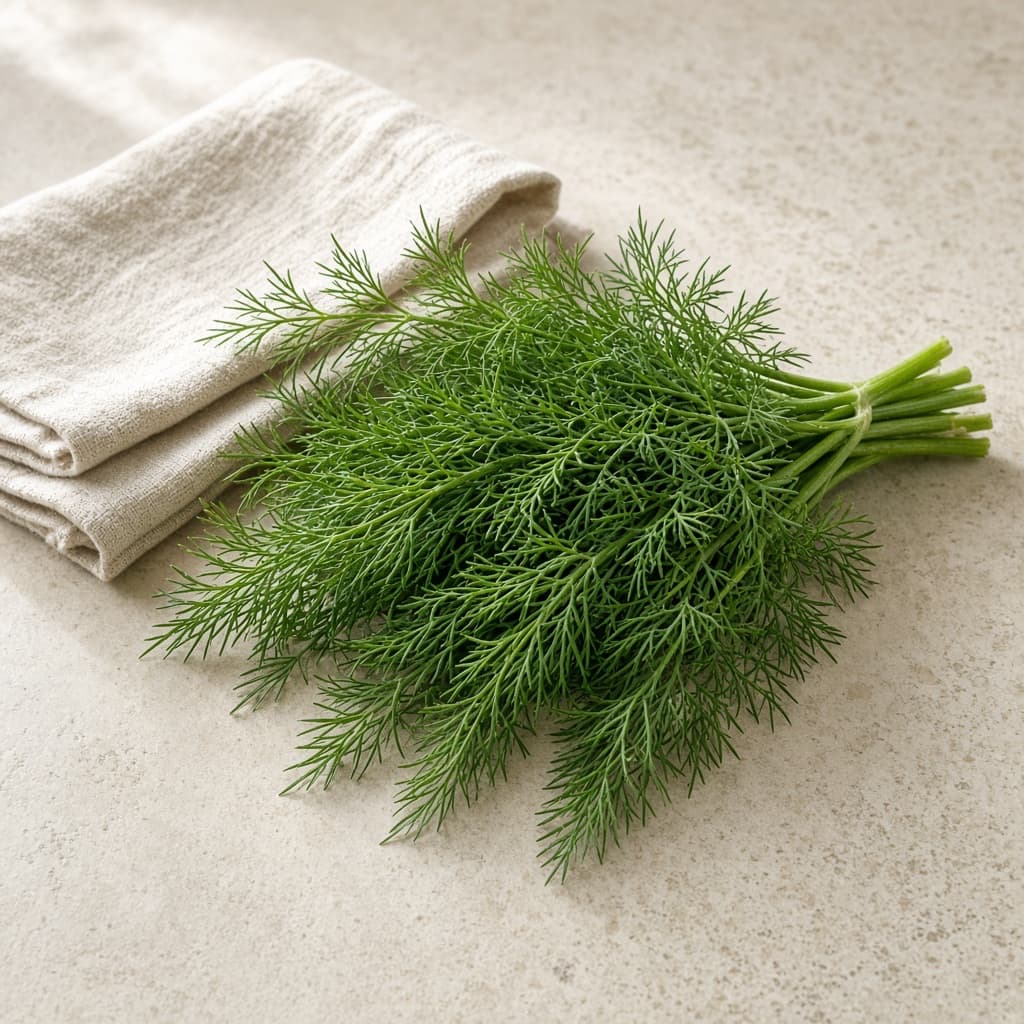
The feathery fronds (and, separately, the seeds) of Anethum graveolens. Pickles, borscht, smørrebrød and a cold dip want the fresh herb. Dried 'dill weed' is a grey shadow. This is not fennel frond, though they rhyme, and it is not the pickle itself.
Origin
Eastern Mediterranean and western Asia, then a northern European habit from the Baltic to Scandinavia. Eastern European pots treat it as a handful, not a garnish. Vietnamese chả cá uses a lot of it with turmeric fish — a different, hotter dill moment.
Flavour
Grassy, clean, lightly anise. Stems are stronger and a bit harsher. Heat flattens it toward hay. The seeds are more caraway than leaf.
How to use it
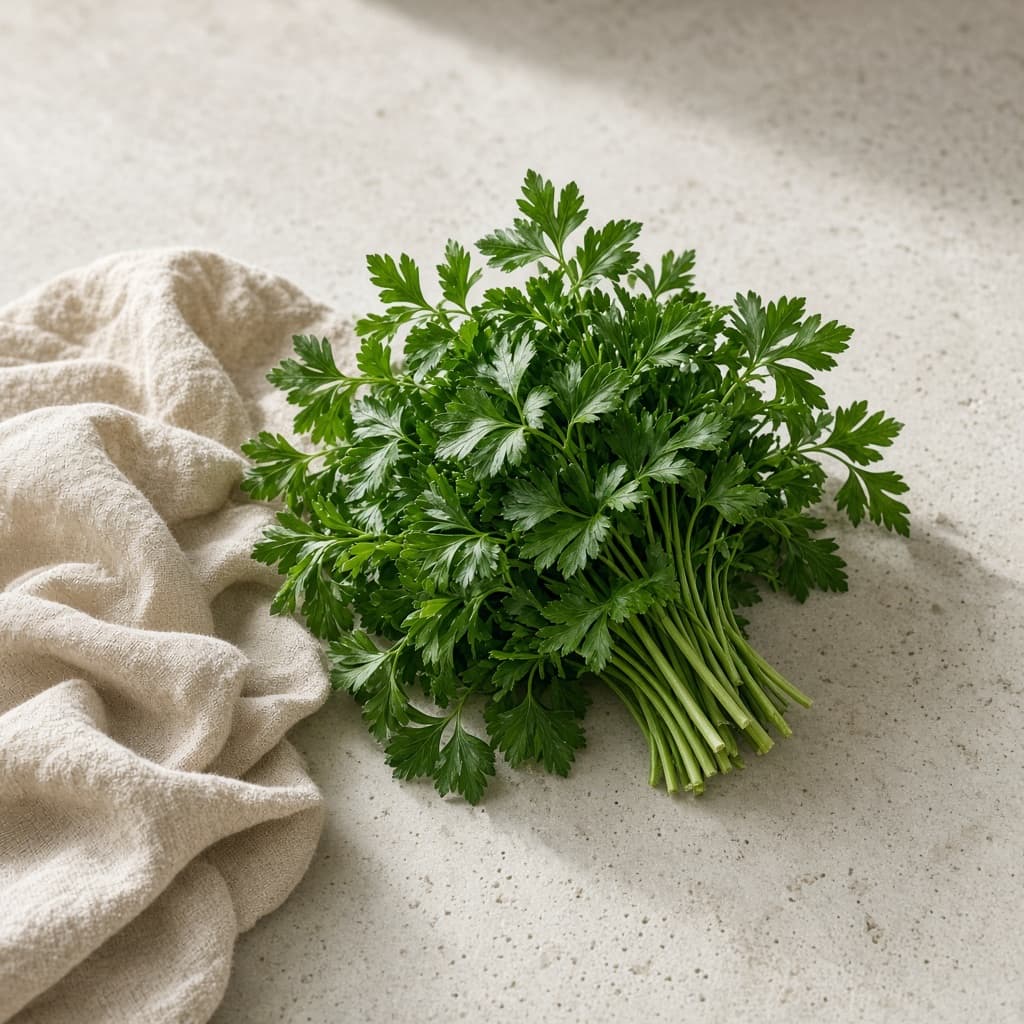
Chop and add at the end of borscht or fold into pickle dip and smørrebrød toppings. For chả cá, a fistful goes into the hot pan so it wilt-fragrances the fish without cooking to sludge. Dried dill can sit in a soup if that is the jar you have; use less and add lemon. Do not confuse the seeds with the herb in a recipe that lists 'dill'. Parsley is not a flavour swap; it is only green. Tough stems can flavour a pickle brine, then come out.
Storage
Fridge, stems in a jar of water with a bag loosely over the fronds, or wrapped in damp paper. It slimes fast. Freeze chopped dill in oil or water if you buy a whole plant; the colour dulls but the smell stays useful.
Recipes using it
Checking your allergy settings…