

 Taste Hungary
Magyarország
The country that made paprika a national identity and built a kitchen of slow stews, sour cream and fried dough around it.
Hungarian food starts with onions softened in lard, taken off the heat, and dusted with sweet paprika so it does not burn. From that base come gulyás, pörkölt and paprikás, each thickened and soured differently. Sour cream finishes half the dishes; peppers and tomatoes stew into lecsó in late summer; cabbage gets stuffed with pork and rice for winter. Wheat shows up as pinched pasta, nokedli and lángos fried in oil. Pastry is a serious Habsburg inheritance, from Dobos torte to strudel. Heat is mild unless you ask.
6 recipes · 1 cuisine
All dishes 6
- 2 hr 55 min

Gulyás
Gulyásleves
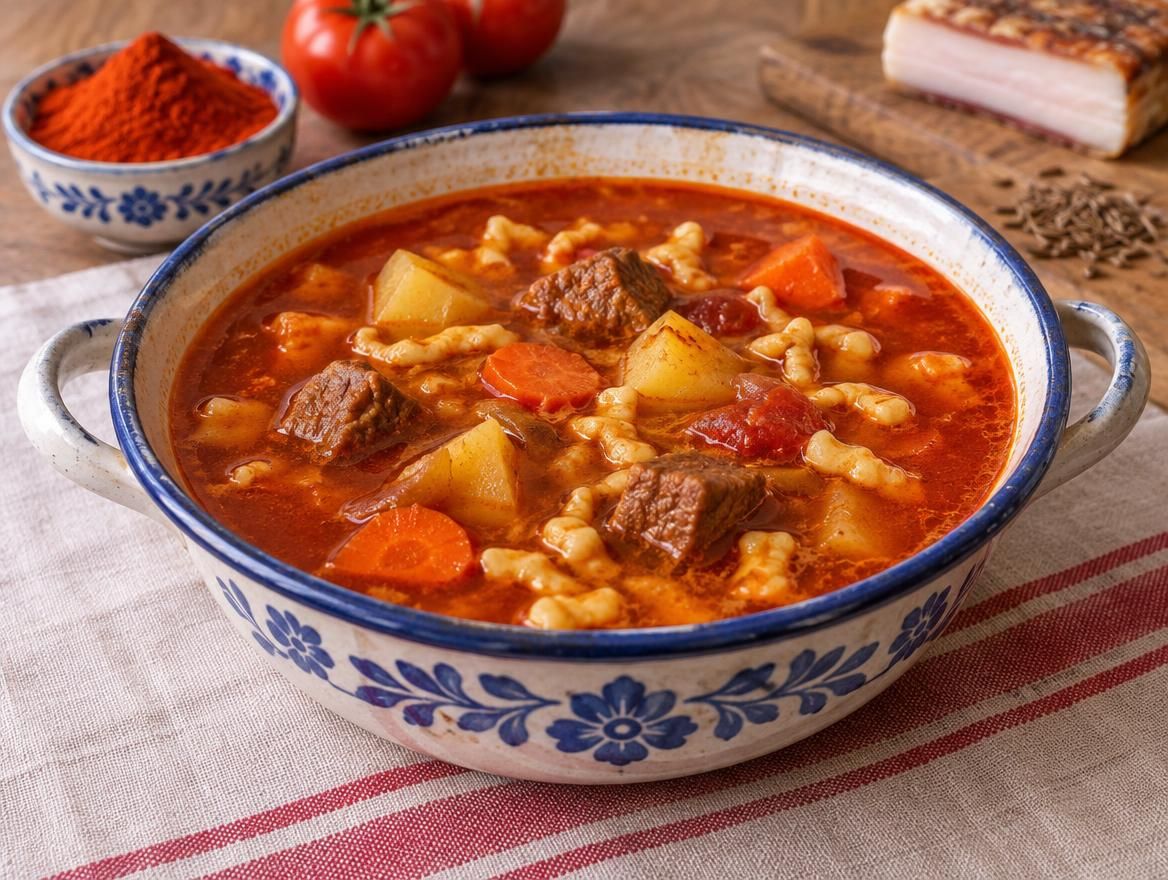
The Hungarian original: a brick-red beef and paprika soup with potatoes, carrots and pinched csipetke pasta, not the thick export stew.
Easy
- 1 hr 25 min

Chicken paprikash
Paprikás csirke
Chicken on the bone braised in an onion and paprika sauce finished with sour cream, served with scraped nokedli dumplings.
Medium
- 1 hr 45 min

Lángos
Hungarian deep-fried flatbread, blistered and puffed, rubbed with garlic and piled with sour cream and grated cheese.
Medium
- 50 min

Lecsó
Hungarian pepper and tomato stew cooked in lard with onion and paprika, eaten with bread, with eggs stirred in, or with sausage.
Very easy
- 3 hr 20 min

Hungarian stuffed cabbage
Töltött káposzta
Soured cabbage leaves rolled around paprika pork and rice, simmered over sauerkraut with smoked pork, finished with sour cream.
Medium
- 4 hr 10 min

Dobos torte
Dobos torta
Budapest's layer cake: six thin sponge discs, chocolate buttercream between, and a hard caramel top cut into wedges before it sets.
A bit of work
Regional cuisines
Think you know Hungary food?
6 quiz dishes. Optional — Passport stamps still come from cooking.
Take the Hungary food quizFood history
Magyar herders cooked meat in a cauldron over a fire on the Great Plain; gulyás means herdsman and the dish keeps the name. Paprika came with the Ottoman occupation in the 16th and 17th centuries and was a peasant seasoning until the 19th, when Szeged and Kalocsa began breeding sweeter strains and the aristocracy adopted it. Vienna added pastry, cream and the café. Twentieth-century shortages fixed cheap classics like lecsó and lángos in the repertoire.
Common ingredients
Techniques
- onion and paprika base off the heat
- slow stewing
- finishing with sour cream
- pinching pasta from dough
- deep-frying yeast dough
- stuffing cabbage leaves