

Hungarian
Magyar konyha
Paprika-red stews built on onions and lard, soured with cream, served with pinched pasta or fried dough, finished with Habsburg pastry.
Magyar herders cooked meat in cauldrons on the plain; gulyás still carries their name. The Ottomans brought peppers and the Habsburgs brought pastry, and by the 19th century Szeged and Kalocsa were breeding the sweet paprika that made the cuisine recognisable. Budapest's cafés and Gundel's restaurant polished it for Europe. The 20th century's shortages fixed lecsó, lángos and stuffed cabbage as the food everyone could afford and still wanted.
The base is always the same: onion cooked slow in lard, pulled off the heat, dusted with paprika. From there the dish is defined by its liquid and thickener: broth for gulyás, almost none for pörkölt, sour cream for paprikás. Caraway, garlic, green pepper and tomato appear constantly. Heat comes from the table, in a jar of hot paprika paste, not from the pot. Pastry is layered, caramelised and unapologetic.
Countries and regions
Great Hungarian Plain · Transdanubia · Budapest · Northern Hungary
Dishes 6
- 2 hr 55 min

Gulyás
Gulyásleves
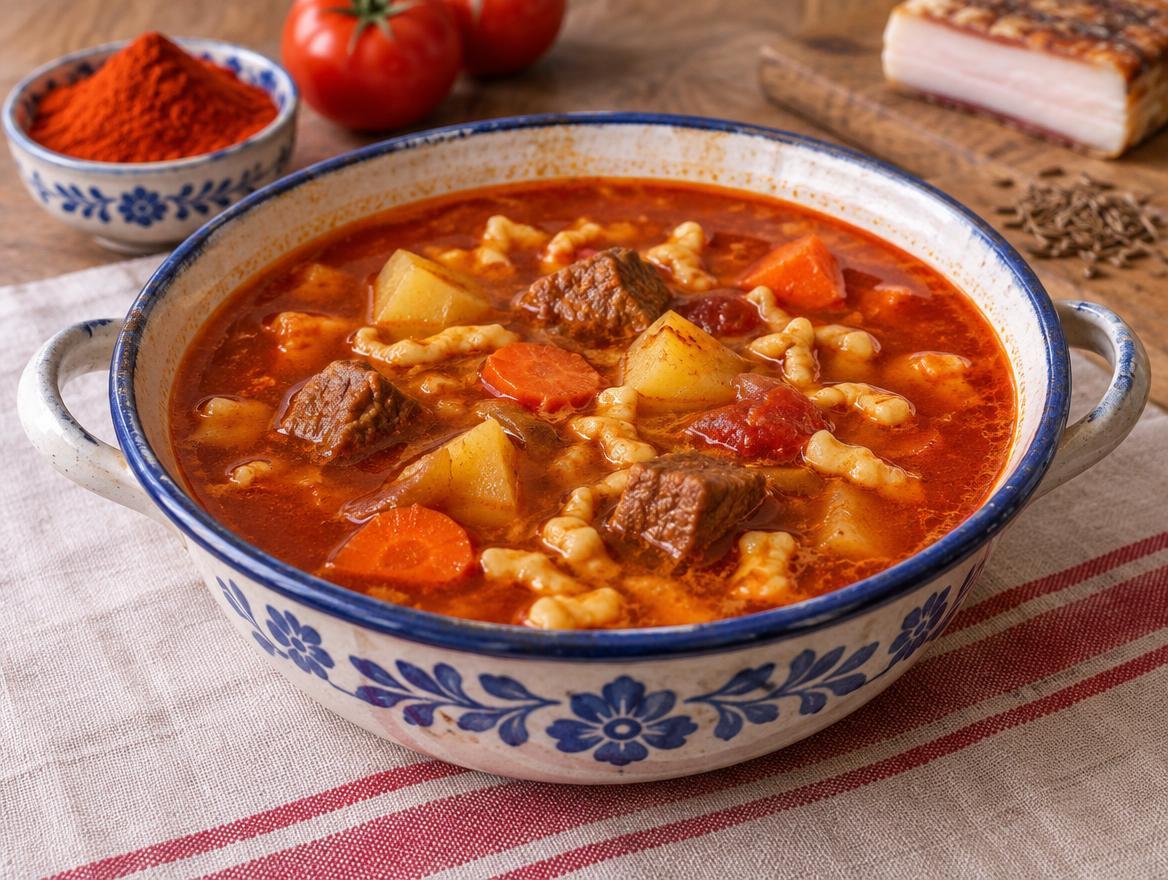
The Hungarian original: a brick-red beef and paprika soup with potatoes, carrots and pinched csipetke pasta, not the thick export stew.
HungaryEasy
- 1 hr 25 min

Chicken paprikash
Paprikás csirke
Chicken on the bone braised in an onion and paprika sauce finished with sour cream, served with scraped nokedli dumplings.
HungaryMedium
- 1 hr 45 min

Lángos
Hungarian deep-fried flatbread, blistered and puffed, rubbed with garlic and piled with sour cream and grated cheese.
HungaryMedium
- 50 min

Lecsó
Hungarian pepper and tomato stew cooked in lard with onion and paprika, eaten with bread, with eggs stirred in, or with sausage.
HungaryVery easy
- 3 hr 20 min

Hungarian stuffed cabbage
Töltött káposzta
Soured cabbage leaves rolled around paprika pork and rice, simmered over sauerkraut with smoked pork, finished with sour cream.
HungaryMedium
- 4 hr 10 min

Dobos torte
Dobos torta
Budapest's layer cake: six thin sponge discs, chocolate buttercream between, and a hard caramel top cut into wedges before it sets.
HungaryA bit of work