

 Taste Netherlands
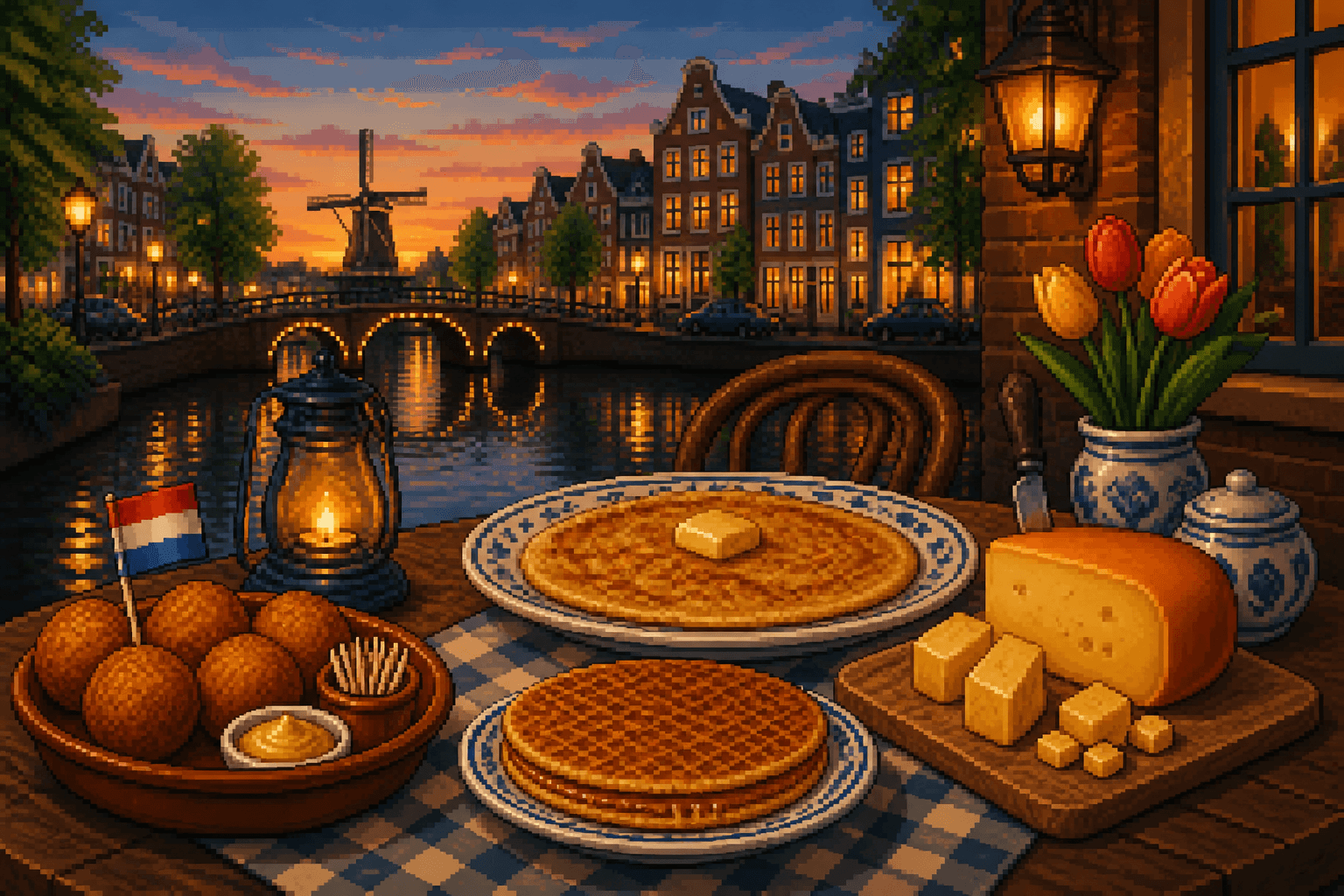
Dairy, rye, frying and a colonial pantry that still sits awkwardly on the table. Stroopwafel is the snack the world knows; it is not dinner.
A stroopwafel is two thin waffle wafers glued with syrup, meant to rest over a hot cup so the caramel softens. That is a street and stall craft from Gouda, not a breakfast religion. Everyday cooking is mashed-pot dishes (stamppot) with smoked sausage, pea soup thick enough for a spoon to stand, pickled herring eaten by the tail, and cheese that is genuinely aged rather than coloured orange for export. Indonesian rijsttafel and Surinamese rotis are Dutch food in the cities because empire moved people as well as spice. Fries with mayonnaise are a correct choice. The pancake is a large pan, not a stack of American diner discs.
18 recipes · 1 cuisine
Essential dishes
Checking your allergy settings…
More dishes
Further Netherlands listings, including shorter editorial recipes and imported methods.
Checking your allergy settings…
Regional cuisines
Think you know Netherlands food?
18 quiz dishes. Optional — Passport stamps still come from cooking.
Take the Netherlands food quizFood history
North Sea fishing, peat-and-dairy farming, and a trading republic that hauled spices, sugar and people across oceans. Indonesian cooking entered Dutch cities through colonial occupation and later migration; calling it a 'fusion trend' is historically illiterate. Jewish Amsterdam kitchens left pickle and fried-fish habits. The stroopwafel dates to the nineteenth century as a baker's use of crumbs and syrup — a thrift snack that tourism later sugared further. Home cooking still mashes potato with greens in winter and argues about whether the syrup in a stroopwafel should leak. It should, a little.