

 Taste Norway
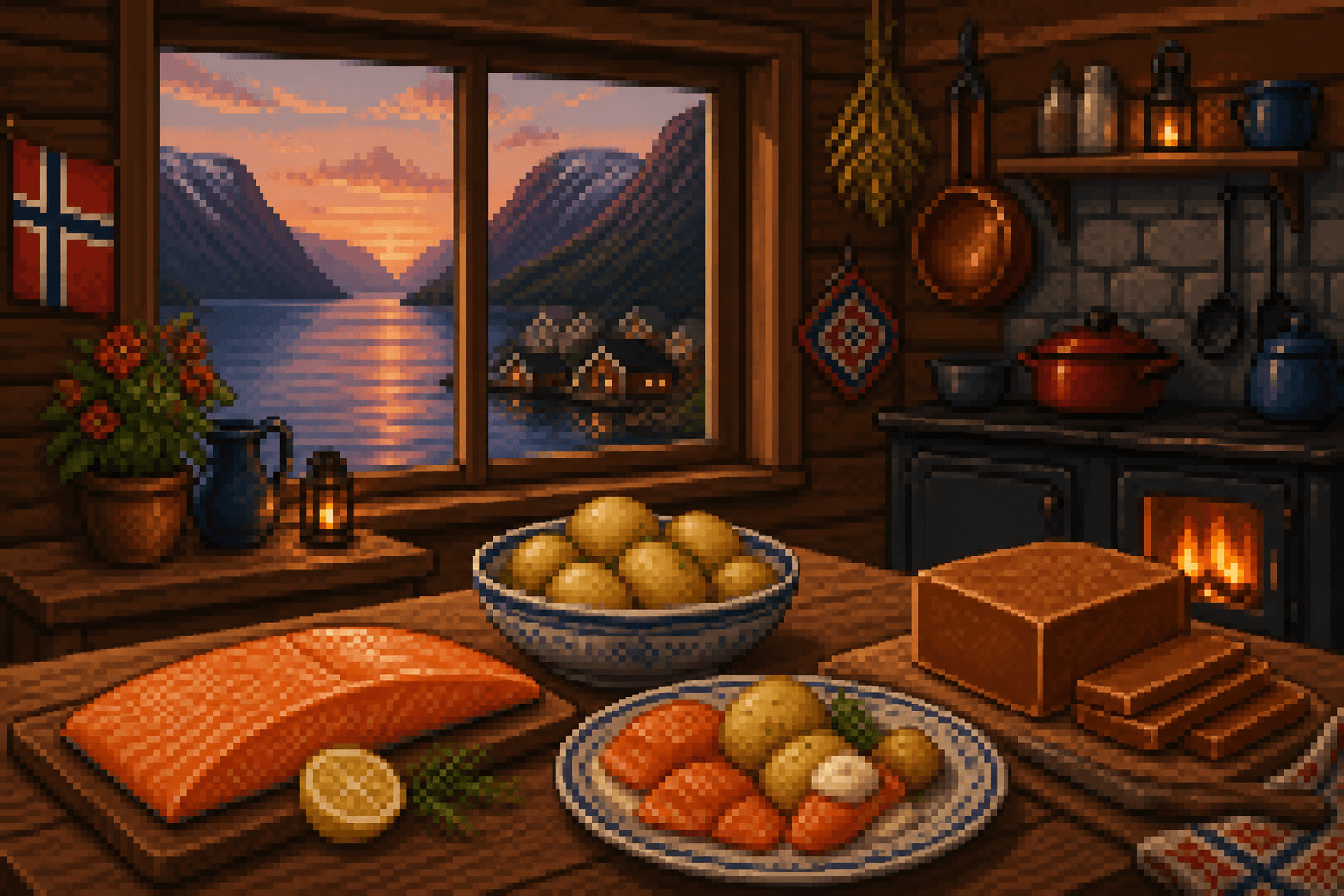
Fish, dairy and a preservation habit learned from a long winter. The waffle is the gentle public face of a kitchen that also pickles, dries and smokes.
Norske vafler are heart-shaped, softer and more cardamom-scented than a Belgian tourist waffle, eaten with brown cheese, sour cream and jam rather than a pile of cream. Everyday cooking is boiled potatoes, lamb or mutton in cabbage (fårikål), fish cakes, and salmon that is smoked, cured or baked. Coastal stockfish and clipfish are older than the café. Oslo restaurants now plate New Nordic vegetables; farm kitchens still jar, dry and salt. Cinnamon and cardamom in baking are not a gimmick; they are how Sunday smells. The brown cheese is goat or cow, caramelised, and it belongs on the waffle.
18 recipes · 1 cuisine
Essential dishes
Checking your allergy settings…
More dishes
Further Norway listings, including shorter editorial recipes and imported methods.
Checking your allergy settings…
Regional cuisines
Think you know Norway food?
18 quiz dishes. Optional — Passport stamps still come from cooking.
Take the Norway food quizFood history
North Atlantic fishing, mountain pastoralism, and a Hanseatic trade that moved dried cod into Europe. Preservation — drying, salting, fermenting trout (rakfisk) — is technique, not folklore. Potatoes arrived and became the default side. Danish and Swedish neighbours share baking and fish habits without being identical. Oil wealth funded restaurants; it did not invent the waffle iron in the cupboard. The heart-shaped iron is a domestic object. Honesty means fish and dairy first, then the pastry, not a fjord slogan.