

 Taste Pakistan
پاکستان
A country of wheat plains, mountain passes and port cities, whose cooking is built on meat, bread and long slow pots.
Pakistani food is heavier on meat and wheat than most of the subcontinent. Punjab eats stuffed parathas, dal and chicken karahi; Sindh and Karachi run on biryani, nihari and street kebabs; Khyber Pakhtunkhwa grills lamb with little more than salt and cooks chapli kebabs in iron pans; Balochistan roasts whole lamb over embers. Naan from a tandoor is the daily bread. Yoghurt, raita and pickles cut the richness. Chai is constant. Restaurant food means dhabas, roadside karahi houses and late-night food streets rather than fine dining.
7 recipes · 1 cuisine
All dishes 7
- 6 hr 25 min

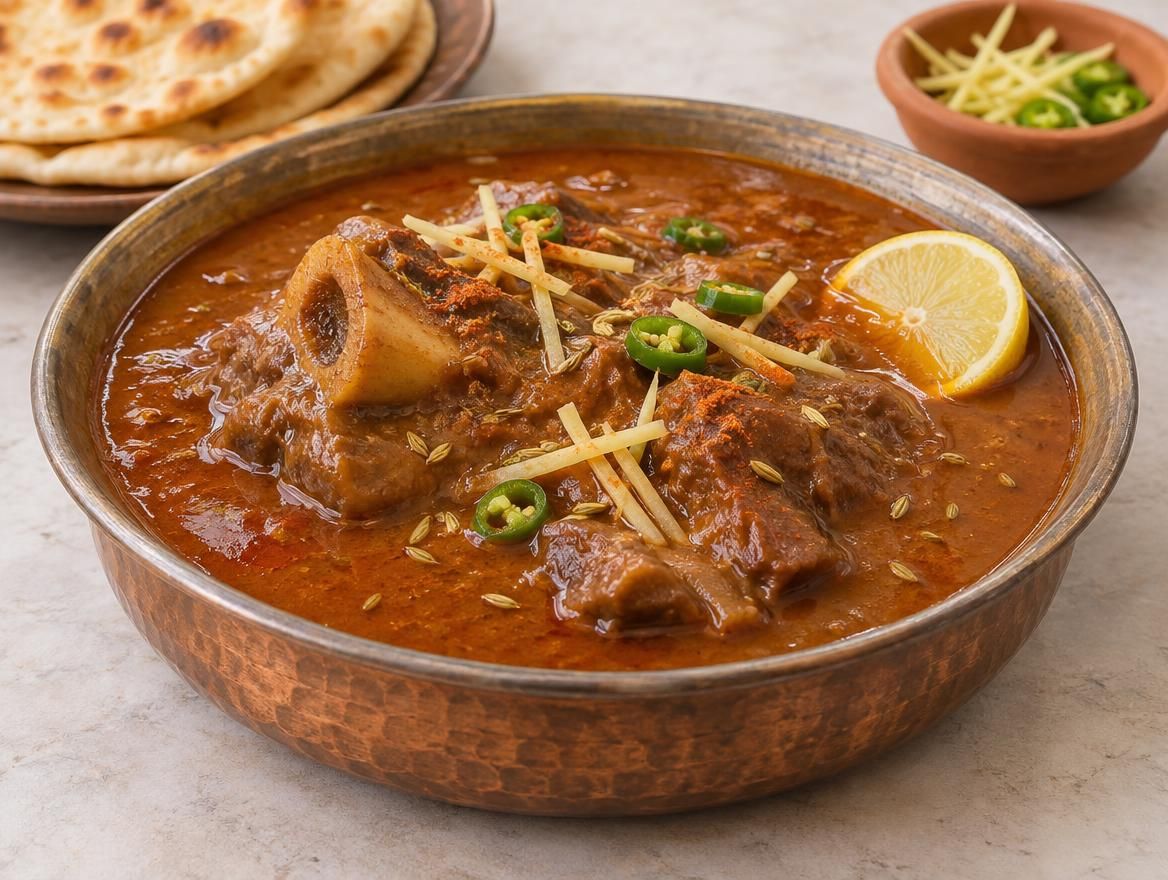
Nihari
نہاری
Slow-cooked beef shank stew in a glossy, flour-thickened gravy, finished with ginger, chilli and lemon.
MediumMedium heat
- 11 hr 30 min

Haleem
حلیم
Wheat, lentils and meat cooked and beaten into a thick porridge, then crowned with fried onion, ginger and lemon.
MediumMedium heat
- 55 min

Chicken karahi
چکن کڑاہی
Bone-in chicken cooked fast in a wok with tomatoes, ginger, green chilli and black pepper. No onion, no cream.
EasyHot
- 1 hr 10 min

Chapli kebab
چپلی کباب
Flat, wide Peshawari beef patties with cornmeal, tomato, pomegranate seed and crushed coriander, fried until the edges crisp.
EasyMedium heat
- 1 hr 40 min

Seekh kebab
سیخ کباب
Spiced lamb mince pressed around skewers and grilled until charred outside and juicy inside.
EasyMedium heat
- 2 hr 15 min

Sindhi biryani
سندھی بریانی
Layered rice and meat from Sindh, hot and sour, with potatoes, dried plums, yoghurt and a lot of green chilli.
MediumHot
- 1 hr 25 min

Aloo paratha
آلو پراٹھا
Wholemeal flatbread stuffed with spiced mashed potato and griddled in ghee. Breakfast in most of Punjab.
Medium
Regional cuisines
Think you know Pakistan food?
7 quiz dishes. Optional — Passport stamps still come from cooking.
Take the Pakistan food quizFood history
The Indus valley grew wheat and barley five thousand years ago. Persian, Central Asian and Mughal cooks brought pilaf, kebabs and slow braises; Pashtun and Baloch tribes kept a simpler grilled tradition. Partition in 1947 moved Urdu-speaking migrants from Delhi and Lucknow to Karachi with their nihari and haleem, which became that city's signature dishes. Gulf migration from the 1970s brought money and Arab influences back. The diaspora in Britain shaped what the world thinks of as curry-house food.