Meat
Lamb
Also called mutton
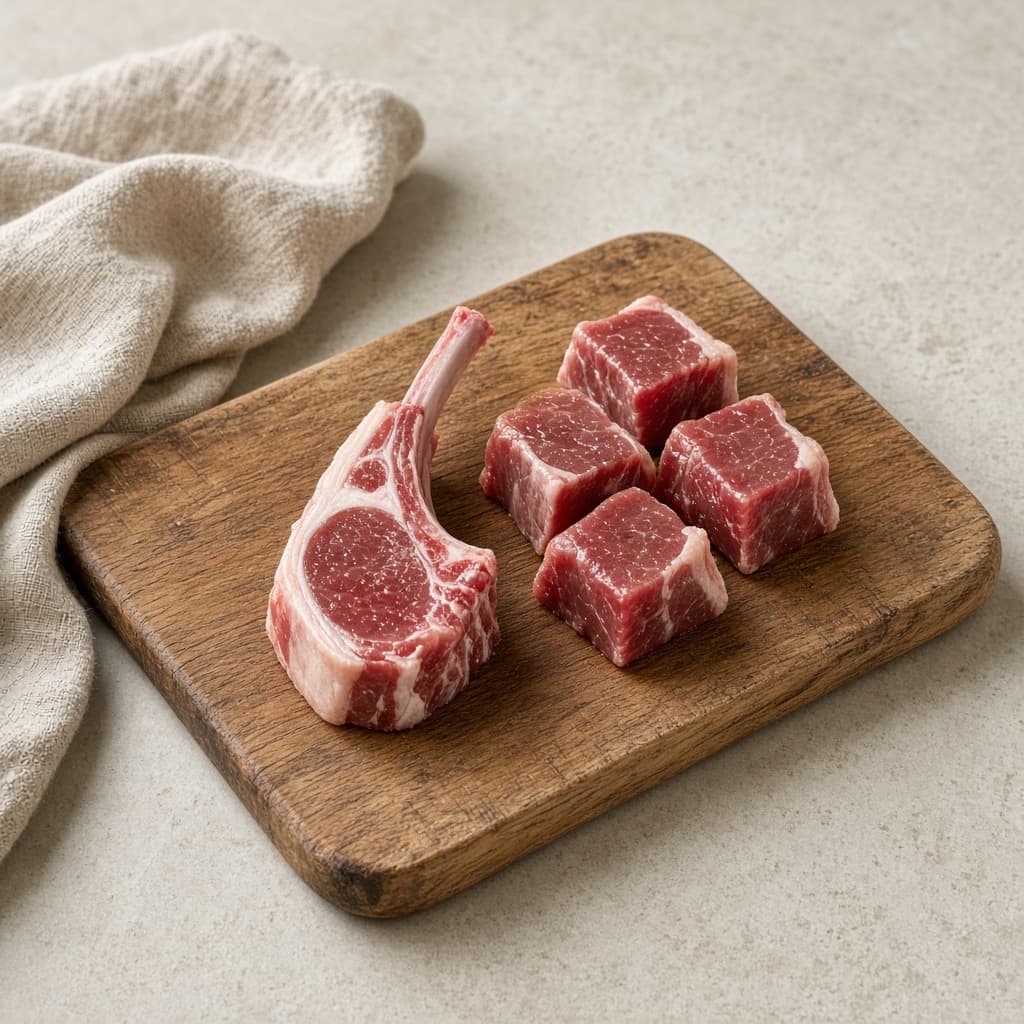
Meat from a young sheep; older animals are hogget or mutton and taste stronger. Fat along the muscles is where most of the characteristic flavour lives, especially on shoulder and a well-marbled leg.
Origin
Pastoral cooking from West Asia and the Mediterranean, then every place that kept flocks. Kebab, kibbeh, tagine, biryani and British slow roasts are regional answers to the same animal.
Flavour
Sweet, mineral and distinctly sheep. Young lamb is milder; mutton is deeper and needs spice or long cooking. The fat should smell clean, not tallowy.
How to use it
Match the cut to the heat. Leg and loin take a hot grill or a pink roast; shoulder, neck and shank want hours until collagen melts. For kebabs, mince with enough fat or the skewers dry out. Salt ahead. Trim only thick waxy caps — a lean chop is often a dry one. In a tagine or hotpot, nestle the meat in onions so it bastes itself. Rest roasted joints before carving. A yoghurt marinade with garlic and lemon tames a strong smell without hiding the meat.
Storage
Fridge, loosely wrapped, and cook within a couple of days. Freeze tightly if you need longer; mince oxidises fast. Thaw in the fridge.
Recipes using it
Checking your allergy settings…