
 Taste Tanzania
Tanzania
A country that cooks two ways at once: maize, beans and bananas inland, and coconut, clove and rice along the Swahili coast and on Zanzibar.
Most Tanzanian meals are a starch and a relish. Inland that means ugali with beans, greens or a little stewed meat, and in the north-west cooking bananas take the place of maize. On the coast and the islands rice is cooked with coconut milk or whole spices, fish is grilled or simmered in coconut, and chapati, mandazi and sambusa are sold from street stalls all day. City evenings belong to the chip stalls: chipsi mayai, grilled mishkaki skewers, and in Stone Town the folded, fried Zanzibar pizza.
3 recipes · 1 cuisine
All dishes 3
- 2 hr 5 min

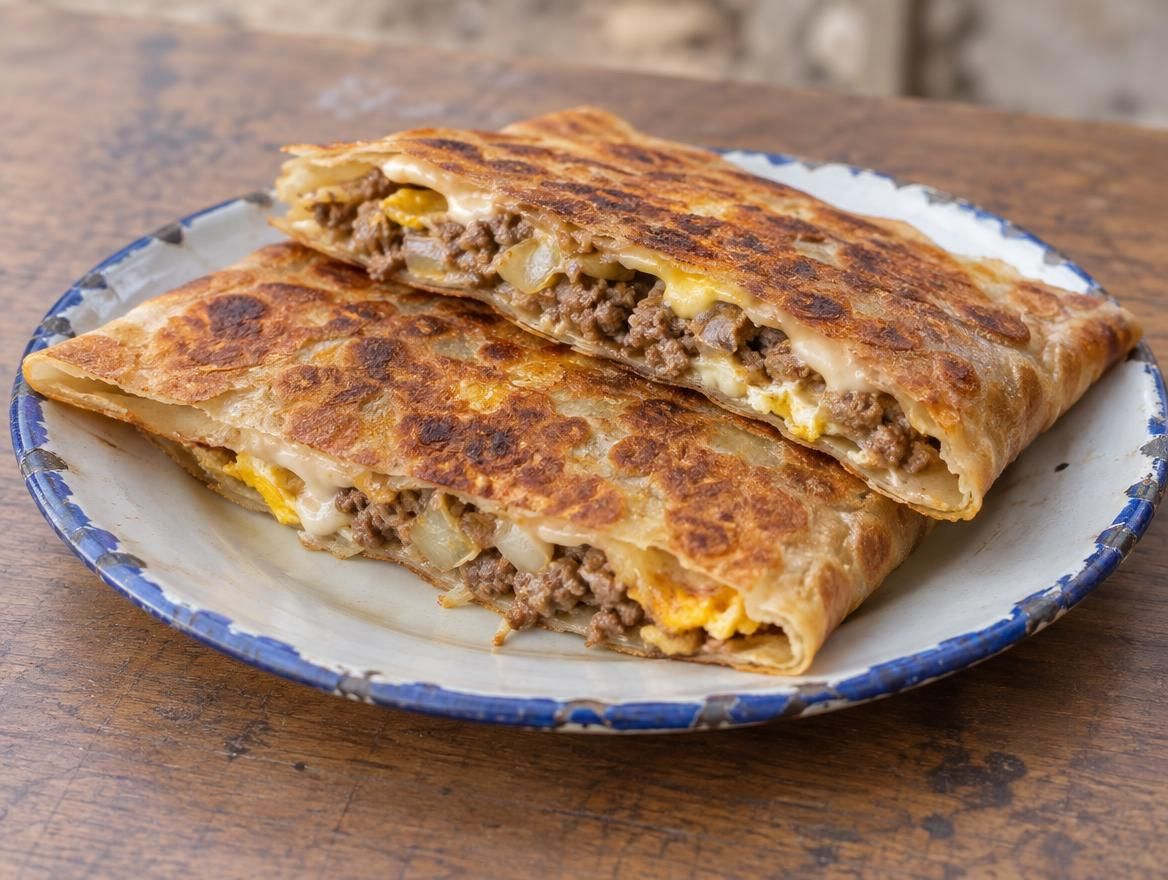
Zanzibar pizza
A paper-thin dough square folded around minced beef, egg, onion, cheese and mayonnaise, then fried crisp on a griddle. Stone Town's night-market snack.
Medium
- 45 min

Chipsi mayai
Fried potato chips set in beaten egg and cooked into a thick omelette. Tanzania's favourite street plate, eaten with kachumbari and chilli.
Easy
- 1 hr 55 min

Pilau
Swahili spiced rice cooked in beef stock with deeply browned onions, cumin, cardamom, cloves and cinnamon. Brown, fragrant and not hot.
Medium
Regional cuisines
Think you know Tanzania food?
3 quiz dishes. Optional — Passport stamps still come from cooking.
Take the Tanzania food quizFood history
The coast has traded across the Indian Ocean for well over a thousand years, and Arab, Persian and Indian merchants brought rice, spices and the pilaf method that became pilau and biryani. Zanzibar's clove plantations made the island a spice name in the 19th century. Maize, cassava and chilli arrived from the Americas by way of Portuguese ships and slowly replaced older millet and sorghum porridges. German and then British rule left tea and bread, and South Asian settlers left chapati, sambusa and a taste for chilli sauce.