Spice
Cloves
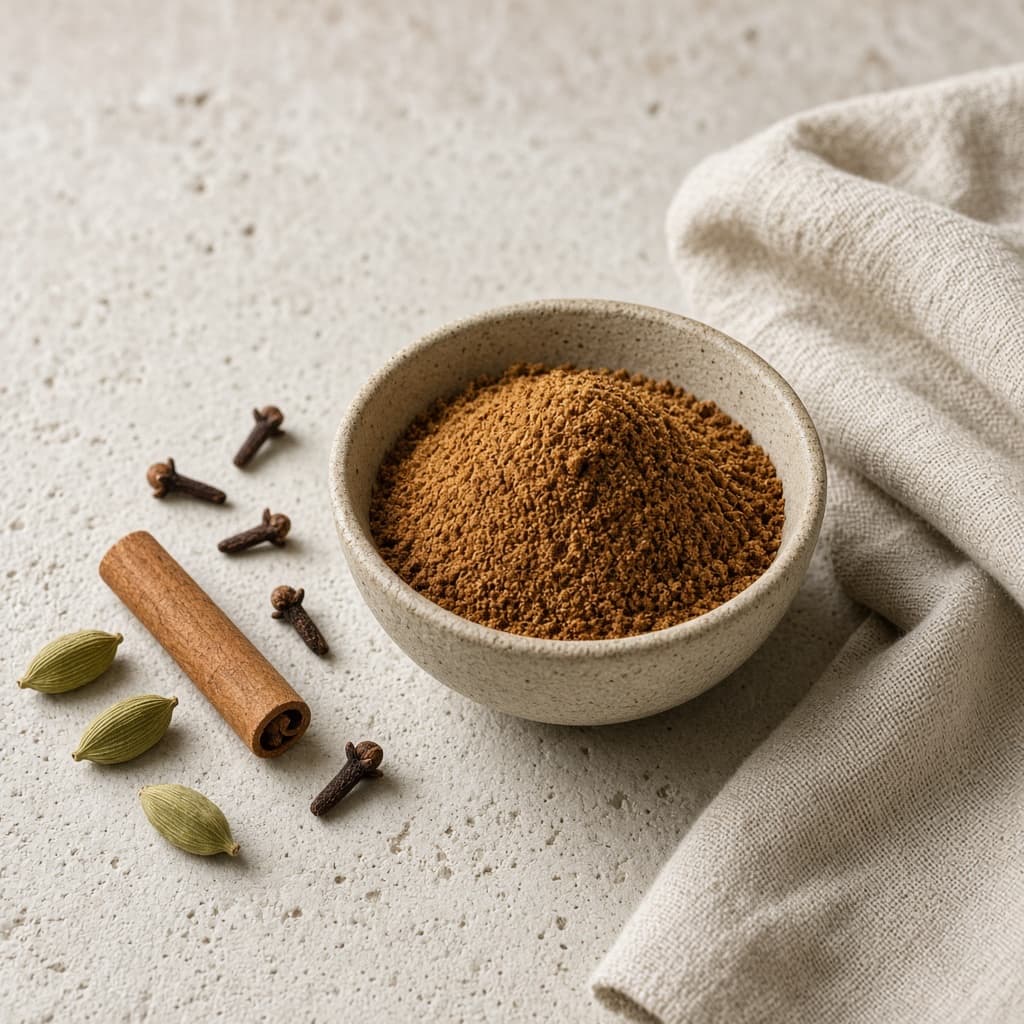
Also called whole cloves, ground clove
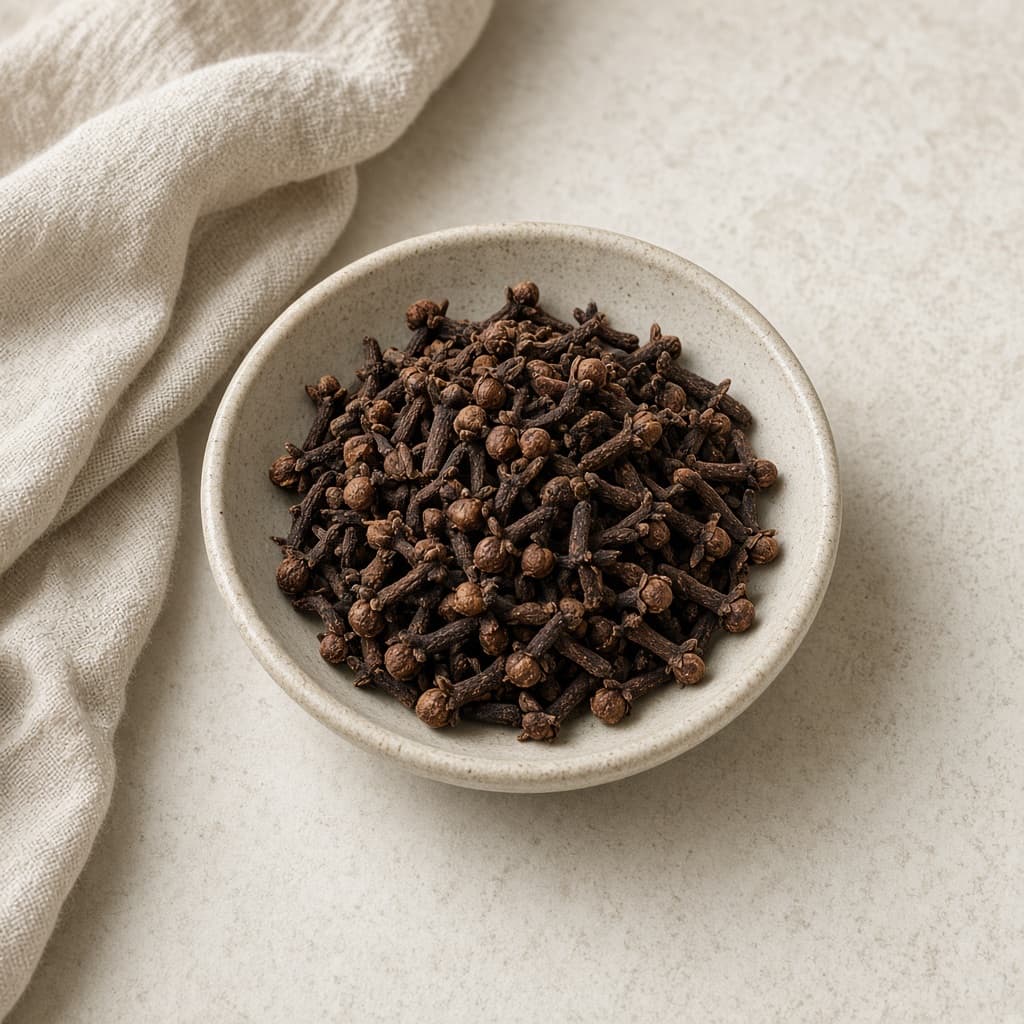
Dried flower buds of Syzygium aromaticum — nail-shaped, oily, fierce. A few perfume a biryani or a pot of chicha; a handful will make the dish taste like a dentist's waiting room. Whole cloves are the cooking form; ground clove is stronger and easier to dump.
Origin
Native to the Maluku Islands, then planted in Zanzibar, Madagascar and East Africa. Every spice route fought over them. You do not need a story about that to use three buds in a rice pot.
Flavour
Hot, sweet, eugenol-heavy — the same chemical as old-fashioned dental oil. Warming, then numbing. Burnt cloves are bitter in a way you cannot stir out.
How it is made
Unopened flower buds are picked and dried until they turn brown and snap. The oil lives in the head; pale, lightweight cloves are tired.
How to use it
Drop whole cloves into kabsa, stock or mulled fruit, then fish them out — nobody wants to bite one. Grind only a pinch for baking. In chicha morada they simmer with pineapple and cinnamon; still, count them. A ham studded with cloves is decoration as much as flavour — do not leave a forest in. If you only have ground clove, use a quarter of the whole-clove count and mix it through the pot so it does not sit in a hot spot.
Storage
Airtight, dark. Whole cloves keep their oil for years; powder is a six-month spice. If you crush one and get little aroma, the jar is furniture.
Recipes using it
Checking your allergy settings…