

 Taste Venezuela
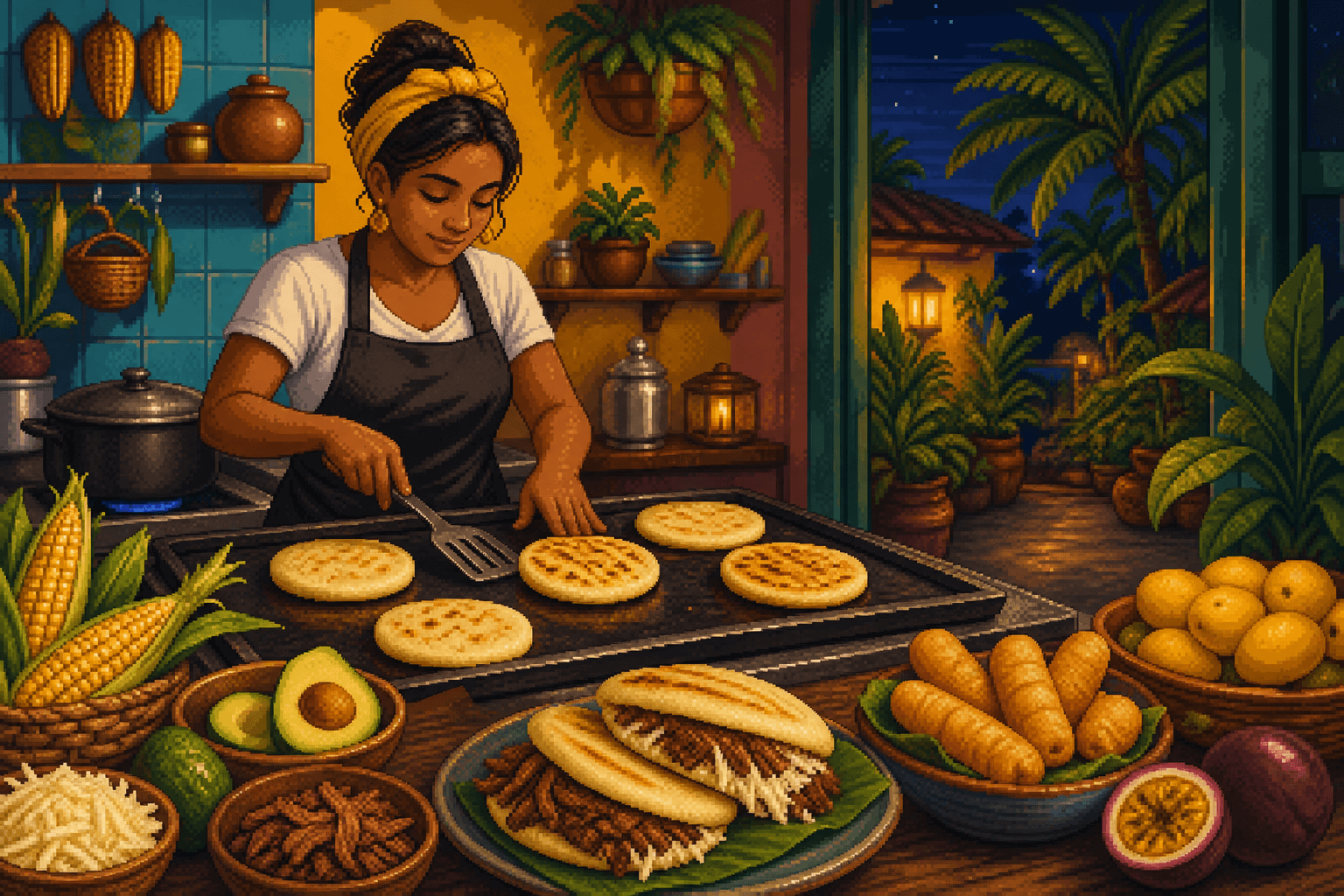
Maize cakes split and stuffed: arepas are breakfast, lunch and a late plate, not a side. The griddle is the national oven.
Arepas are made from pre-cooked maize flour (harina P.A.N. in most kitchens), patted, griddled, sometimes baked or fried, then filled — cheese, shredded beef, black beans, chicken salad, avocado. Reina pepiada is chicken and avocado; pabellón filling is the national plate of shredded beef, black beans, rice and plantain put inside the maize. Coastal kitchens fry fish; the Andes bake arepas differently; the llanos grill meat. Hallacas at Christmas are leaf-wrapped tamales with a complicated filling. Cachapas are sweetcorn pancakes with cheese. The arepa is not a Mexican tortilla and not a Colombian twin you can swap without comment.
10 recipes · 1 cuisine
Essential dishes
Checking your allergy settings…
More dishes
Further Venezuela listings, including shorter editorial recipes and imported methods.
Checking your allergy settings…
Regional cuisines
Think you know Venezuela food?
9 quiz dishes. Optional — Passport stamps still come from cooking.
Take the Venezuela food quizFood history
Indigenous maize cooking met Spanish livestock, African fried-plantain and stew logic, and later Italian and Portuguese urban habits. Pre-cooked maize flour in the twentieth century moved the arepa from soaked-and-ground grain to a weeknight patty without killing the form. Pabellón criollo is a republic-era national plate assembled from older parts. Oil-boom Caracas restaurants added fillings; diaspora cooks in Bogotá, Madrid and Miami kept the griddle. Honesty means maize first, fillings second, and a neighbourly argument with Colombia about whose arepa is correct. Both are.