

Dominican
Cocina dominicana
Plantain, rice, beans and slow-braised meat from the eastern side of Hispaniola, with coconut on the coast and sweets built on condensed milk.
Taíno, Spanish and West African cooking merged on the island from the 16th century. Cassava, root vegetables and the barbecue are Taíno; rice, pork, oregano, olives and sofrito are Spanish; plantain, pigeon peas and the mashing behind mangú are African. The Cibao valley became the farming heartland and the coast around Samaná, settled partly by freed African Americans in the 1820s, cooks with coconut. Industrial salami, frying cheese and tinned milk were adopted in the 20th century. New York's Dominican community keeps the cuisine evolving.
Savoury rather than hot: oregano, garlic, coriander and sour orange do the seasoning, and chilli is a table condiment rather than a base. Plantain appears at every meal in some form. Meats are braised after a quick caramel of sugar in oil. Beans are stewed with squash until thick. The daily rhythm is a big lunch, la bandera, and a lighter evening meal that is often mangú again. Desserts are sweet, spiced and often made from beans, corn or coconut.
Countries and regions
Santo Domingo · Cibao · Samaná · the south coast
Dishes 5
- 45 min

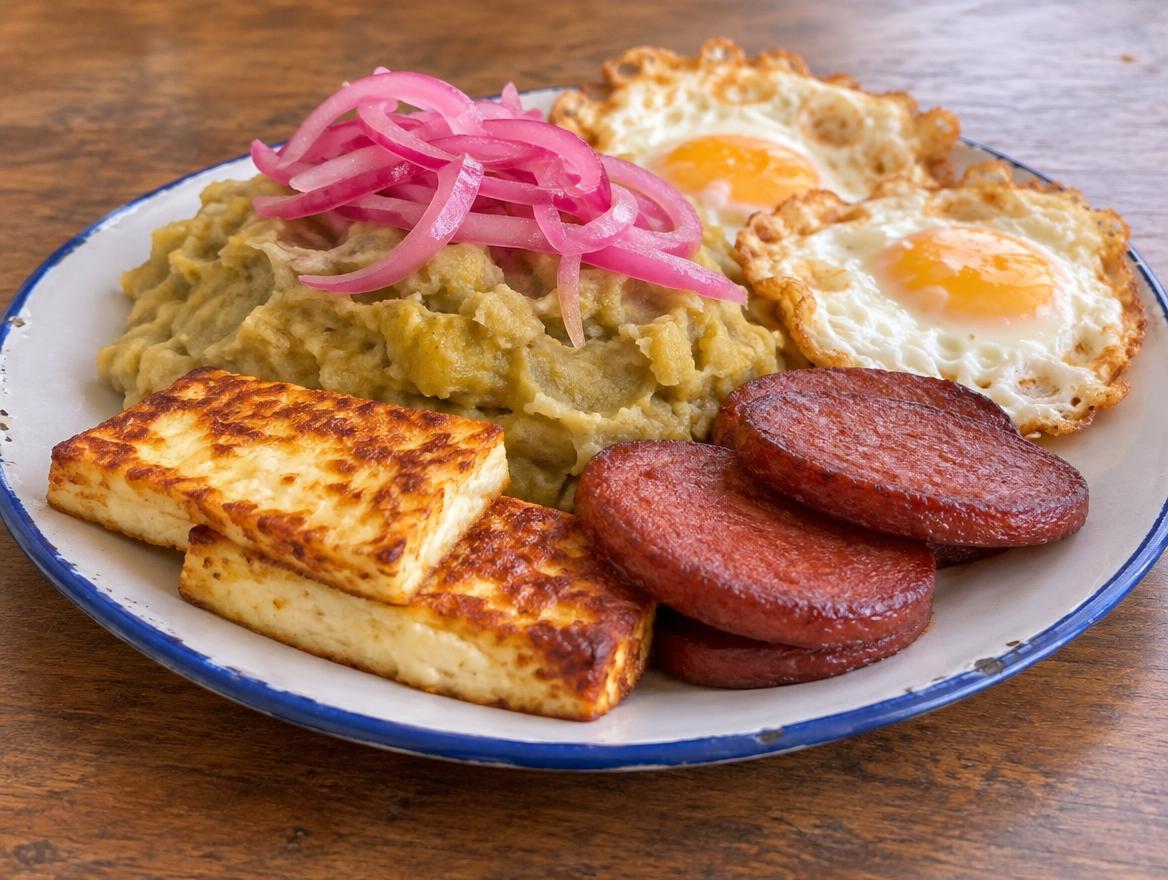
Mangú con los tres golpes
Dominican mashed green plantain with pickled red onion, served with fried cheese, fried salami and eggs — the three hits.
Dominican RepublicEasy
- 1 hr 30 min

La bandera dominicana
White rice, stewed red beans and braised chicken — the Dominican flag on a plate, eaten at lunchtime across the country.
Dominican RepublicMedium
- 2 hr 40 min

Sancocho dominicano
Sancocho
The Dominican celebration stew: several meats simmered with plantain, pumpkin, yam, corn and potato until the broth turns thick and golden.
Dominican RepublicMedium
- 25 min

Tostones
Green plantain slices fried, flattened and fried again until crisp outside and tender within. Salt, garlic, and eat them hot.
Dominican RepublicEasy
- 4 hr

Habichuelas con dulce
Sweet red bean cream with coconut milk, cinnamon, clove, sweet potato and raisins — the Dominican Lenten dessert eaten cold.
Dominican RepublicEasy