

Ghanaian
Ghanaian cuisine
Starch and soup, plantain and chilli, peanut and palm oil: Ghanaian cooking is bold, ginger-heavy and built for sharing.
Akan, Ga and Ewe kitchens in the forest and on the coast grew yam, plantain and oil palm and fished the Gulf of Guinea; the north farmed millet, sorghum and groundnuts. Portuguese ships from 1471 brought maize, cassava and chilli, which became fufu, banku and the universal pepper. The British Gold Coast colony added wheat bread and tinned goods; Hausa traders brought waakye and kebabs. Independence in 1957 made Ghana a cultural reference point for the diaspora, and its food has followed.
Ginger and chilli together are the Ghanaian signature, in kelewele, in shito, in the tomato base of stews. Soups are lighter and more tomato-forward than Nigeria's and eaten with fufu, banku or rice balls. Fermented maize dough gives banku and kenkey their sourness. Smoked and dried fish season almost everything. Plantain appears boiled, fried, roasted and pounded. Street food is a full meal, served by the ladle.
Countries and regions
Ashanti · Greater Accra · Northern Ghana · Volta
Dishes 4
- 1 hr 20 min

Waakye
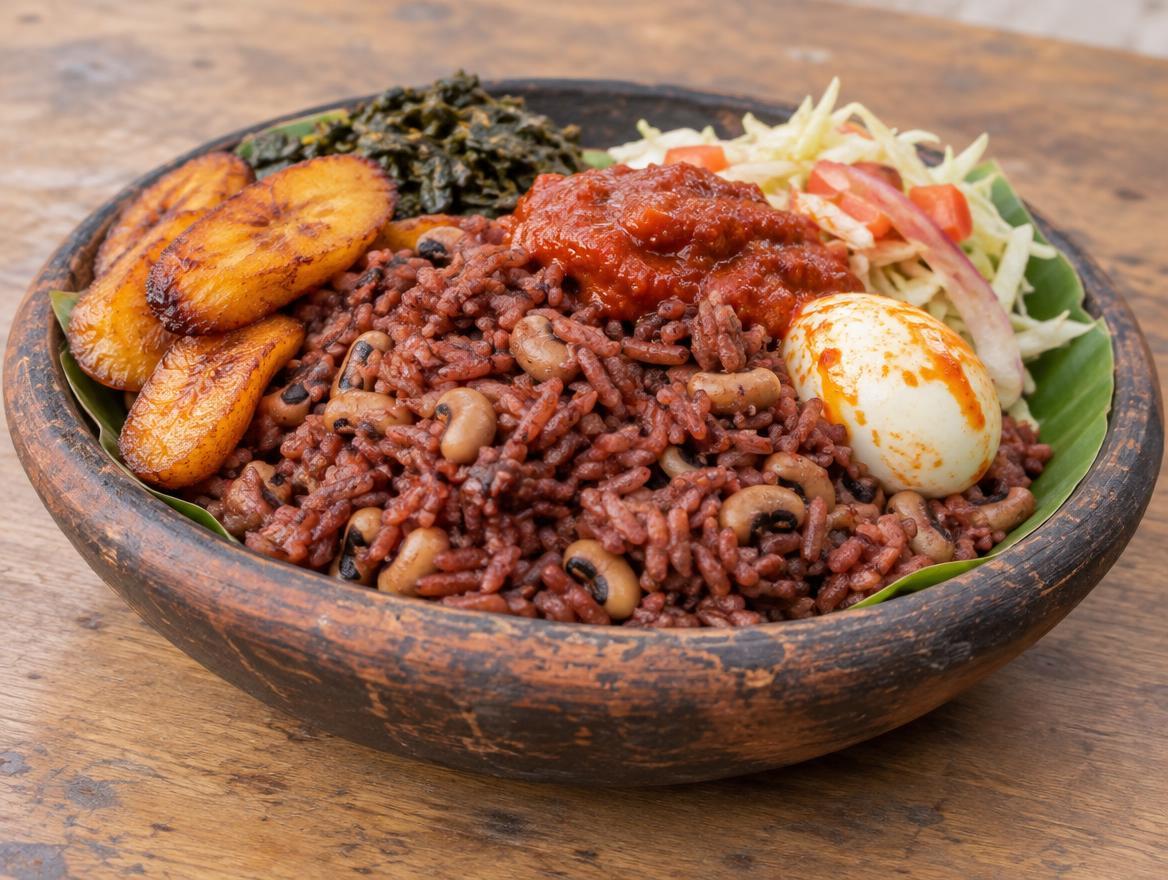
Ghanaian rice and beans cooked together with dried sorghum leaves, which turn the pot red-brown, sold by the ladle from street tables.
GhanaEasy
- 30 min

Kelewele
Ghanaian fried ripe plantain cubes tossed in ginger, chilli and onion before they hit the oil — sweet, hot, sticky-edged street food.
GhanaVery easyMedium heat
- 1 hr 35 min

Red-red
Ghanaian black-eyed bean stew cooked in red palm oil with tomato and ginger, served with fried ripe plantain.
GhanaEasyMedium heat
- 1 hr 30 min

Groundnut soup
Nkatenkwan
Ghanaian peanut soup with chicken, tomato, ginger and chilli, thin enough to call soup and eaten with rice balls or fufu.
GhanaEasyMedium heat