

Nigerian
Nigerian cuisine
Thick soups eaten by hand with pounded starches, red pepper bases fried down in oil, and a snack culture that never closes.
Yam, palm oil, cowpea and melon seed are indigenous and ancient. Chilli, tomato, maize and cassava arrived with Atlantic trade from the sixteenth century and were absorbed so completely that no Nigerian soup is imaginable without pepper. Colonial trade added stockfish, stock cubes, wheat flour and tinned milk. Lagos street food and a large diaspora have made jollof, suya and puff-puff recognisable far beyond West Africa, and the regional traditions of Yoruba, Igbo and Hausa kitchens remain distinct underneath the national dishes.
Heat from scotch bonnet, savour from ground crayfish, stockfish and fermented locust bean, body from palm oil and ground seeds. Soups are thick and eaten with a swallow: pounded yam, eba, amala or fufu. Rice dishes start with a tomato-pepper base fried until the oil separates. Snacks are fried and sold hot. Meat is often cooked twice, boiled then fried. Portions are generous and leftovers are expected.
Countries and regions
Yorubaland · Igboland · Hausa north · Niger Delta
Dishes 7
- 1 hr 20 min

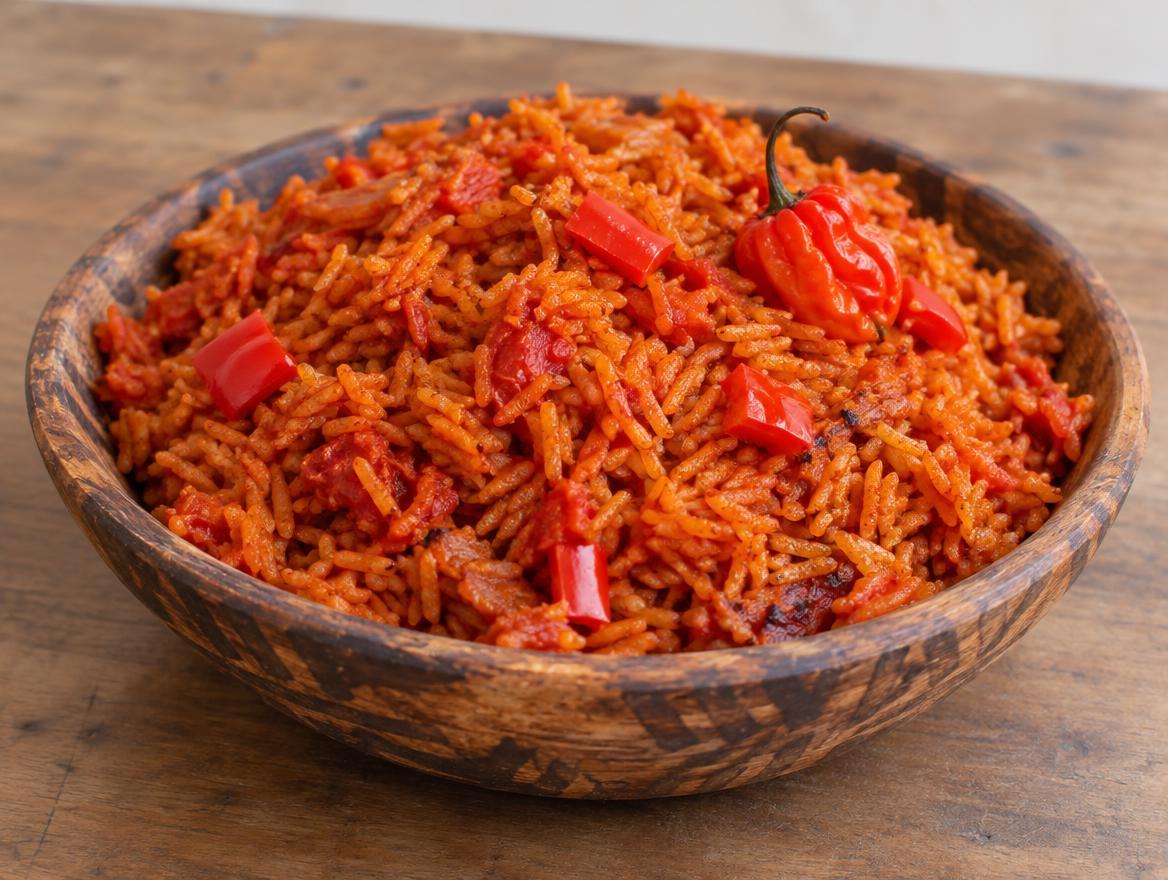
Jollof rice
Nigerian party rice cooked in a fried-down tomato, pepper and scotch bonnet base until the grains stain red and the bottom catches.
NigeriaMediumMedium heat
- 2 hr

Egusi soup
Nigerian melon-seed soup with palm oil, beef, stockfish, crayfish and greens, eaten with pounded yam.
NigeriaMediumHot
- 1 hr 40 min

Suya
Northern Nigerian street skewers of thin beef rubbed in yaji, a peanut and chilli spice mix, grilled hot and served with raw onion.
NigeriaEasyHot
- 1 hr 35 min

Puff-puff
Nigerian yeasted dough balls, deep-fried until golden and chewy, sold hot in paper bags on every corner.
NigeriaEasy
- 4 hr 30 min

Moi moi
Mọ́ínmọ́ín
Nigerian steamed bean pudding of skinned black-eyed beans blended with peppers, onion and crayfish, set in cups.
NigeriaMediumMedium heat
- 1 hr 20 min

Chin chin
Crunchy Nigerian fried pastry nibbles of sweet nutmeg dough, cut into small cubes and fried by the bowlful.
NigeriaEasy
- 1 hr 30 min

Nigerian pepper soup
Pepper soup
Thin, hot, aromatic Nigerian broth of goat meat simmered with scotch bonnet and the camphorous pepper soup spice blend.
NigeriaEasyExtra hot