

Haitian
Manje ayisyen
Creole cooking from the western third of Hispaniola: epis-marinated meat, fried pork, hot vinegar pickles, red rice and a soup that marks independence.
The French colony of Saint-Domingue was the richest in the Caribbean and the cruellest; its kitchen was built by enslaved Africans working with French technique, Taíno roots and Spanish-era citrus and pork. The revolution that ended in 1804 made Haiti the first Black republic and turned a planter's pumpkin soup into the national dish of freedom. Rice spread in the 20th century, the north kept its coconut and djon djon mushrooms, and emigration carried griot and pikliz to Miami, Montreal and Brooklyn.
Everything begins with epis and a wash of lime. Meat is braised until tender and then fried until crisp. Heat arrives through scotch bonnet, whole in the pot for aroma or sliced into pikliz for fire. Rice is cooked in bean liquid or with black mushrooms and is never mushy. Cloves, thyme and parsley are the dominant aromatics. Squash, cabbage and root vegetables bulk out soups and legumes. Sweets lean on sweet potato, coconut and condensed milk.
Countries and regions
Port-au-Prince · Cap-Haïtien · Jacmel · the Artibonite
Dishes 4
- 10 hr 25 min

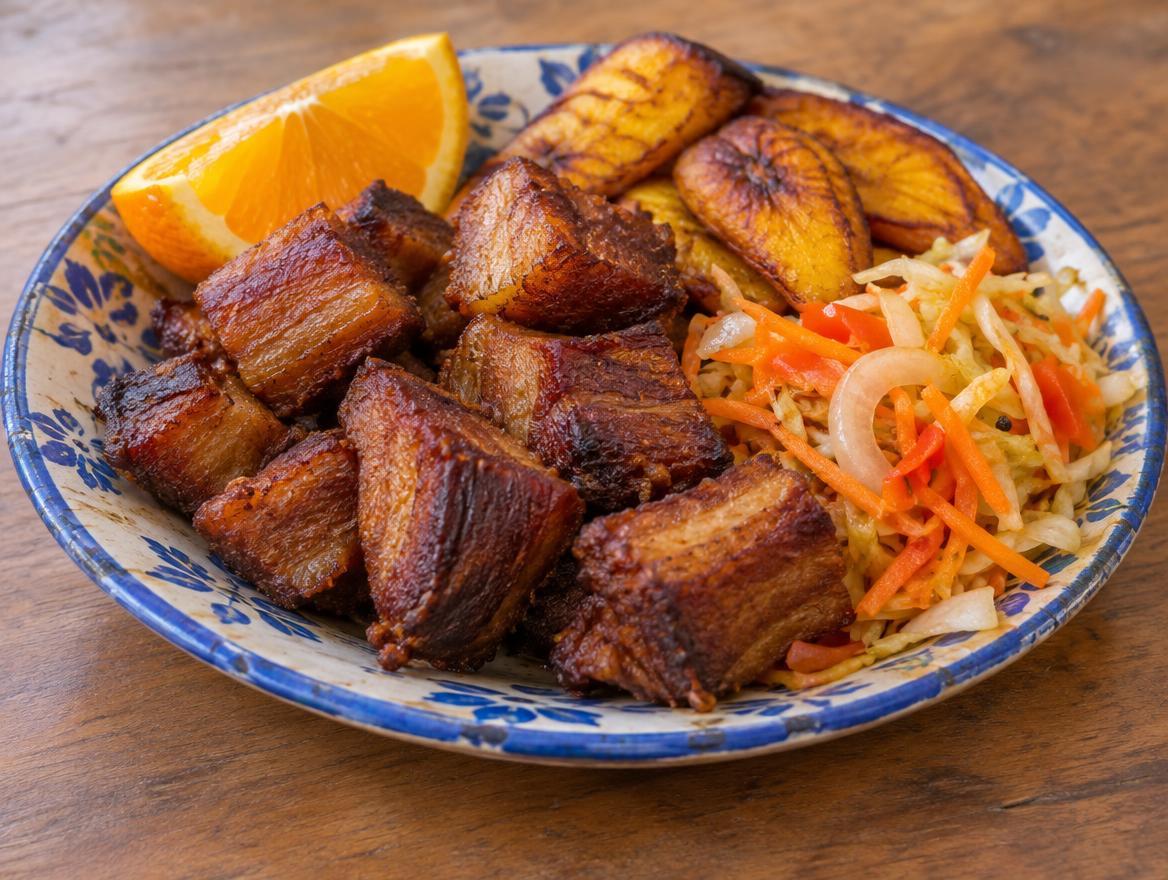
Griot
Griyo
Haitian pork shoulder marinated in sour orange, scotch bonnet and epis, braised until tender, then fried until the edges shatter.
HaitiMediumMedium heat
- 4 hr 30 min

Soup joumou
Haiti's independence soup: a smooth pumpkin broth with beef, pasta, potato, carrot, cabbage and a whole scotch bonnet, eaten every 1 January.
HaitiMedium
- 24 hr 20 min

Pikliz
Haitian pickled cabbage, carrot and scotch bonnet in vinegar and lime — the sharp, very hot relish that goes on griot and everything fried.
HaitiVery easyExtra hot
- 9 hr 50 min

Diri kole ak pwa
Haitian rice and red beans cooked together in the bean liquid with coconut milk, thyme, cloves and a whole scotch bonnet.
HaitiEasy