
Icelandic
Íslensk matargerð
Fish, lamb and dairy from a cold island with few crops, cooked simply and preserved by drying, smoking and souring.
Norse settlers brought livestock and preserving methods suited to a land with little salt, grain or firewood. For a thousand years the diet was dried fish with butter, boiled or smoked lamb, skyr and whey-pickled offal, with imported rye for those who could afford it. Danish trade and rule introduced potatoes, sugar, coffee and European baking. The fishing boom and refrigeration of the twentieth century replaced preserved food with fresh, and the old foods became festival fare.
Few ingredients, little seasoning and a preference for boiling over browning. The quality of the lamb and fish carries the dish. Butter is used generously and bread is dense, dark and sweet. Smoke and sourness come from the preserving traditions, and sweetness from a Danish-influenced love of cakes and syrup. Meals are warming and plain, and nothing edible is wasted, which explains both the fish mash and the sheep's head.
Countries and regions
Reykjavik and the south-west · Westfjords · North Iceland
Dishes 3
- 50 min

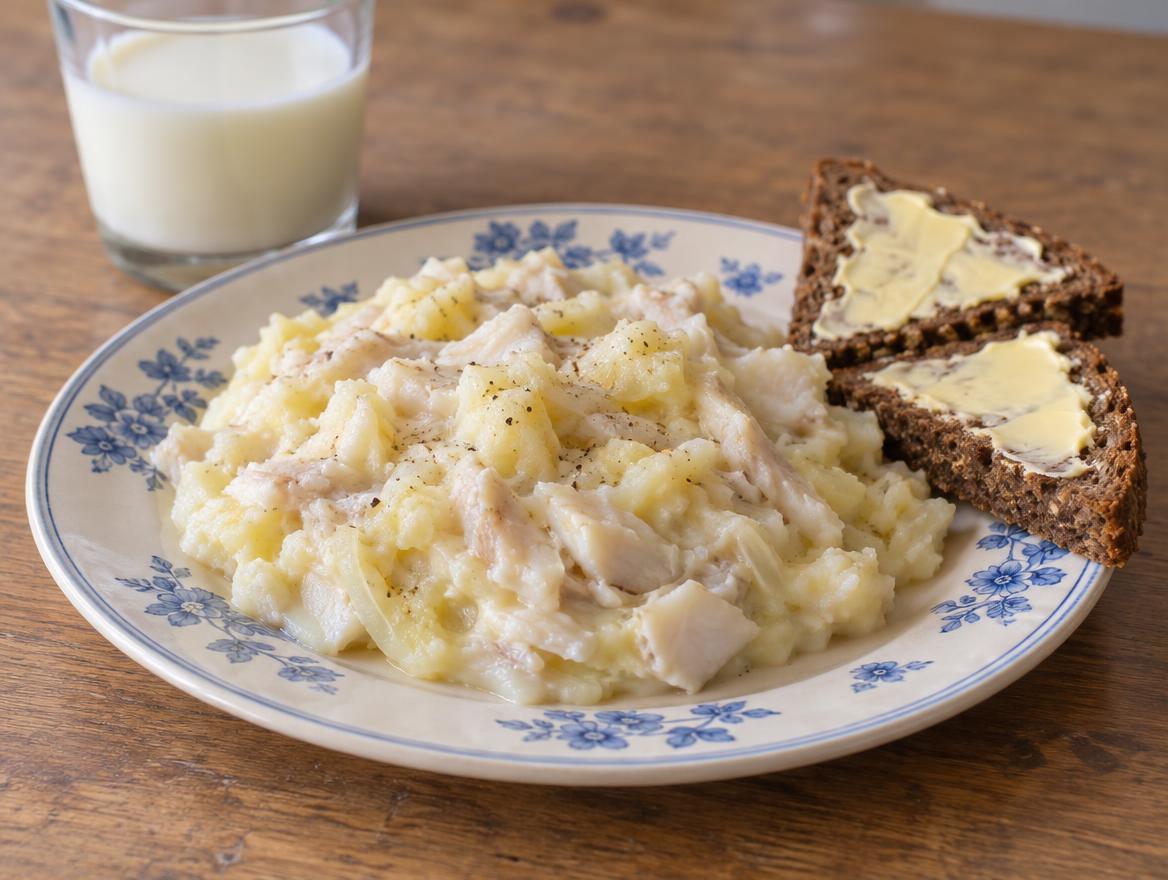
Plokkfiskur
Icelandic fish and potato mash: flaked poached haddock or cod stirred with boiled potato and onion into a thick white sauce, eaten with buttered rye bread.
IcelandEasy
- 1 hr 50 min

Kjötsúpa
Icelandic lamb soup: bone-in lamb simmered with swede, carrot, potato, cabbage and leek in a clear broth, thickened only by a handful of rice or oats.
IcelandEasy
- 11 hr 15 min

Rúgbrauð
Dark, sweet, crustless Icelandic rye bread, stirred together as a batter with buttermilk and golden syrup and steamed in a sealed tin in a very low oven overnight.
IcelandEasy