

Indonesian
Masakan Indonesia
Pounded spice pastes, sweet soy, coconut and chilli over rice, from the sweet cooking of Java to the fiery curries of Sumatra.
Indonesian food grew from island staples of rice, coconut, fish and native spices, reshaped by a thousand years of trade. Indian merchants brought curry techniques, Arabs brought skewered meats, Chinese settlers brought noodles, soy, tofu and the wok, and the Dutch colonial era added bread and cakes. Javanese cooks fermented soybeans into tempeh and Chinese-Indonesian producers turned soy sauce into kecap manis. After 1945 regional dishes were adopted as national ones and carried across the archipelago by warungs and street carts.
A bumbu paste of shallot, garlic, chilli, turmeric, galangal, candlenut and shrimp paste begins most dishes, fried until the oil separates. Javanese food is sweet with palm sugar and kecap manis; Padang food from Sumatra is rich, hot and coconut-heavy; Balinese and Manadonese cooking are hotter still. Sambal, fried shallots and prawn crackers appear at every meal. Rice is eaten three times a day.
Countries and regions
Java · Sumatra · Bali · Sulawesi
Dishes 8
- 30 min

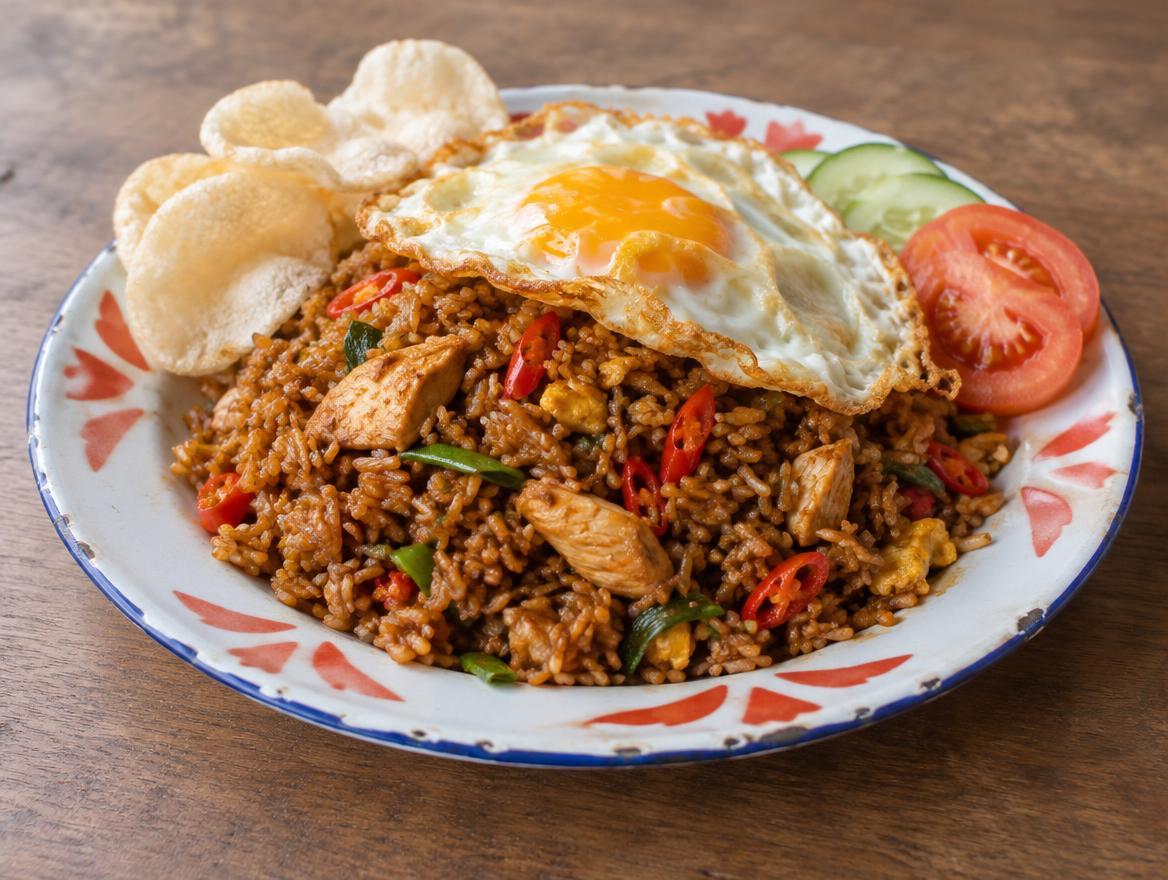
Nasi goreng
Indonesian fried rice stained with kecap manis, seasoned with shrimp paste and chilli, and finished with a fried egg.
IndonesiaEasyMedium heat
- 25 min

Mie goreng
Mi goreng
Indonesian fried egg noodles with sweet soy, garlic, chilli, greens and a tangle of egg, cooked fast in a very hot wok.
IndonesiaEasyMedium heat
- 1 hr 50 min

Sate ayam
Indonesian chicken satay: kecap manis-marinated thigh grilled on skewers and served with a rough, sweet-hot peanut sauce.
IndonesiaEasy
- 1 hr

Gado-gado
Indonesian salad of blanched vegetables, boiled egg, fried tofu and tempeh under a thick peanut dressing.
IndonesiaEasy
- 1 hr 30 min

Soto ayam
Indonesian turmeric chicken soup with lemongrass and lime leaf, served over rice vermicelli with egg, sprouts and fried shallots.
IndonesiaMedium
- 1 hr 10 min

Bakso
Indonesian bouncy beef meatballs in a clear garlic broth with noodles, greens, fried shallots and sweet soy.
IndonesiaMedium
- 25 min

Tempeh orek
Orek tempe
Javanese sweet-soy fried tempeh: crisp strips glazed with kecap manis, palm sugar, chilli and bay leaf.
IndonesiaVery easy
- 25 min

Pisang goreng
Indonesian banana fritters: ripe bananas in a thin rice-flour batter, fried until shattering and eaten hot.
IndonesiaEasy