
Maldivian
Island cooking from the Indian Ocean, made almost entirely from tuna, coconut and a starch, sharpened with lime and chilli.
Maldivian cuisine, also called Dhivehi cuisine, was shaped by scarcity of land and abundance of sea. Islanders fished tuna, grew coconuts and a few root crops, and traded cured fish for rice and spices with Sri Lanka, India and Arab merchants. Preserving tuna by boiling, smoking and drying produced the country's main export and its most distinctive flavours. Curries and flatbreads show the south Asian connection. Resorts now serve food from everywhere, but on local islands the old pattern of fish, coconut and rice still holds.
Clean, salty, fishy in the good sense, and often very hot. Tuna appears at every meal in fresh, smoked, dried or paste form. Coconut softens and sweetens. Lime juice, raw onion and a fierce small chilli are worked in by hand, giving sharp, fresh dishes as well as cooked ones. Curry leaves and pandan scent the curries. Meals are simple in structure: a fish dish, a starch, and something sour or hot beside it.
Countries and regions
Malé · Northern atolls · Southern atolls
Dishes 2
- 55 min

Mas huni
މަސްހުނި
Flaked tuna worked together with fresh grated coconut, onion, chilli and lime, scooped up with thin roshi flatbread. The Maldivian breakfast.
MaldivesEasyMedium heat
- 40 min

Garudhiya
ގަރުދިޔަ
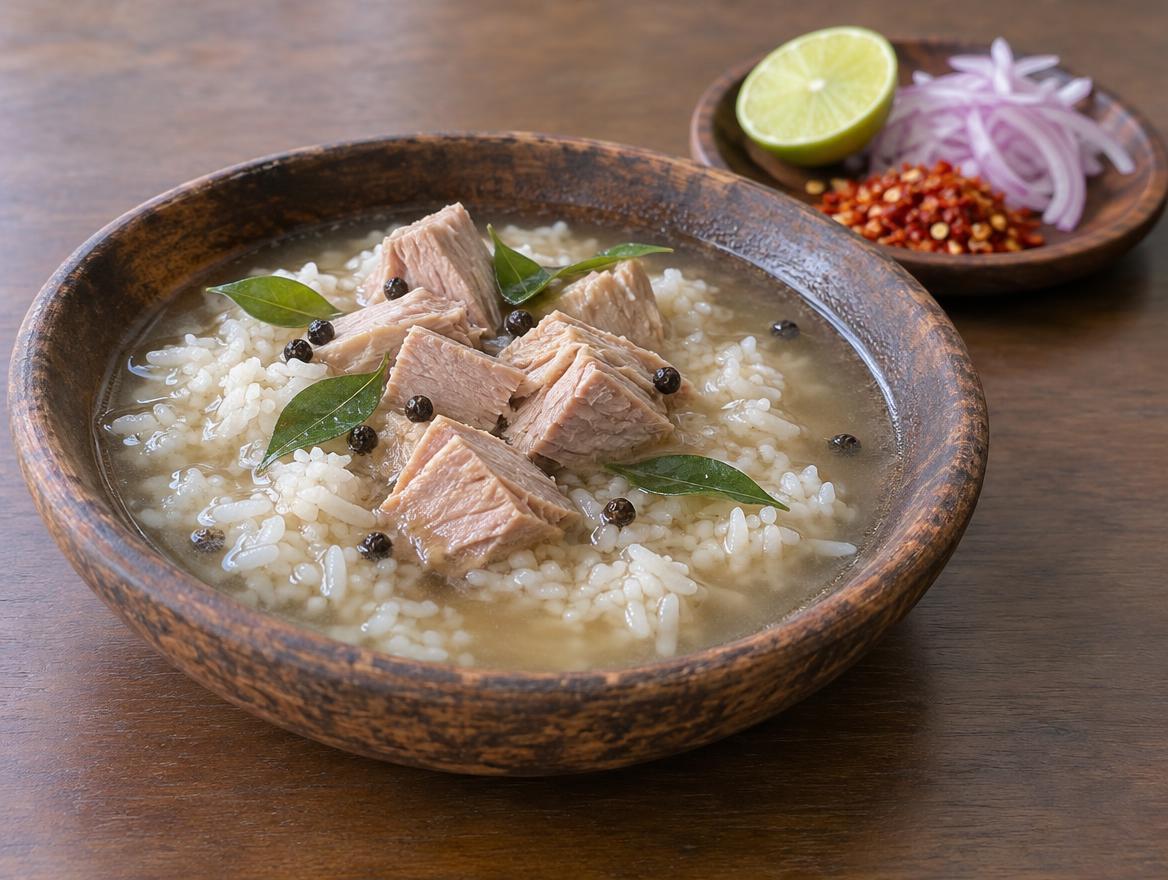
A clear, salty tuna broth with chunks of fresh fish, eaten over rice with lime, raw onion and crushed chilli. The plainest and oldest Maldivian meal.
MaldivesEasy