
 Taste Maldives
ދިވެހިރާއްޖެ
A chain of coral atolls in the Indian Ocean whose cooking rests on three things: tuna, coconut and starch.
Maldivian food begins with tuna, mostly skipjack caught by pole and line. It is eaten fresh in the clear broth garudhiya, smoked and dried as Maldive fish, cooked down to the dark paste rihaakuru, and flaked with coconut for the breakfast dish mas huni. Coconut is grated, squeezed for milk and pressed for oil. The starch is rice, thin roshi flatbread, taro, breadfruit or sweet potato. Curries are scented with curry leaves, pandan and a small, fierce local chilli. In the afternoon come hedhikaa, short eats: fried and baked snacks of fish, coconut and dough, taken with black tea.
2 recipes · 1 cuisine
All dishes 2
- 55 min

Mas huni
މަސްހުނި
Flaked tuna worked together with fresh grated coconut, onion, chilli and lime, scooped up with thin roshi flatbread. The Maldivian breakfast.
EasyMedium heat
- 40 min

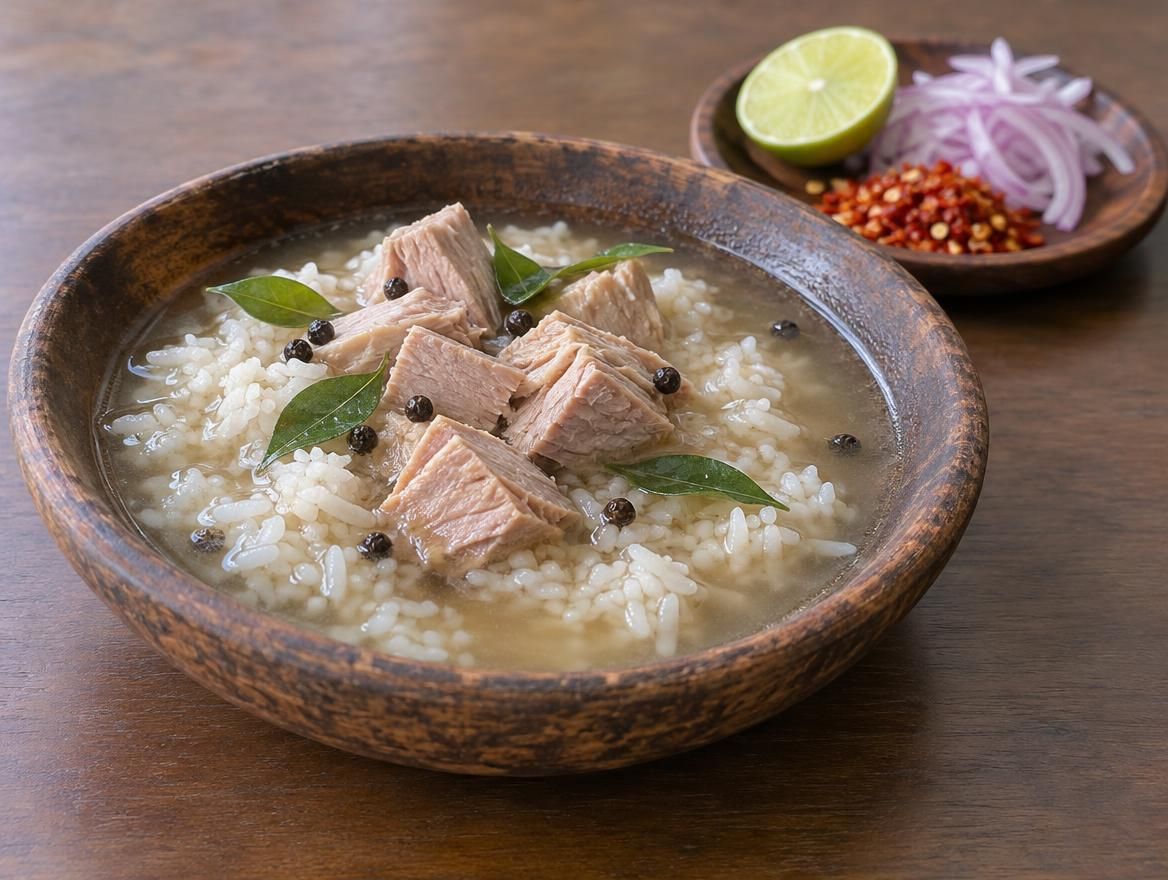
Garudhiya
ގަރުދިޔަ
A clear, salty tuna broth with chunks of fresh fish, eaten over rice with lime, raw onion and crushed chilli. The plainest and oldest Maldivian meal.
Easy
Regional cuisines
Think you know Maldives food?
2 quiz dishes. Optional — Passport stamps still come from cooking.
Take the Maldives food quizFood history
The islands have little soil and almost no farmland, so the sea and the coconut palm fed people for most of their history. The Maldives sat on Indian Ocean trade routes, and for centuries exported cured tuna and cowrie shells while importing rice, spices and cloth. Sri Lankan and south Indian cooking are the nearest relatives, visible in the curries, flatbreads and use of curry leaves, and Arab traders left their mark as the country became Muslim. Tourism since the 1970s has brought every imported food to the resorts, but island home cooking has changed far less.
Common ingredients
Techniques
- boiling and skimming fish broth
- smoking and sun-drying tuna
- grating and squeezing coconut
- hand-mixing with lime and salt
- griddling flatbread