

Romanian
Bucătăria românească
Sour soups, polenta, pork, pickled cabbage and sour cream, cooked where Balkan, Ottoman, Hungarian and Slavic kitchens meet.
Ottoman suzerainty gave Wallachia and Moldavia stuffed vegetables, meatballs, grilled minced meat and the word ciorbă. Orthodox fasting made beans, greens and pickles essential. Maize arrived in the 17th century and became mămăligă, untaxed and life-saving. Habsburg Transylvania added paprika, schnitzel and strudel. The communist decades of shortage faded regional cooking; since 1990 it has returned, along with pride in the Christmas pig and the grandmother's sarmale.
Sour is the dominant note, from fermented bran, pickled cabbage, lemon and sour cream. Pork and smoked pork fat flavour vegetable dishes. Dill, lovage, summer savory, garlic and parsley season rather than spice; chilli appears whole on the side. Polenta substitutes for bread at the table. Cheeses are white, salty and usually from sheep. Desserts are fried, cheese-based or layered with walnuts and jam, and plum brandy opens the meal.
Countries and regions
Wallachia · Moldavia · Transylvania · Dobrogea
Dishes 5
- 3 hr 30 min

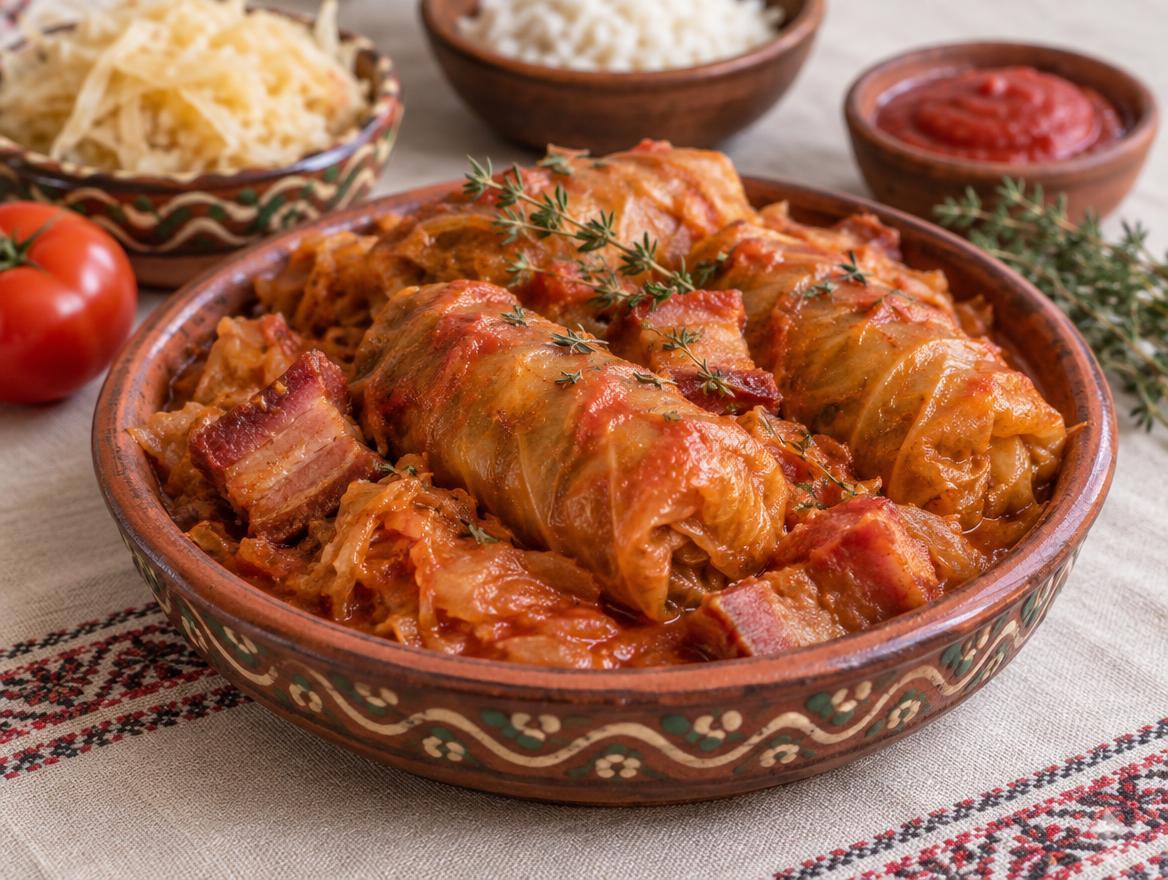
Sarmale
Romanian cabbage rolls: pork and rice wrapped in sour pickled cabbage leaves, braised slowly with smoked bacon and tomato.
RomaniaMedium
- 40 min

Mămăligă cu brânză
Mămăligă cu brânză și smântână
Romanian polenta turned out firm, served with crumbled salty sheep's cheese and a lot of sour cream.
RomaniaEasy
- 12 hr 37 min

Mici
Mici (mititei)
Romanian grilled skinless sausages: beef and pork with garlic, bicarbonate and spices, charred and eaten with mustard and bread.
RomaniaEasy
- 1 hr 15 min

Ciorbă de perișoare
Romanian sour soup with pork and rice meatballs, root vegetables, lovage and a finish of sour cream.
RomaniaEasy
- 1 hr 15 min

Papanași
Romanian fried cheese doughnuts: a ring with a ball on top, under sour cream and sour cherry jam.
RomaniaMedium