

 Taste Romania
România
A Latin-speaking country on the Black Sea whose kitchen mixes Balkan, Ottoman, Hungarian and Slavic habits around polenta, pork and sour soup.
Romanian meals start with ciorbă, a sour soup, and lean on mămăligă, firm polenta, where other countries would use bread. Pork is the meat, especially at Christmas, when a pig is slaughtered and nothing is wasted. Cabbage rolls, grilled skinless sausages, stuffed peppers, bean stews and sheep's cheese are everyday. Sour cream goes on nearly everything. Dill, lovage, summer savory and garlic season the pot. Transylvania adds Hungarian paprika and Saxon pastries; the Danube delta adds fish; Moldavia adds the best wine and the best cabbage rolls, according to Moldavians.
5 recipes · 1 cuisine
All dishes 5
- 3 hr 30 min

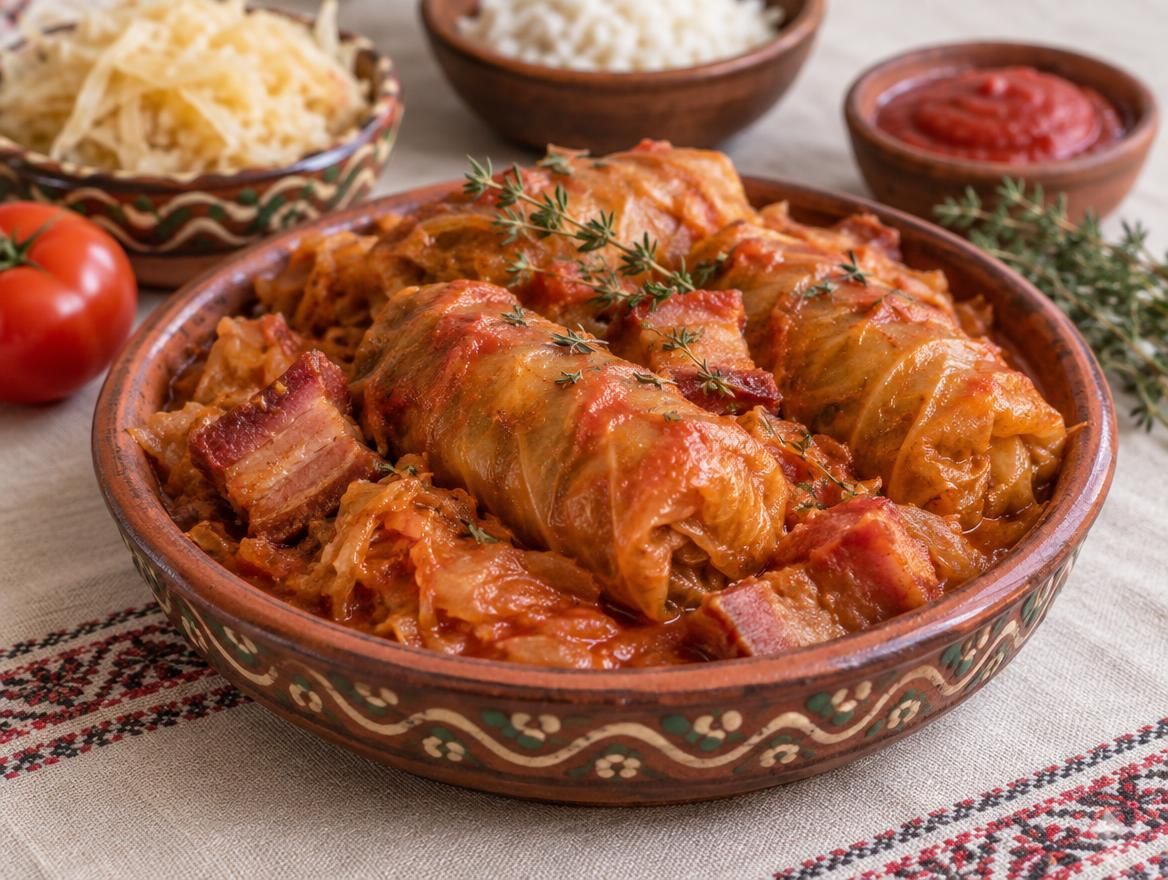
Sarmale
Romanian cabbage rolls: pork and rice wrapped in sour pickled cabbage leaves, braised slowly with smoked bacon and tomato.
Medium
- 40 min

Mămăligă cu brânză
Mămăligă cu brânză și smântână
Romanian polenta turned out firm, served with crumbled salty sheep's cheese and a lot of sour cream.
Easy
- 12 hr 37 min

Mici
Mici (mititei)
Romanian grilled skinless sausages: beef and pork with garlic, bicarbonate and spices, charred and eaten with mustard and bread.
Easy
- 1 hr 15 min

Ciorbă de perișoare
Romanian sour soup with pork and rice meatballs, root vegetables, lovage and a finish of sour cream.
Easy
- 1 hr 15 min

Papanași
Romanian fried cheese doughnuts: a ring with a ball on top, under sour cream and sour cherry jam.
Medium
Regional cuisines
Think you know Romania food?
5 quiz dishes. Optional — Passport stamps still come from cooking.
Take the Romania food quizFood history
Dacian and Roman roots, then centuries of Ottoman influence that brought stuffed vegetables, meatballs and the word ciorbă, filtered through a Christian Orthodox calendar with long fasts that made bean and vegetable dishes central. Maize arrived in the 1600s and became mămăligă, the food that fed the peasantry. Habsburg Transylvania took on schnitzels, strudels and goulash. Communist-era shortages flattened the cuisine for a generation; since 1990 regional cooking and the traditional pig slaughter have come back as points of pride.
Common ingredients
Techniques
- souring soups with borș or lemon
- slow braising in sour cabbage
- charcoal grilling
- stirring polenta until firm
- deep-frying cheese doughs