

Trinidadian
Trini food
Indian, African, Creole and Chinese cooking on one small island, eaten mostly standing up, with pepper sauce on everything.
Spanish and British colonisation built a sugar economy on enslaved African labour, which left the stews, dumplings, callaloo and the burnt-sugar browning technique. From 1845 to 1917 indentured workers from northern India arrived and brought roti, curry, dhal and fritters, which became doubles, pholourie and the Trinidad curry style. Chinese, Portuguese, Syrian-Lebanese and Venezuelan arrivals added more. Oil money in the 20th century supported a dense, competitive street food culture that defines the island's eating to this day.
Cumin-heavy curry powder, green seasoning in every marinade, scotch bonnet in the sauce and the pot, and sweetness from burnt sugar and coconut milk. Breads are fried fast and yeasted: bara, bake, fry bake. Split peas and chickpeas appear as fritters, dhal and soup thickener. One-pot rice dishes are party food. Tobago adds crab, dumplings and more coconut. Portions are generous and eaten from paper or styrofoam as often as from plates.
Countries and regions
Port of Spain · Maracas Bay · Princes Town · Tobago
Dishes 5
- 2 hr 45 min

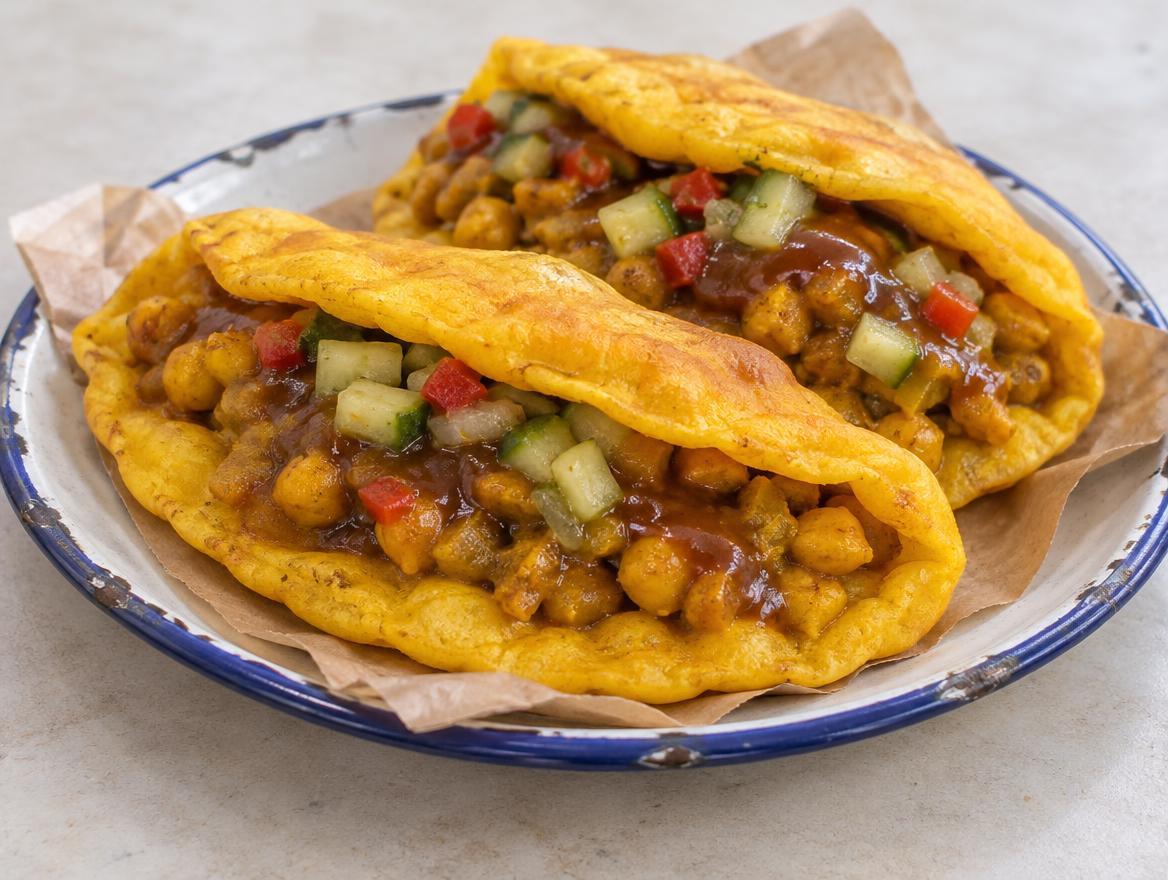
Doubles
Trinidad's street breakfast: two soft turmeric fried breads folded around curried chickpeas, with tamarind, cucumber and pepper sauce.
Trinidad and TobagoMediumMedium heat
- 2 hr 10 min

Bake and shark
Maracas Bay's beach sandwich: seasoned fried fish in a puffy fried bread, piled with salad, pineapple and a row of sauces.
Trinidad and TobagoMedium
- 2 hr 15 min

Pelau
Trinidad's one-pot rice: chicken browned in burnt sugar, cooked with pigeon peas, coconut milk, pumpkin and green seasoning.
Trinidad and TobagoMedium
- 5 hr 35 min

Pholourie
Light, spiced split pea fritters fried in balls and dipped in tamarind or mango chutney — Trinidad's favourite snack from a bag.
Trinidad and TobagoEasy
- 1 hr 30 min

Trinidad corn soup
Corn soup
The after-fete soup: split peas, corn on the cob, pumpkin, coconut milk and flour dumplings in a thick, pepper-warmed broth.
Trinidad and TobagoEasy