

 Taste Trinidad and Tobago
Trinidad and Tobago
Twin islands at the bottom of the Caribbean where Indian, African, Creole, Chinese and Syrian cooking meet in a paper bag on the roadside.
Trinidad eats on the street: doubles at dawn, pholourie and aloo pie by the dozen, bake and shark at the beach, corn soup after the fete. Curry is everywhere, Trinidad-style with heavy cumin, wrapped in roti or eaten with rice and dhal. Afro-Trinidadian cooking gives callaloo, stewed chicken browned in sugar, pelau and macaroni pie. Tobago leans on seafood and curried crab with dumplings. Everything comes with pepper sauce, green seasoning runs through every marinade, and Carnival is as much about food as music.
5 recipes · 1 cuisine
All dishes 5
- 2 hr 45 min

Doubles
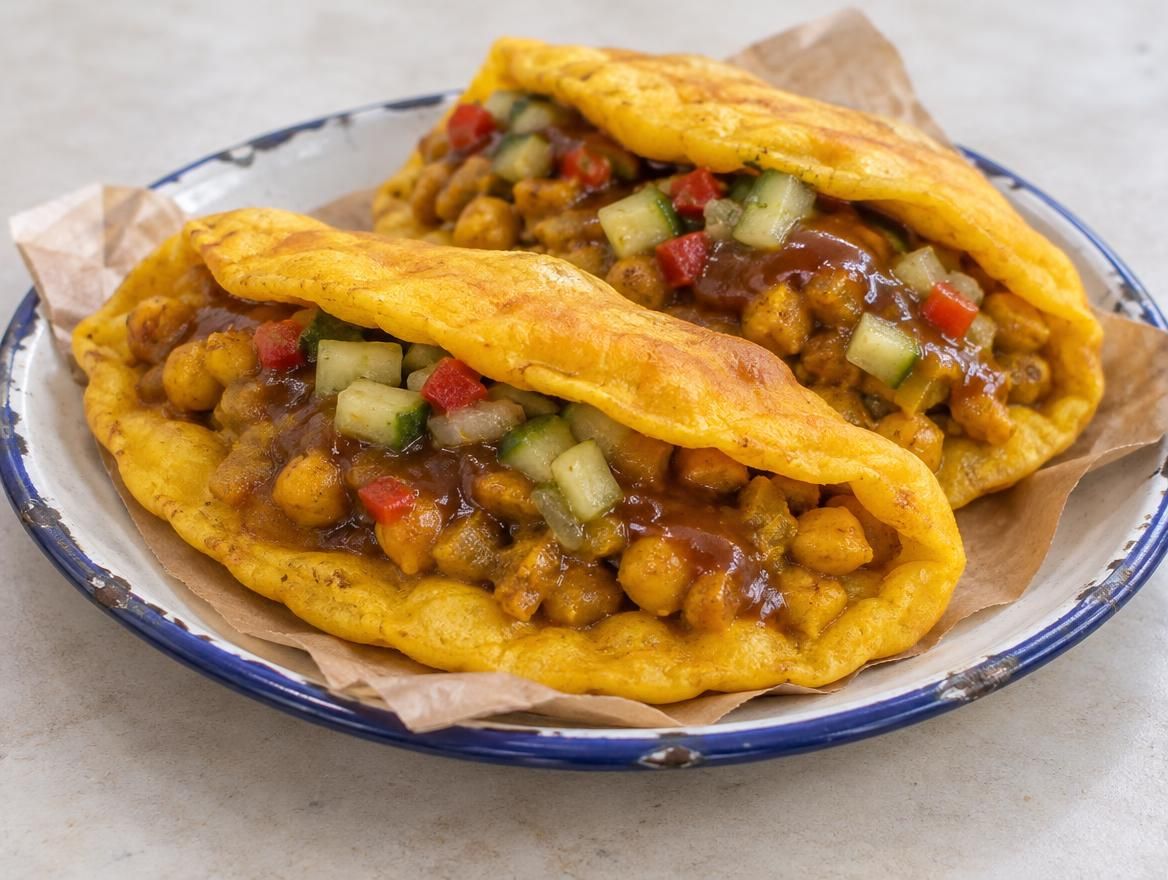
Trinidad's street breakfast: two soft turmeric fried breads folded around curried chickpeas, with tamarind, cucumber and pepper sauce.
MediumMedium heat
- 2 hr 10 min

Bake and shark
Maracas Bay's beach sandwich: seasoned fried fish in a puffy fried bread, piled with salad, pineapple and a row of sauces.
Medium
- 2 hr 15 min

Pelau
Trinidad's one-pot rice: chicken browned in burnt sugar, cooked with pigeon peas, coconut milk, pumpkin and green seasoning.
Medium
- 5 hr 35 min

Pholourie
Light, spiced split pea fritters fried in balls and dipped in tamarind or mango chutney — Trinidad's favourite snack from a bag.
Easy
- 1 hr 30 min

Trinidad corn soup
Corn soup
The after-fete soup: split peas, corn on the cob, pumpkin, coconut milk and flour dumplings in a thick, pepper-warmed broth.
Easy
Regional cuisines
Think you know Trinidad and Tobago food?
5 quiz dishes. Optional — Passport stamps still come from cooking.
Take the Trinidad and Tobago food quizFood history
Spanish and then British colonisers planted sugar with enslaved African labour, which gave the island its stews, dumplings, callaloo and the burnt-sugar browning method. After emancipation in 1838, indentured workers from India arrived in large numbers and brought roti, curry, dhal and the fritters that became doubles and pholourie. Chinese, Portuguese, Syrian and Venezuelan arrivals added their own dishes. Oil wealth in the 20th century built a street food economy that has never slowed down.
Common ingredients
Techniques
- green seasoning marinade
- browning in burnt sugar
- curry paste frying
- quick-fried yeasted breads
- one-pot pelau
- split pea batters