

What is umami?
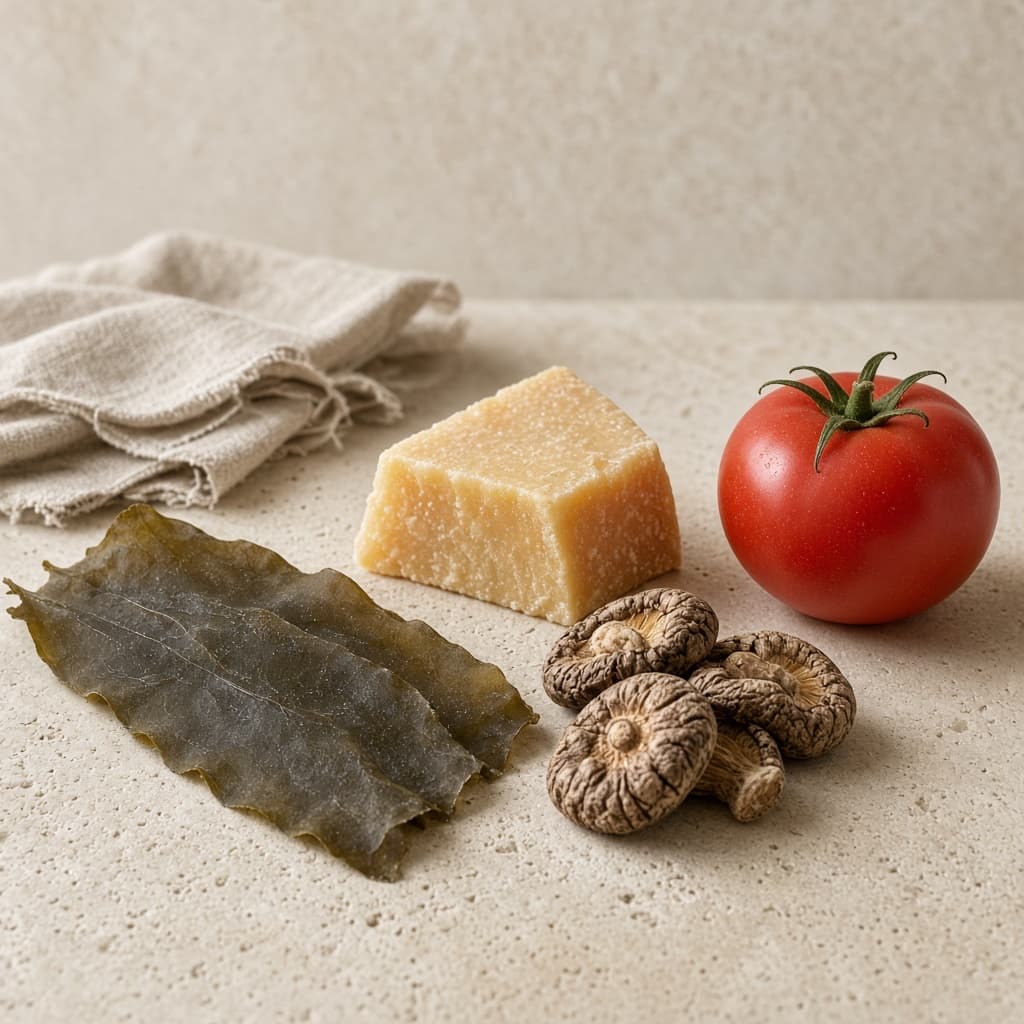
The savoury taste. Not a marketing word for 'tasty'.
Umami is a basic taste, in the same list as sweet, salty, sour and bitter. It is the savoury depth you get from glutamates and nucleotides — kombu, Parmesan rinds, slow tomatoes, soy sauce, mushrooms, anchovy, a long-cooked bone broth. Calling a burger 'umami' because it is brown does not make the word useful.
Kikunae Ikeda isolated glutamate from kombu broth in 1908 and named the taste. That history matters because it is chemistry, not a branding department. MSG is the sodium salt of that same glutamate. Some cooks use it. It is not a moral failing and it is not a headache potion. We will not invent scare stories.
Nucleotides from dried fish, mushrooms and meat amplify glutamate. That is why a dash of soy in a mushroom pan tastes larger than either ingredient alone, and why Parmesan on pasta is not only salt. Dashi is the textbook: kombu plus katsuobushi. A ripe tomato and a hard cheese are the same idea in an Italian kitchen.
If a dish tastes flat, check salt, acid and fat before you reach for a condiment labelled umami. Then add something glutamate-rich: a spoon of miso, a splash of fish sauce, a rind in the pot, a longer brown on the onions. Flat is usually under-seasoned or under-cooked, not missing a marketing noun.
Braising works partly because time dissolves connective tissue and concentrates those savoury compounds into sauce. That is why a short boil tastes thin and a patient pot tastes like itself. Deglazing a pan after a sear is the same logic in five minutes: you are dissolving browned glutamate-rich bits, not performing a trick.
Use the word when you mean the taste. Do not use it as a synonym for 'delicious', 'Asian', or 'has mushrooms'. The recipes on this site season with soy, miso, cheese, tomato and time. If you want the science on a plate, cook the dashi-led Japanese bowls or a slow braise — and taste before and after the salty-savoury ingredient goes in.