Meat
Beef tripe
Also called tripe, mondongo, honeycomb tripe, blanket tripe
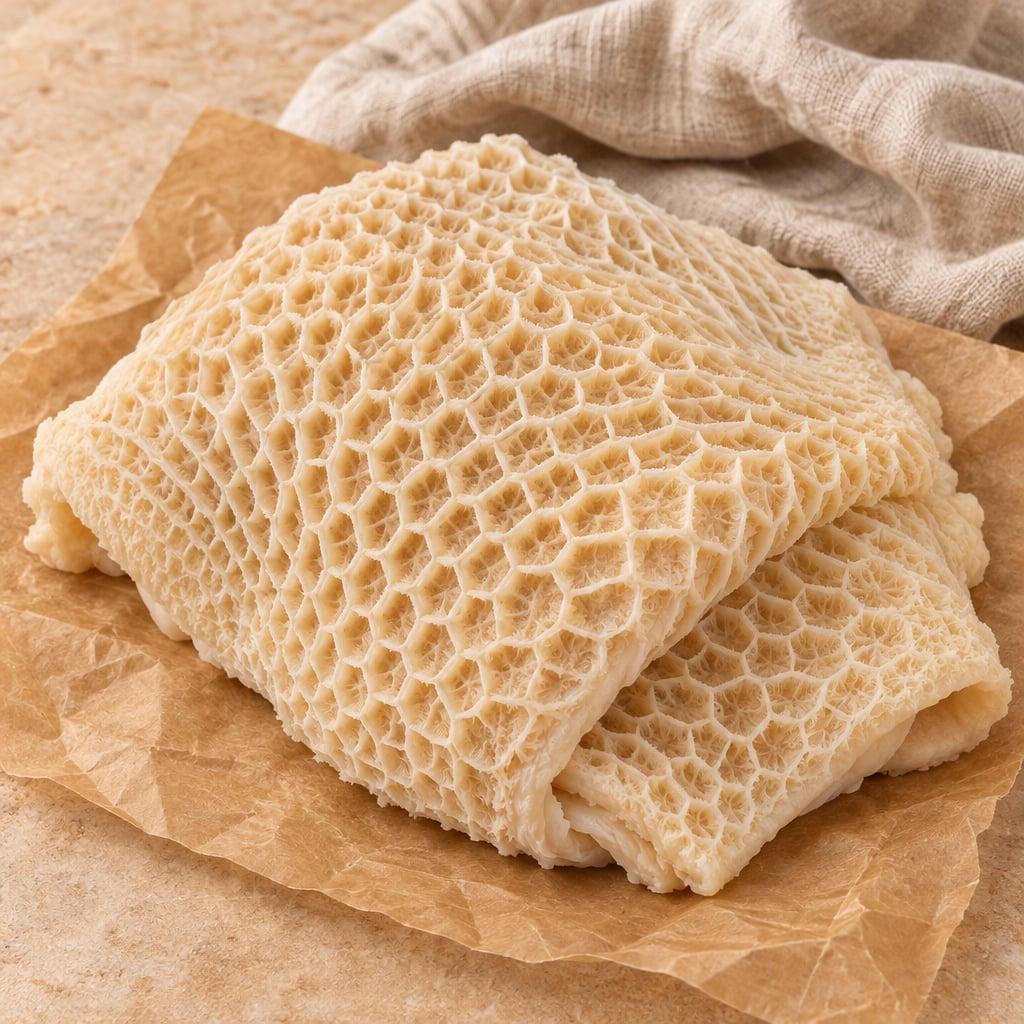
The stomach lining of cattle. Honeycomb tripe, from the second stomach, is the kind most often sold, pale and ridged like a waffle. It is usually sold cleaned and bleached, and it stays chewy until it has been cooked for a long time.
Origin
Eaten across Latin America as mondongo, in Mexico as the base of menudo, and in Italy, France, China and Britain. Sold at Latin American, Caribbean and Asian butchers and some supermarket meat counters.
Flavour
Very mild and faintly milky, with a slight mineral edge. The texture is chewy and a little gelatinous, and it takes on the flavour of the liquid it cooks in.
How to use it
Rinse it, scrub it with salt and lime or vinegar, then boil it for 10 minutes and rinse again. Cut it into squares and simmer for two to three hours, or pressure-cook for about 45 minutes, until a piece cuts easily with the side of a spoon. Add vegetables afterwards.
Storage
Raw tripe keeps two days in the fridge or three months frozen. Cooked, keep it in its broth for up to three days.
Recipes using it

Sopa de pata
Salvadoran cow's foot and tripe soup, simmered for hours and loaded with yuca, corn, green plantain, chayote, squash and cabbage. Served with lime and hot sauce.
Medium

Guatita
Ecuadorian tripe and potato stew in a mild peanut and milk sauce coloured with achiote, served with rice, avocado and lime-cured red onion.
Medium

Flaki
Polish beef tripe soup: tripe scrubbed, blanched and simmered for hours, cut into strips, then finished in beef broth with root vegetables, marjoram, ginger, nutmeg and sweet paprika.
Medium