Meat
Caul fat
Also called lace fat, crépine, panna, πάννα, omentum, pork caul
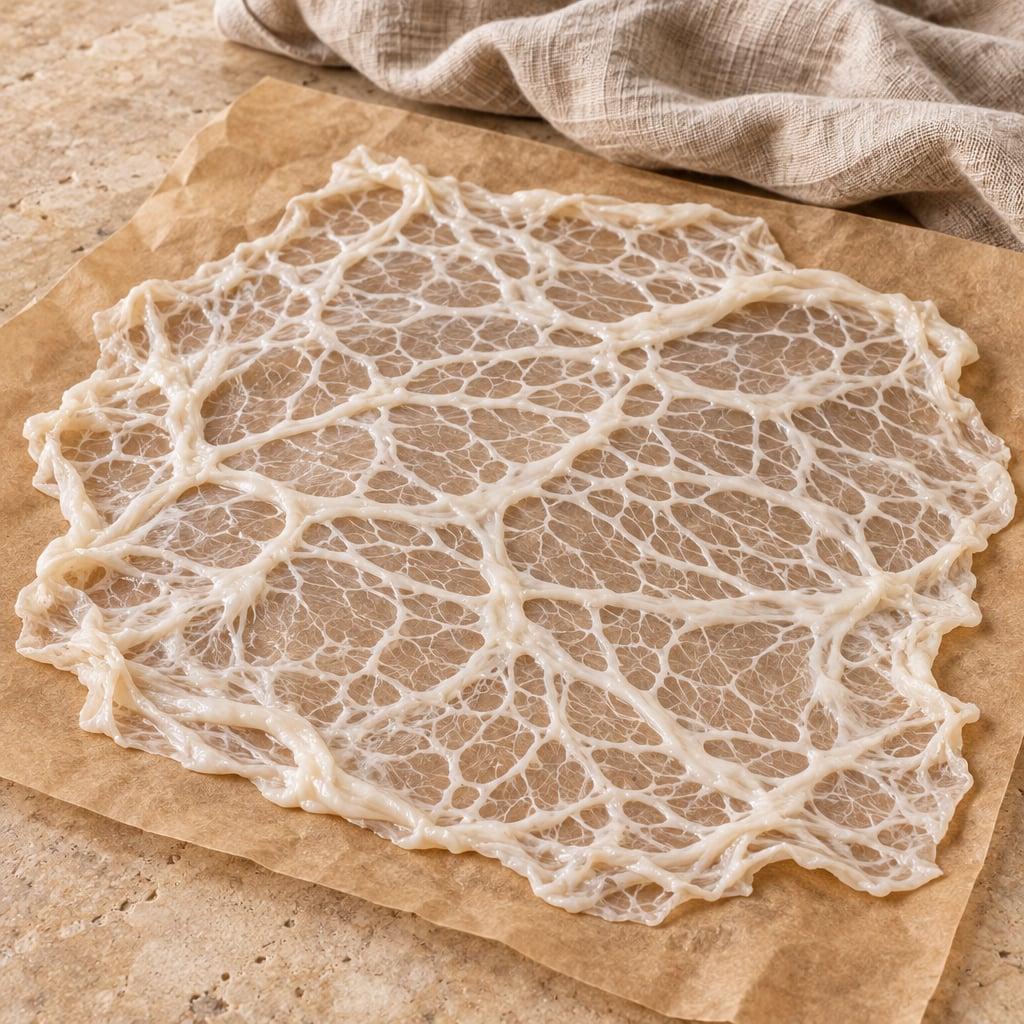
A thin, lacy sheet of fat and membrane that surrounds the stomach and intestines of a pig or a lamb. It looks like a net of white veins on a clear film. Cooks use it as an edible wrapper that bastes whatever is inside and then all but disappears.
Origin
A by-product of every slaughterhouse, used wherever people make sausages without casings: Cypriot sheftalia, French crépinettes, British faggots. You will rarely see it on display. Ask a butcher who breaks down whole animals, or a Greek, Cypriot or Chinese butcher, and order it a few days ahead. It often arrives frozen.
Flavour
Mild pork or lamb fat, nothing more. Its job is texture and moisture: it melts over the heat, browns in patches and holds a loose mince together.
How to use it
Soak it for ten minutes in cold water with a spoon of vinegar or lemon juice so it relaxes and loses any smell. Spread it gently on a board, cut it into squares with scissors, and wrap the filling in a single layer with a small overlap. Trim away the thick fatty seams.
Storage
Fresh caul keeps two days in the fridge. It freezes well for three months, flat in a bag. Thaw it overnight in the fridge and soak it before use.
Recipes using it

Sheftalia
Σιεφταλιά
Cypriot skinless sausages of minced pork, onion and parsley wrapped in caul fat and grilled until the fat melts and browns. Eaten in pitta with lemon.
Medium

Sai oua
ໄສ້ອົ່ວ
Lao herb sausage of coarse pork with lemongrass, galangal, lime leaf, shallot, chilli and dill. Made here as caul-wrapped logs or patties, no casings needed.
MediumHot

Drob de miel
Romanian Easter loaf of lamb liver, heart and kidney chopped with spring onion, dill and parsley, baked around whole hard-boiled eggs and sliced cold.
Medium