Produce
Collard greens
couve
Also called collards, couve-manteiga, gomen greens
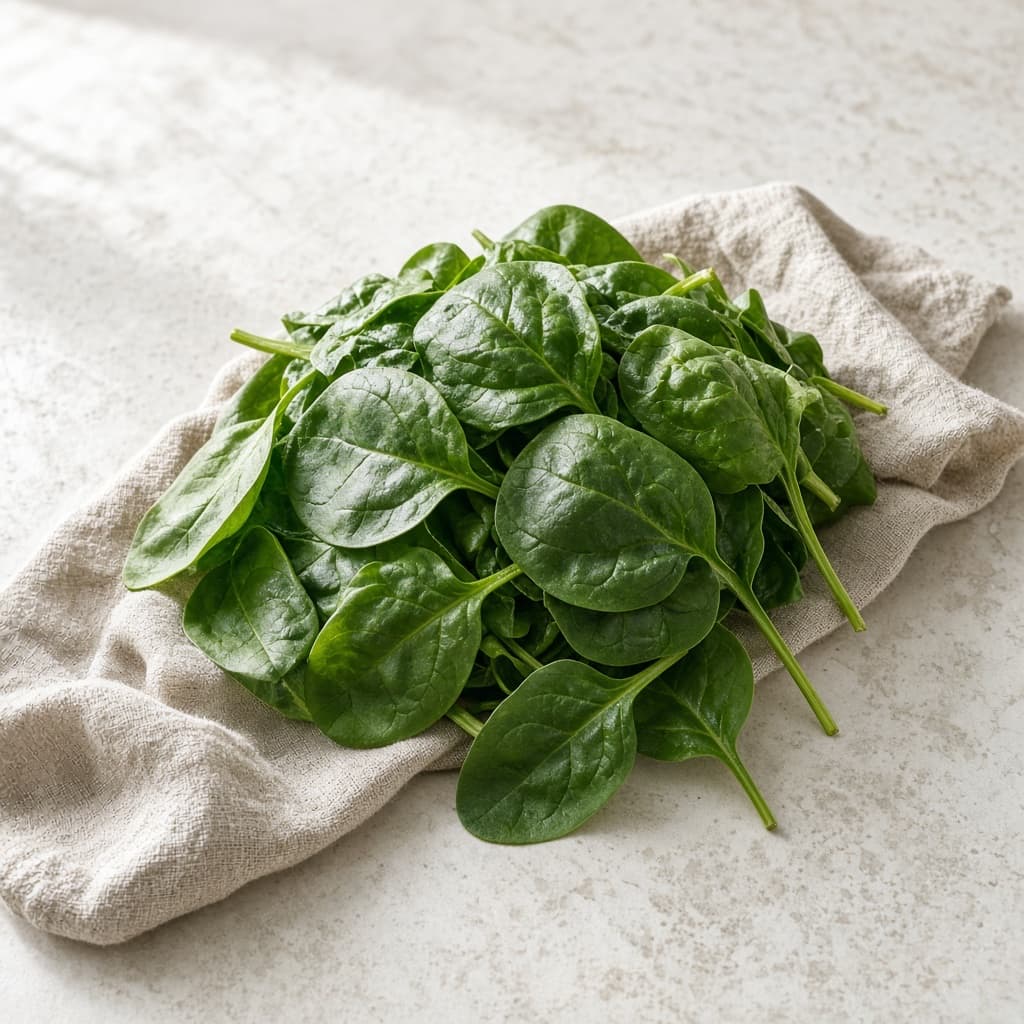
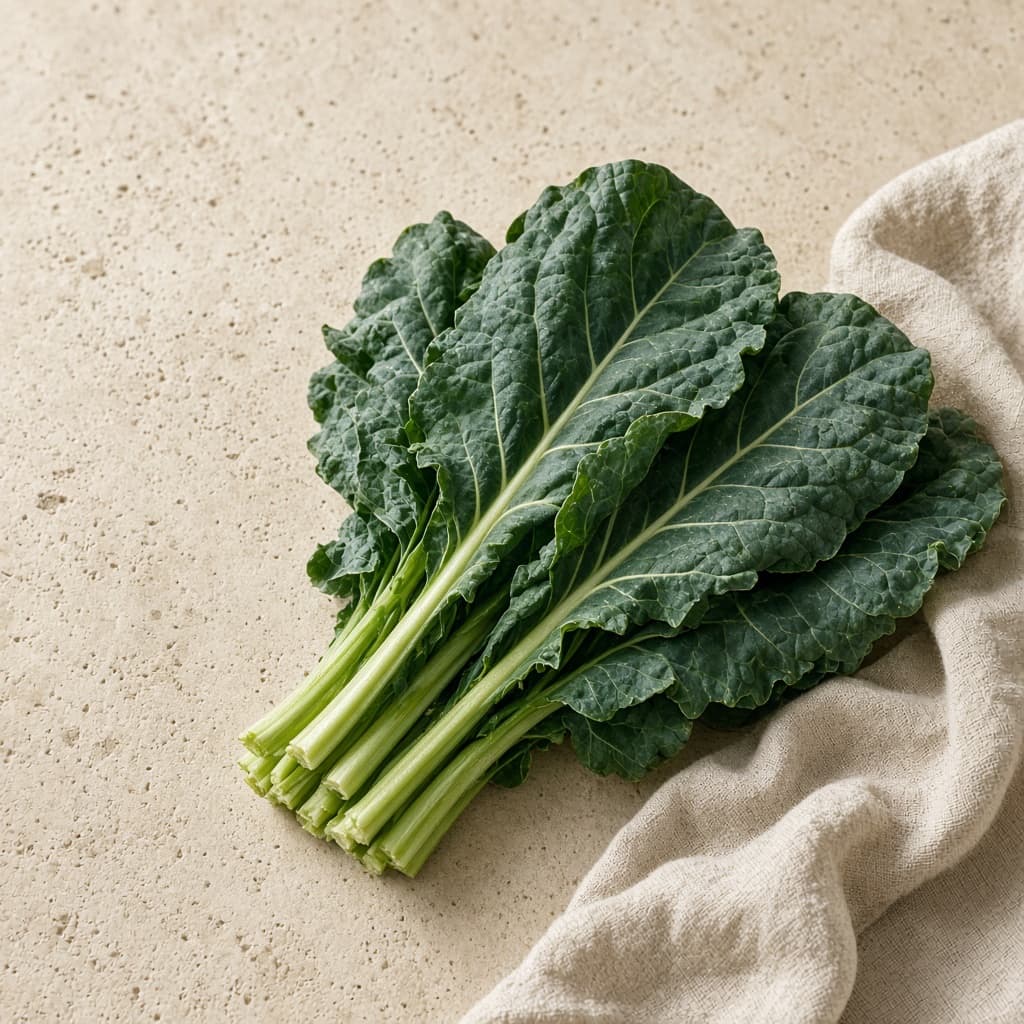
A thick, waxy brassica leaf — collards, couve-manteiga, the green in Ethiopian gomen — built for a knife and heat. The midrib is tough; the blade sweetens if you give it time or slice it to ribbons. It is not spinach, and it will not wilt into nothing in two minutes unless you cut it very fine.
Origin
Descended from Mediterranean wild cabbage, then taken up as a pot green in the American South, in Minas Gerais, and in highland East African kitchens. The plant likes cool weather and poor soil; the cooking habits travelled with people, not with a single cuisine.
Flavour
Cabbage-bitter when raw, mineral and sweet after a long simmer with pork or smoked meat. A quick fry in garlic oil tastes greener and sharper, closer to kale.
How to use it
Strip the stems. For feijoada or a Southern pot, simmer the leaves with stock and something smoked until they surrender — an hour is not a failure. For mineiro-style couve, stack, roll and cut hair-thin ribbons, then flash in hot oil with garlic so they stay bright. Ethiopian gomen wants onion, fat and patience. Salt early if you are stewing, late if you are frying. Tough leftover ribs can flavour stock; they should not hit the plate as sticks.
Storage
Fridge, unwashed, in a bag with a little air, three to five days. They soften and yellow as they age. Do not wash until you cook; trapped water speeds the rot.
Recipes using it
Checking your allergy settings…